

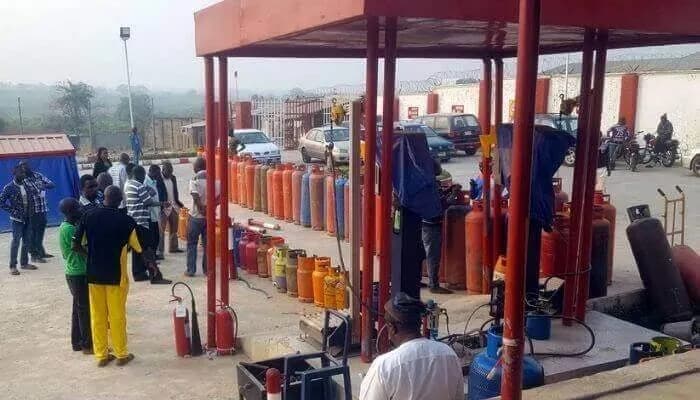
Cooking gas prices have climbed sharply across Nigeria, with retail rates now reaching as high as ₦2,000 per kilogramme in some locations ahead of the 2026 Eid-el-Kabir celebrations. The spike is being driven by a familiar but troubling mix rising festive demand and a tight squeeze in depot supply.
At the centre of the latest pressure is a simple reality: there is too much demand chasing too little product. Depot loading has become increasingly constrained, especially in Lagos, the country’s main LPG distribution hub, leaving marketers with limited volumes to circulate to the retail market.
As at yesterday, industry sources confirmed that only a few depots were able to load LPG, with Techno Oil standing out as the only active supplier in Lagos, selling at about ₦1,250 per kilogramme. Even at that level, operators described the supply as lean, with volumes insufficient to meet rising market demand.
That shortage has quickly filtered down the value chain. Across Lagos, Ogun, Ibadan and other major urban centres, retail prices have moved into a wide band between ₦1,600 and ₦1,900 per kilogramme, while several filling points have already crossed the ₦2,000 mark as Sallah-related demand intensifies.
The timing has added another layer of pressure. The Federal Government has declared May 27 and May 28, 2026 as public holidays for Eid-el-Kabir, a period when households traditionally increase cooking gas consumption for family meals, celebrations and commercial food preparation.
What is playing out in the market is not just seasonal demand, but a supply chain that is struggling to respond in real time. Marketers say depot shortages and inconsistent product availability have made it difficult to secure steady loading allocations, forcing retailers to compete for whatever limited stock is available.
An earlier report by Petroleumprice.ng had already flagged the tightening situation in Lagos depots, warning that prolonged supply disruptions could push retail prices closer to the ₦2,000/kg threshold a projection that has now materialised in several locations.
Industry operators also link the strain to broader upstream and import dynamics, including rising international LPG costs and irregular inflows into key storage depots. The Nigerian Association of Liquefied Petroleum Gas Marketers has repeatedly warned that unstable supply patterns are undermining pricing stability and household access to clean cooking fuel.
As it stands, the market is firmly tilted against consumers. With depot supply thin and demand rising sharply ahead of Sallah, cooking gas has moved from being a relatively stable household necessity to a product once again defined by scarcity, pressure, and unpredictable pricing across the country.