

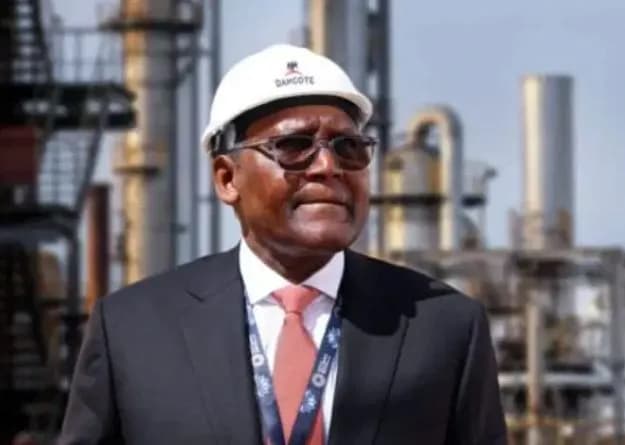
A new flashpoint has erupted in Nigeria’s oil and gas sector as the Dangote Petroleum Refinery accused private depot owners of undermining its operations and sabotaging the country’s energy future.
In a strongly worded statement responding to the Depot and Petroleum Products Marketers Association of Nigeria (DAPPMAN), the refinery alleged that entrenched import cartels were orchestrating a campaign of “economic sabotage” to derail its Compressed Natural Gas (CNG)-powered truck rollout and nationwide fuel distribution plan.
Dangote Targets Quality Scandals and Regulatory Gaps
Dangote recalled that in January 2022, one DAPPMAN member supplied petrol containing more than 15% methanol, a level that damaged thousands of engines across the country. Yet, no independent probe followed. The refinery blamed this on the absence of a government-owned, world-class laboratory capable of testing fuels to international standards.
Consequently, importers, it said, have exploited this regulatory gap to flood Nigeria with substandard products, in clear violation of the Petroleum Industry Act (PIA), which limits sulphur content to 50 parts per million.
The refinery also dismissed DAPPMAN’s claim that it covers only 35% of national fuel needs. It argued that regulators have failed to publish transparent consumption data. Inflated figures — often pegged at 93 million litres daily — have, according to Dangote, long justified subsidy claims and crude swap agreements. “The reality is that Nigeria consumes less than half that figure,” the statement stressed.
Import-Driven Cartels Under Fire
Moving further, Dangote rejected claims that petrol is cheaper in Togo. It cited average pump prices in Lomé at ₦1,826 per litre, nearly double Nigeria’s rate after its cuts. The refinery accused depot owners of “round-tripping” — buying products under the guise of domestic supply only to divert them across borders for higher margins.
“The business model has never truly been about serving Nigerian consumers,” the refinery said. “It has been about exploiting arbitrage opportunities through cross-border trade.”
The refinery added that subsidy-era fraud drained billions of naira from Nigeria while cartels enriched themselves. To restore accountability, Dangote challenged DAPPMAN members — including Matrix, AA Rano, AYM Shafi, and NIPCO to publish their financial records for the past decade and submit to forensic audits on imports, tax compliance, and equalisation fund claims.
Call for Government Protection
Furthermore, Dangote warned that loading 40 million litres of petrol and 15 million litres of diesel through Single Point Mooring (SPM) would add ₦75 per litre in handling charges, costing the country an estimated ₦1.5 trillion annually. By contrast, gantry loading and direct trucking would eliminate these costs and save Nigeria from avoidable losses.
“The Dangote Refinery is a national asset built to serve Nigerians first. It will not bow to cartels seeking to undermine reforms,” the company declared. It therefore urged the Federal Government to shield the refinery from “import-dependent practices designed to strangle Nigeria’s first private refinery.”
NUPENG, Depot Owners Accused of Collusion
In addition, Dangote accused the Nigeria Union of Petroleum and Natural Gas Workers (NUPENG) of aligning with import cartels. It condemned NUPENG’s dismissal of its petrol price cut as a “Greek gift” and DAPPMAN’s labelling of the move as “unpatriotic,” arguing that both remarks exposed vested interests.
The refinery also recalled its diesel price cuts from ₦1,900 to ₦1,000 per litre, which provided relief to manufacturers and transporters. Rather than applaud the move, competitors resisted, lobbying against the cuts.
“These are the same players who benefitted from subsidy scandals that drained over ₦1.7 trillion in 2012 alone,” Dangote alleged, noting decades of inflated claims and diversion of subsidised fuel.
High Stakes for Energy Independence
Finally, the refinery maintained that a refinery-led model remains Nigeria’s only sustainable path to energy self-sufficiency, job creation, and affordable pricing. Yet, depot owners, it claimed, continue to destabilise operations by flooding the market with imports, issuing boycotts, and blacklisting partners who engage with Dangote.
“The hostility is not surprising,” the refinery concluded. “It is a defensive pushback by cartels against a new order of transparency and accountability. Nigerians deserve affordable energy, not a return to exploitative practices.”