

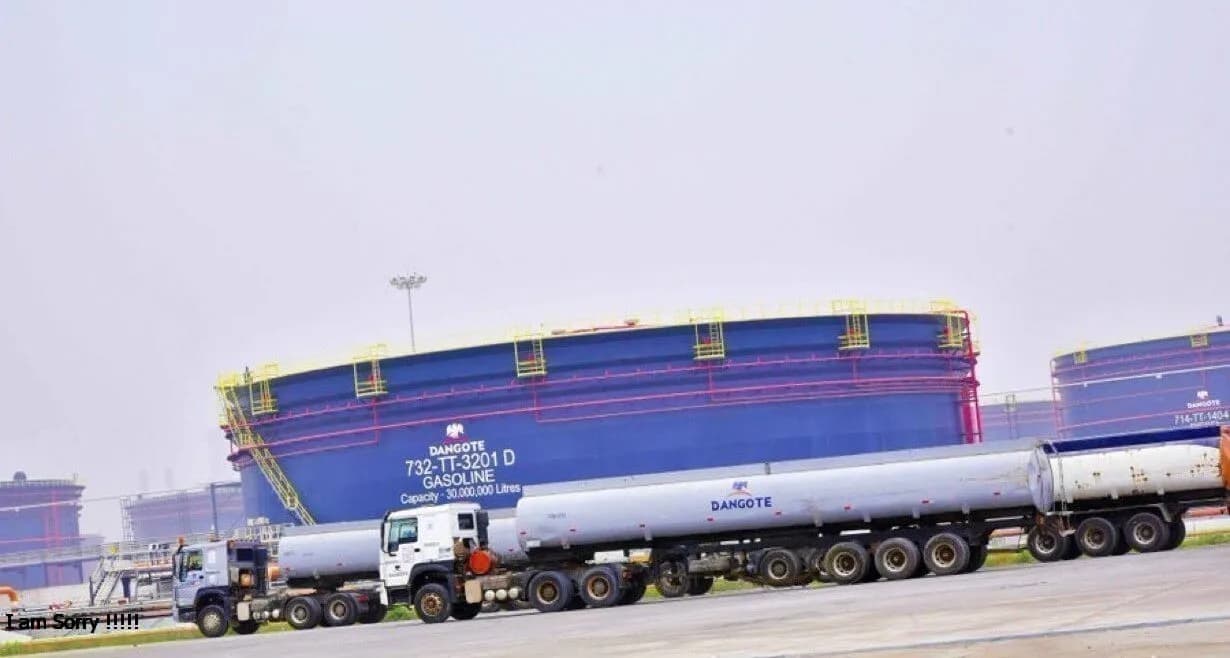
Nigeria’s depot petrol market saw a sharp surge within 24 hours, with prices climbing by 8% between September 18 and 19, 2025, after Dangote Refinery suspended gantry sales on September 18 and announced it would resume collections on September 23.
On September 18, the lowest recorded depot price stood at ₦824 per litre at Dangote Lagos. By midday on September 19, the highest price hit ₦890 per litre at Fynefield Calabar, representing an 8% increase in just one day.
Depot Movements Across Cities
In Lagos, Dangote’s ex-depot price rose from ₦824 on September 18 to ₦840 on September 19. Rainoil also increased its rate from ₦831 to ₦865, while MENJ moved from ₦830 to ₦835.
In Warri, Matrix maintained ₦855 across both days. However, Calabar recorded one of the steepest jumps, with Fynefield moving from ₦850 to ₦890. Port Harcourt’s Sigmund stayed at ₦860 but has since halted sales.
Sales Suspension and Market Impact
The market reaction comes after Dangote Petroleum Refinery and Petrochemicals FZE (DPRP) suspended gantry collections on September 18, directing marketers to its Free Delivery Scheme. The refinery later announced that self-collection would resume on September 23, but uncertainty during the suspension window drove traders to adjust prices upward.
Industry sources said depots in Calabar and Port Harcourt have stopped selling, tightening supply in the eastern axis. Meanwhile, Dangote’s customers who already had tickets sold at ₦840, slightly above the ₦824 rate of the previous day.
Analysts’ View
Market watchers say the sudden spike underscores how sensitive depot prices remain to Dangote’s supply decisions. With the refinery positioned as the single largest supplier, its operational shifts can ripple quickly through the downstream market.
The brief halt, they added, exposed supply gaps at coastal depots and triggered defensive pricing by independent operators, further highlighting Nigeria’s fragile petrol distribution network.