

Nigeria’s estimated spot landing cost for Automotive Gas Oil (AGO), commonly known as diesel, has climbed to ₦1,709.60 per litre, widening the price gap with Dangote Petroleum Refinery’s ₦1,570 per litre gantry price and supporting stronger buying interest in locally refined diesel.
A review of the Major Energies Marketers Association of Nigeria (MEMAN) Energy Bulletin for August 18, 2026, by Petroleumprice.ng shows that the estimated spot into-tank landed cost of AGO stood at ₦1,709.60 per litre, based on an exchange rate of ₦1,343.32/$.
The landing-cost estimate is ₦139.60 per litre, or 8.9 per cent, above Dangote’s current price. The seven-day average import parity price of ₦1,682.37 per litre is also ₦112.37 above the refinery’s rate, while the 30-day average of ₦1,619.03 represents a ₦49.03 difference.
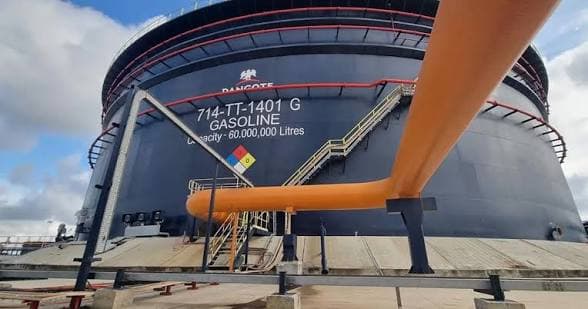
The price gap has coincided with increased truck activity around Dangote Refinery, where diesel trucks have been seen queuing to load products. The lower refinery-gate price gives buyers an incentive to source AGO locally, particularly when compared with higher-priced depot supplies and the estimated cost of imported diesel.
Dangote’s current AGO price followed an ₦80 per litre reduction, from ₦1,650 to ₦1,570, effective August 6. The cut represented a 4.8 per cent reduction from the previous price.
The price difference is also visible across the depot market. Lagos AGO prices in the August 18 data ranged from ₦1,574.50 to ₦1,710 per litre, putting the highest listed Lagos price ₦140 above Dangote’s rate.
Warri recorded prices between ₦1,690 and ₦1,720 per litre, while Calabar and Port Harcourt recorded ranges of ₦1,700 to ₦1,715 per litre. The ₦1,720 Warri price was ₦150 above Dangote’s rate.
At the lower end, the ₦1,574.50 per litre Lagos price was only ₦4.50 above the refinery’s price, showing that the gap varies considerably between suppliers and locations.
The pricing differential comes as international oil benchmarks remain elevated amid continued geopolitical risks. Brent crude was trading at $92.01 per barrel, up 1.09 per cent, while WTI stood at $86.24, gaining 1.53 per cent.
The stronger crude prices add to the replacement-cost pressure facing importers, although the domestic diesel market is also influenced by product availability, exchange rates, freight, inventory positions, logistics and financing costs.
The landed-cost calculation assumes a 20,000-tonne vessel carrying AGO and therefore represents an estimated into-tank replacement cost rather than the actual cost of every diesel cargo imported into Nigeria.
The latest international benchmarks in the August 18 bulletin included Brent at $91.02 per barrel, WTI at $84.45, Bonny Light at $98.16 and ICE Low Sulphur Gasoil futures at $1,299 per tonne.
The current market therefore presents a notable divergence: the estimated cost of replacing imported diesel is above Dangote’s refinery-gate price, while several depot prices also remain higher than the refinery’s ₦1,570 rate.
For buyers able to access the refinery’s supply directly or through marketers, the price difference provides a financial incentive to favour locally refined AGO over higher-priced alternatives.