

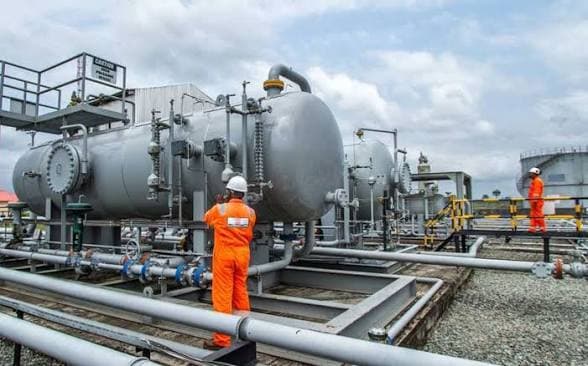
Edo Refinery recorded Nigeria's highest average capacity utilisation among operating modular refineries in September 2026, reaching 104.24% as the facilities collectively supplied 620,000 litres of diesel daily to the domestic market.
The September 2026 factsheet released by the Nigerian Midstream and Downstream Petroleum Regulatory Authority (NMDPRA), as reviewed by Petroleumprice.ng, showed that modular refineries accounted for 4.3% of Nigeria's average daily Automotive Gas Oil (AGO) consumption during the month.
Although Edo Refinery recorded the highest utilisation rate, Walter Smith delivered the largest daily diesel output among the four operating facilities, producing 290,000 litres and supplying 310,000 litres to the domestic market.
Edo Refinery recorded average daily diesel production and domestic supply of 90,000 litres each. Aradel produced 140,000 litres daily and supplied 120,000 litres, while OPAC recorded daily production of 140,000 litres and domestic supply of 110,000 litres. Duport Refinery was listed as shut down, with no production or supply figures reported for September.
The performance figures show varying operating levels among Nigeria’s modular refineries, even as their collective contribution remained relatively small compared with national diesel demand.
Nigeria’s average daily diesel consumption rose to 14.5 million litres in September from 14.3 million litres in August. Against this demand, the 620,000 litres supplied daily by modular refineries represented 4.3% of national consumption.
The NMDPRA also reported a sharp decline in total diesel receipts during the month. Average daily receipts fell by 40% to 8.7 million litres in September from 14.5 million litres in August.
Domestic sources accounted for 8.1 million litres daily, representing a 39% decline from the previous month, while imported diesel receipts fell by 54% to 600,000 litres per day.
The drop in receipts coincided with a slight increase in consumption, indicating a reduction in the volume of new diesel supplies entering the domestic market during September. However, receipts and consumption measure different aspects of the market, while stock movements also affect product availability.
Despite the decline in receipts, the regulator reported diesel stock sufficiency of 49.7 days at the end of its September assessment, down from 51.6 days in August. The figure remained above the regulatory benchmark of 30 days.
Edo Refinery’s reported capacity utilisation of 104.24% placed it above the NMDPRA’s 80% threshold for high utilisation. Walter Smith’s 62.25% fell within the moderate category, while Aradel’s 31.90% and OPAC’s 18.43% were classified as low utilisation, below the 50% threshold.
A utilisation rate above 100% indicates that measured throughput exceeded the capacity benchmark used in the calculation. However, the factsheet did not explain the technical or operational factors behind Edo Refinery’s reported result.
The distinction between utilisation and output is significant because a higher utilisation rate does not necessarily mean a refinery produces the largest volume of fuel. Walter Smith’s daily diesel production of 290,000 litres was more than three times Edo Refinery’s reported 90,000 litres.
Walter Smith also recorded domestic supply 20,000 litres above its reported daily production. By contrast, Aradel supplied 20,000 litres less than it produced, while OPAC’s domestic supply was 30,000 litres below its production figure. Edo Refinery reported equal production and supply volumes of 90,000 litres daily.
The NMDPRA factsheet did not explain the differences between production and domestic supply at the individual facilities. The figures therefore do not establish whether the variations resulted from inventory movements, timing differences or other operational and commercial factors.
The regulator also did not disclose the installed capacity of each modular refinery in the reported table, limiting the extent to which the facilities’ absolute refining capacities can be compared using the utilisation percentages alone.
Feedstock challenges and maintenance shutdowns were identified by the NMDPRA as factors affecting Aradel and OPAC, which operated below optimal capacity during September. Their respective utilisation rates of 31.90% and 18.43% placed both facilities in the regulator’s low-utilisation category.
Duport Refinery remained shut down during the period, although the factsheet did not specify the duration of its closure or the reasons for it.
The figures highlight the importance of feedstock availability, maintenance and sustained operations in determining how much petroleum product modular refineries can supply. However, the report did not establish that the same constraints affected every facility.
Modular refineries are smaller-scale refining facilities generally assembled from prefabricated processing units. Depending on their design and processing capabilities, they can convert crude oil or other suitable feedstocks into petroleum products for domestic consumption or other markets.
Their potential role in Nigeria’s petroleum sector includes expanding local refining capacity and diversifying domestic sources of fuel supply. Their actual contribution, however, depends on operating performance, access to feedstock, maintenance requirements and the range of products they can produce.
The NMDPRA’s September data also showed a decline in crude oil receipts across Nigeria’s domestic refining sector. Refineries collectively received an average of 618,000 barrels of crude oil daily during the month, down 9% from 681,000 barrels per day in August.
Between January and September 2026, domestic refineries received a cumulative 156.51 million barrels of crude oil. Domestic sources accounted for 125.85 million barrels, or 80.4% of the total, while imported crude contributed 30.66 million barrels, representing 19.6%.
These figures cover domestic refineries collectively and do not represent crude intake by modular refineries alone.
Overall, the September factsheet presents different performance levels across Nigeria’s modular refining segment. Edo Refinery recorded the highest reported capacity utilisation, Walter Smith delivered the largest daily diesel output, Aradel and OPAC operated at low utilisation, and Duport remained shut down.
Collectively, the four operating facilities supplied 620,000 litres of diesel daily, equivalent to 4.3% of national consumption. The figures demonstrate that assessing the segment’s contribution requires consideration of capacity utilisation, production volumes, domestic supply and operating status rather than relying on any single performance indicator.