

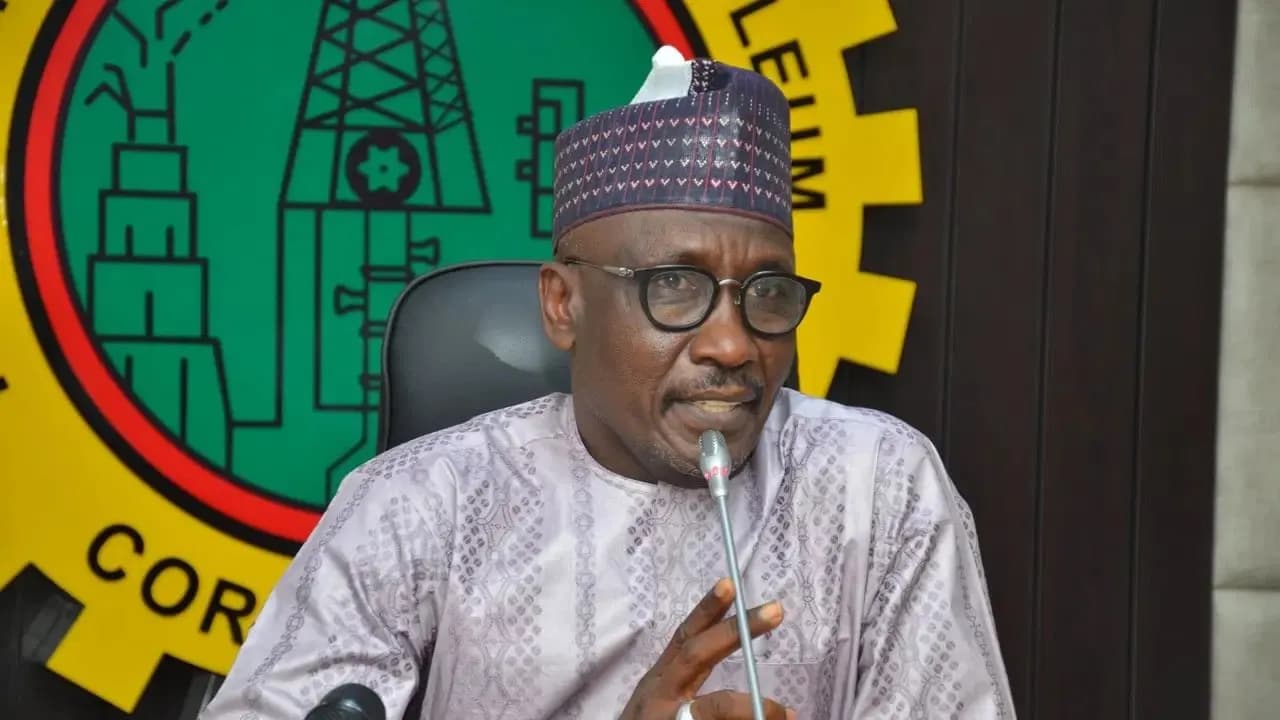
The Economic and Financial Crimes Commission (EFCC) has intensified its clampdown on financial misconduct in Nigeria’s oil and gas industry, as it interrogates the immediate past Group Managing Director of the Nigerian National Petroleum Company Limited (NNPCL), Mele Kyari.
High-profile questioning at EFCC headquarters
Kyari, who led the transition of the NNPC into a limited liability company between 2019 and July 2024, appeared before EFCC investigators in Abuja on Wednesday. According to senior sources within the agency, the questioning centres on allegations of mismanagement of billions of dollars allocated to Nigeria’s struggling refineries.
An official who requested anonymity disclosed, “He is with our investigators at the moment. The interrogation is linked to financial transactions and turnaround maintenance projects during his tenure.”
The EFCC’s spokesman, Dele Oyewale, was unavailable for comment as of press time, underscoring the sensitive nature of the ongoing probe.
Focus on refinery funds and frozen accounts
Kyari’s interrogation follows earlier reports linking him to a $7.2 billion turnaround maintenance project intended to revitalise Nigeria’s four state-owned refineries, none of which currently operate at optimal capacity. Investigators believe large sums earmarked for these projects may have been misappropriated.
In a related ruling, the Federal High Court in Abuja recently ordered the temporary freezing of four bank accounts linked to Kyari, pending further investigations. This development signals a stronger prosecutorial posture by the EFCC towards alleged graft in the petroleum sector.
Reform legacy under scrutiny
During his five-year tenure, Kyari oversaw major reforms, including the Petroleum Industry Act (PIA) implementation and the rebranding of the Nigerian National Petroleum Corporation into NNPCL, a profit-driven company. Supporters credit him with modernising parts of the national oil giant, while critics argue that refinery rehabilitation under his watch remained a mirage.
Now, with the EFCC’s focus on financial accountability, industry watchers say the interrogation could reshape public perceptions of his legacy and test the credibility of reforms launched during his leadership.
What this means for Nigeria’s oil sector
The investigation highlights systemic challenges in Nigeria’s downstream sector, particularly the recurring failure of state-owned refineries despite repeated multi-billion-dollar interventions. Analysts believe the case could serve as a litmus test for President Bola Tinubu’s anti-corruption agenda in the petroleum industry, at a time when Nigeria is relying heavily on private refiners like Dangote Refinery to reduce dependence on fuel imports.
Whether Kyari faces charges or wins clearance, the EFCC probe drives home a clear message: Nigeria’s oil sector must embrace financial accountability.