

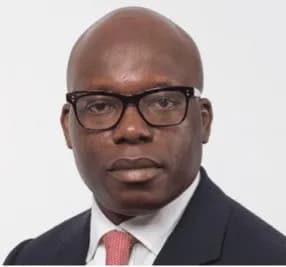
Wale Tinubu, Group Chief Executive Officer of Oando Plc, has projected that electric vehicles (EVs) could account for 50 percent of Nigeria’s total vehicle population within the next two decades, citing global manufacturing trends and Nigeria’s energy potential.
Tinubu made the remarks during an interview with Arise News Television on Tuesday, on the sidelines of the World Economic Forum (WEF) in Davos, Switzerland.
Drawing comparisons with global markets, he pointed to China’s rapid EV transition as a signal of what lies ahead. According to him, electric cars are increasingly cheaper to manufacture, accelerating their adoption worldwide.
“Today in China, one out of every two cars produced is electric, and electric vehicles are significantly cheaper to produce,” Tinubu said.
He added that Nigeria’s vast natural gas reserves position the country to generate affordable electricity over time, which could further support a large-scale shift away from internal combustion engines.
“With the abundance of gas in Nigeria, we are eventually going to produce very cheap electricity,” he said. “Over the next 20 years, I expect a major transition from combustion engines to electric vehicles in Nigeria. It will happen.”
Business Climate and Policy Reforms
Tinubu also addressed concerns around Nigeria’s investment climate, describing the country as open for business and largely stable. He noted that insecurity affects only a small fraction of Nigeria’s total landmass.
“Areas of instability represent less than two percent of Nigeria’s geographical landmass,” he said.
He highlighted the growing role of private and indigenous capital as one of the most significant developments in the Nigerian economy, describing it as a profound shift that is reshaping the business landscape.
Impact of Recent Economic Decisions
The Oando chief executive further acknowledged the economic reforms introduced by the current administration, including the removal of fuel subsidies and the decision to allow the naira to float.
According to him, while the measures were difficult, their impact is already becoming visible across the economy.
“The government has taken tough decisions,” Tinubu said, “and we are beginning to see the effects.”