

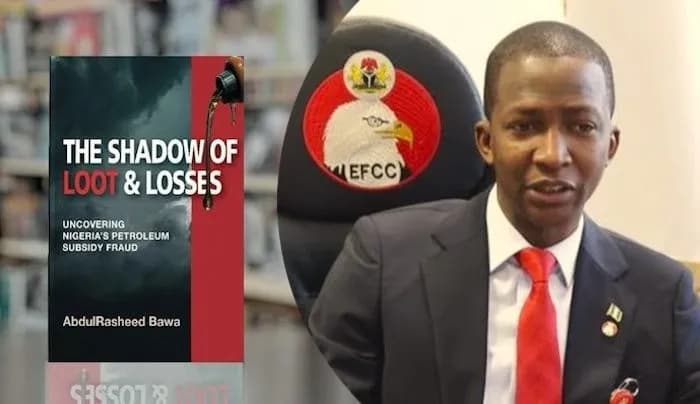
Abdulrasheed Bawa, former chairman of the Economic and Financial Crimes Commission (EFCC), has released The Shadow of Loot & Losses: Uncovering Nigeria’s Petroleum Subsidy Fraud, the most extensive account yet of how subsidy payments became a cash machine for corrupt officials and oil marketers.
Bawa headed the EFCC from 2021 to 2023 but cut his investigative teeth in 2012 as a member of the commission’s special subsidy-fraud team. That probe uncovered false import claims, doctored shipping documents, and round-tripping schemes that siphoned trillions of naira from public coffers.
Four classic fraud routes
In the 370-page book, published by CableBooks, an imprint of Cable Media & Publishing Ltd, Bawa outlines the mechanics of:
- Ghost importing and over-invoicing – marketers filed for subsidies on cargoes that never arrived or inflated volumes to secure extra payouts.
- Manipulated bills of lading – forged or altered shipping papers let companies peg claims to higher international prices.
- Round-tripping and double-dipping – a single shipment generated multiple subsidy reimbursements through layered paperwork.
- Diversion and smuggling – subsidised fuel meant for Nigerian depots found its way to black-market channels or neighbouring states.
“These pipelines of fraud thrived because of forged documents, weak oversight, and collusion between public officers and private actors,” Bawa writes.
A call for systemic overhaul
Beyond the case studies, The Shadow of Loot & Losses argues that subsidy fraud will resurface unless Nigeria tightens port surveillance, automates verification, and publishes real-time subsidy payments. “Transparency is the cheapest anti-corruption tool,” Bawa notes.
The book also reflects on the political pushback investigators face. He says that while the EFCC recovered billions of naira and secured several convictions, entrenched interests often slowed prosecutions.
Essential reading for reformers
Policy analysts have welcomed the publication, calling it a timely resource as Nigeria debates the future of fuel pricing and post-subsidy accountability. Civil-society groups urge lawmakers to treat Bawa’s findings as a roadmap for closing regulatory loopholes.
RovingHeights Bookstore is distributing the title nationwide. Early orders are reportedly brisk among journalists, auditors, and students of public finance.
The Shadow of Loot & Losses delivers both a forensic narrative of past graft and a blueprint to prevent its return, making it, in Bawa’s words, “a handbook for citizens who refuse to let history repeat itself.”