

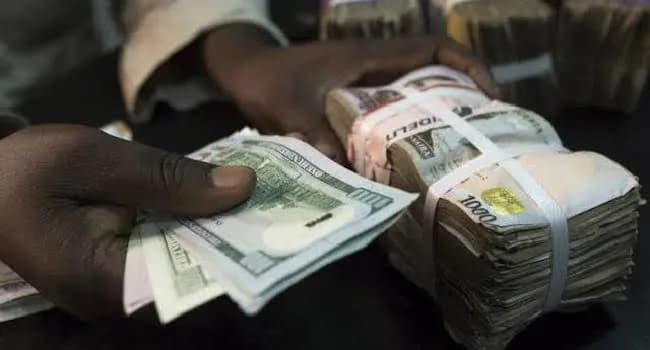
As at today Saturday 26th April 2025, the Nigerian exchange rate experienced a dip, as the United States dollar (USD), British pound (GBP), and Euro (EUR) climbed higher in both official and parallel markets. Ongoing challenges in Nigeria’s oil and gas sector drove this movement.
Official Market: Naira Faces Pressure
The Central Bank of Nigeria (CBN) set today’s official exchange rates as follows:
- USD/NGN: ₦1,613.43 (up 0.50%)
- GBP/NGN: ₦2,007.80 (up 0.13%)
- EUR/NGN: ₦1,843.39 (down 0.15%)
Moreover, despite injecting $197.71 million into the market, the CBN could not meet the strong demand for dollars. Nigeria’s heavy dependence on imports also adds pressure on the naira, making it harder for the currency to stabilise.
Parallel Market: Black Market Rates Surge
In the parallel market, traders quoted wider buying and selling rates:
- USD/NGN: ₦1,600 (buy) / ₦1,615 (sell)
- GBP/NGN: ₦2,080 (buy) / ₦2,140 (sell)
- EUR/NGN: ₦1,720 (buy) / ₦1,770 (sell)
Traders in Lagos blamed the limited access to official foreign exchange rate for driving buyers into the black market. Furthermore, the British pound surged to as high as ₦2,140, putting additional pressure on the naira.
Oil and Gas Sector Weighs on the Naira
Nigeria relies on oil and gas for about 80 percent of its export earnings. Recent drops in global oil prices, triggered by fears of a trade war and ongoing negotiations between the United States and Iran, have slashed Nigeria’s dollar earnings. Also, earlier oil price spikes had boosted the naira temporarily, but persistent volatility has kept black market premiums high.
Economic Outlook
The growing gap between official and parallel market rates worsens inflation and hurts businesses and consumers alike. Economists urge Nigeria to diversify its economy to ease the naira’s burden. However, for now, the USD, GBP, and EUR dominate the market, while black market activities continue to thrive.