

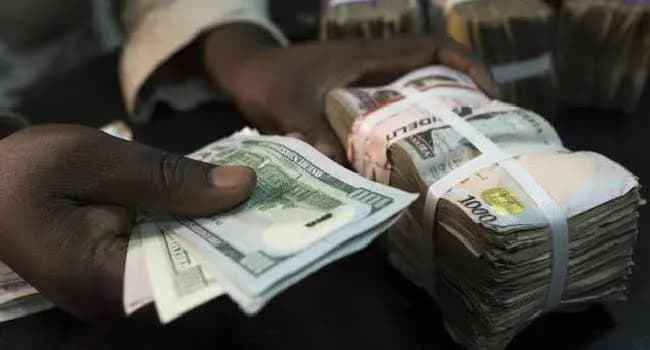
As of today Tuesday 20th May 2025, The Naira continues to sway under the weight of market forces, driven by global oil price shifts, forex supply constraints, and speculative activity. As of May 20, 2025, exchange rates reflect a familiar tension between the official and parallel markets, showing slight gains in the official segment and persistent volatility in informal trading zones.
Official Market Rates: Stable but Still Tight
Rates from the Central Bank of Nigeria (CBN) and trusted platforms for financial transactions such as international trade, corporate remittances, and import payments. Current official rates in the Nigerian Autonomous Foreign Exchange Market (NAFEM) are:
- USD/NGN: ₦1,603.00
- GBP/NGN: ₦2,173.30
- EUR/NGN: ₦1,850.63
These rates, while more predictable, still diverge significantly from street-level prices due to forex rationing, import backlogs, and compliance constraints.
Parallel Market Rates: Fluid and Fast-Moving
In locations like Wuse Zone 4 (Abuja), Lagos Island, and Trans-Amadi Port-Harcourt, black market exchange rates continue to move quickly, fuelled by limited forex access and speculative trading sometimes affecting the Naira.
USD/NGN
- Buying: ₦1,590.00 – ₦1,622.00
- Selling: ₦1,610.00 – ₦1,640.00
Average rate: ~₦1,615.00 per dollar
GBP/NGN
- Buying: ₦2,080.00 – ₦2,140.00
- Selling: ₦2,130.00 – ₦2,170.00
Reflects high demand for foreign education and imports
EUR/NGN
- Buying: ₦1,760.00 – ₦1,790.00
- Selling: ₦1,810.00 – ₦1,830.00
Driven by logistics, tech imports, and Euro-backed transactions
These rates often change within minutes, as traders respond to online signals, demand surges, and shifting global indices. In this fluid landscape, traders recommend face-to-face transactions and verified channels to avoid scams.
Oil Prices Fuel Currency Pressure
Nigeria’s oil earnings, a key source of forex supply, have become more unpredictable. Brent crude remains soft, trading around $65 per barrel, down from its $70 peak. This modest dip has cooled CBN’s forex inflows, tightening supply in official markets.
Although the Dangote Refinery has helped stabilize local petroleum product prices, Nigeria’s broader import dependency continues to strain forex availability. As refineries in Port Harcourt and Kaduna undergo reactivation, expectations rise for a long-term easing of forex pressure.
Market Dynamics: Gaps Reflect Structural Challenges
The Naira has witnessed a wide gap between official and parallel market rates isn’t just a matter of numbers, it underscores broader issues:
- Forex scarcity in banks and BDCs
- Speculation and panic-buying in the informal sector
- Weak non-oil export growth, despite incentives
While CBN’s new reforms (e.g., flexible FX windows, non-resident BDC licensing) aim to improve liquidity, traders argue that the real test lies in execution and transparency.
Expert Insights: Fragile Gains Require Real Fixes
Economic analysts at FocusEconomics agree: global oil prices, U.S. monetary policy, and investor confidence continue to shape Nigeria’s forex landscape. At the same time, informal traders caution that online rates can be misleading, urging Nigerians to verify every rate before committing to a deal.
“We’ve seen the naira recover slightly, but it’s a narrow window. If oil prices slip again or demand surges, black market rates could spike overnight,” said Adamu Bello, a parallel market trader in Lagos.
As of today, Nigeria’s forex market sits at a crossroads. The official segment remains steady, thanks to marginal improvements in oil revenues and cautious CBN intervention. Meanwhile, the parallel market remains volatile, reflecting public sentiment and structural imbalances.