

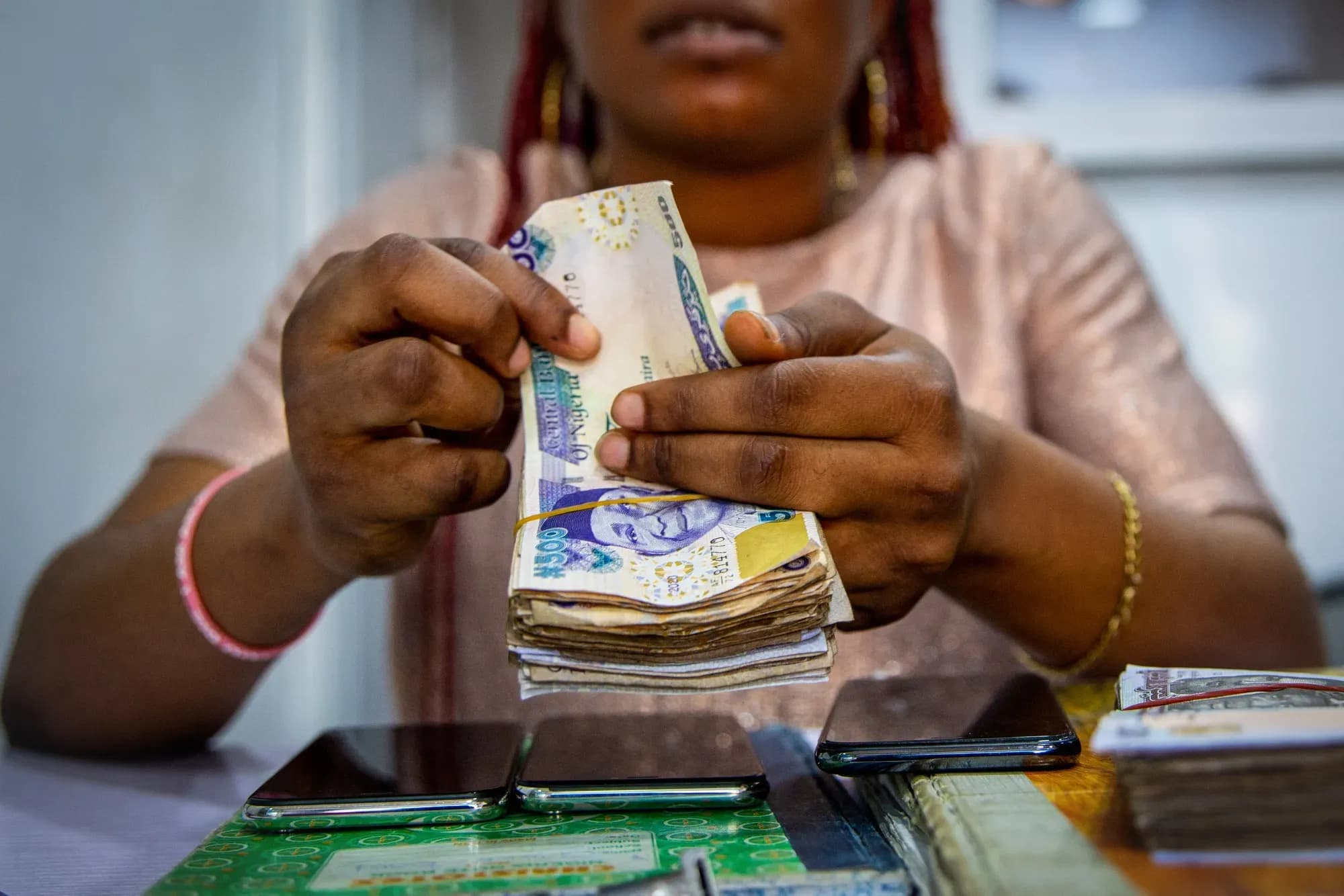
As of today, May 22nd, 2025, the Naira remains under significant pressure against major global currencies, the US Dollar (USD), British Pound (GBP), and Euro (EUR) despite ongoing interventions by the Central Bank of Nigeria (CBN) and foreign inflows from oil earnings.
The widening gap between the official and parallel markets highlights deep structural challenges in the oil and gas-dependent economy. Dangote Refinery’s recent output surge and fuel cargo arrivals may have helped ease inland product supply, but the forex crisis continues to erode gains in other sectors.
Official Market: Central Bank Holds Rate Steady Against The Naira
CBN maintained stability in the official market through dollar injections aimed at shielding the Naira from further erosion.
- USD/NGN: The Naira traded at ₦1,599.00 (buy) and ₦1,600.00 (sell)
- GBP/NGN: The British Pound exchanged at ₦2,050.00 (buy) and ₦2,060.00 (sell).
- EUR/NGN: The Euro hovered around ₦1,750.00 (buy) and ₦1,760.00 (sell).
These official rates reflect weighted averages and recent interventions, including CBN’s $197.71 million forex injection to calm demand.
Black Market: Demand for Dollar Surges Against The Naira
Parallel market traders continue to offer significantly higher rates, driven by strong demand from importers, manufacturers, and petroleum marketers seeking forex outside the official window.
- USD/NGN: Street traders quoted the dollar at ₦1,630.00 (buy) and ₦1,635.00 (sell).
- GBP/NGN: The Pound traded at ₦2,160.00 (buy) and ₦2,180.00 (sell).
- EUR/NGN: The Euro stood at ₦1,810.00 (buy) and ₦1,830.00 (sell).
In hotspots like Wuse Zone 4, Abuja, traders briefly offered the dollar at ₦1,675.00, and the Pound as high as ₦2,230.00, although prices have slightly moderated.
Why Today’s Exchange Report Matters
Nigeria’s foreign exchange instability threatens key sectors, especially the downstream oil and gas industry. Though Dangote Refinery has ramped up Jet A1 and PMS supplies through recent tanker discharges, marketers still face currency constraints when sourcing refined products and settling offshore obligations.
The forex gap also distorts depot pricing models. Some depot operators now adjust ex-depot prices using black market benchmarks to hedge against risk, fuelling speculation and consumer uncertainty.
Without structural reform, including productivity incentives, transparent forex allocation, and reduced import dependency, analysts warn that the Naira could slip closer to ₦2,000/$1 by Q3 2025.
Advice for Market Participants
CBN-authorised banks and Bureaux de Change (BDCs) remain the safest channels for forex access. However, availability remains tight.
As the federal government pivots toward non-oil exports and retail forex reforms, stakeholders expect further adjustments in official rates to reflect market reality.