

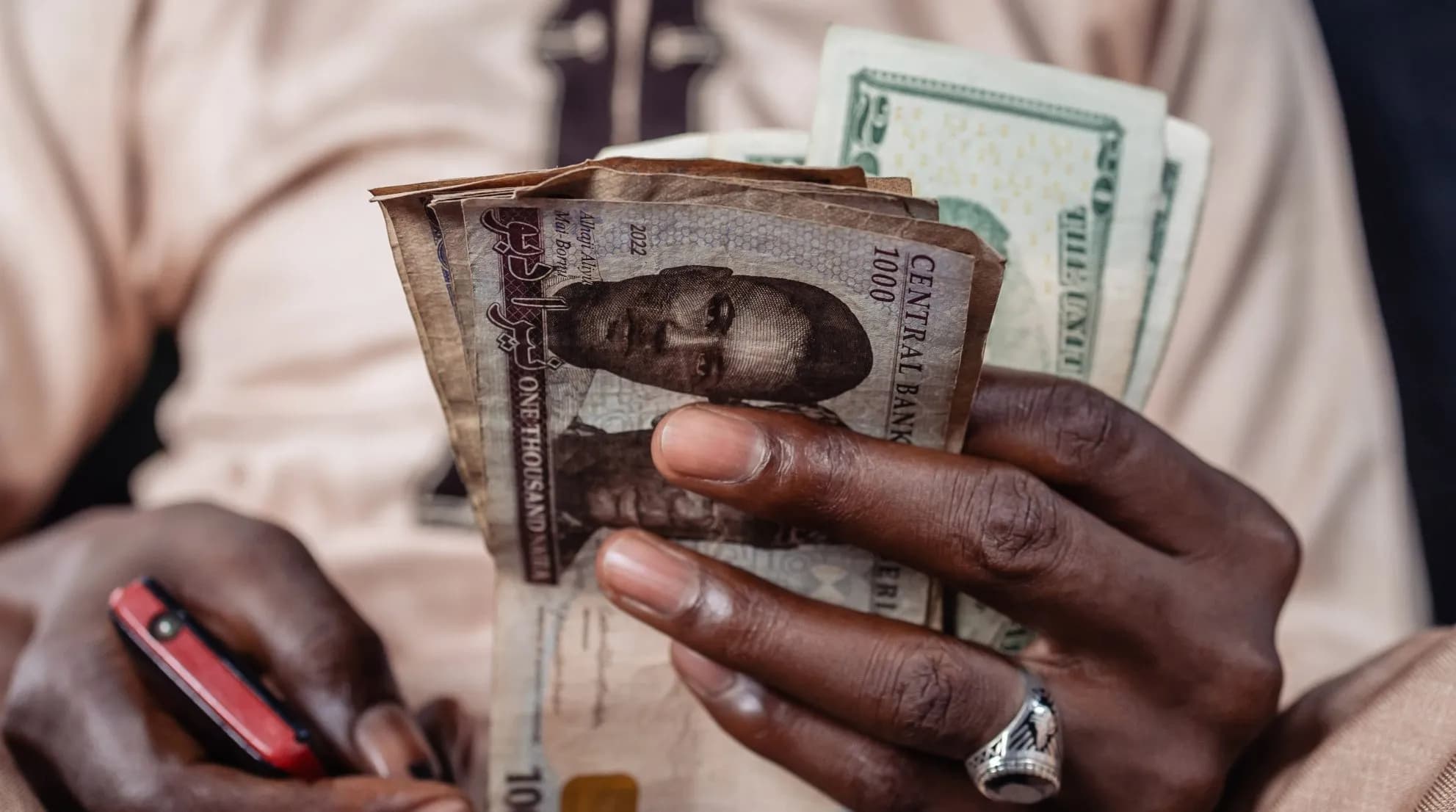
As of today, 16th May 2025, Nigeria’s forex landscape remains volatile as the exchange rates today show contrasting figures between the official market and the widely accessed parallel market. While the Central Bank of Nigeria (CBN) maintains stability through its benchmark pricing, real world transactions across major cities paint a different picture.
Official CBN Exchange Rates
The CBN released its most recent update through the Nigerian Foreign Exchange Market (NFEM). Rates are based on volume-weighted averages and apply to authorised FX dealers and formal banking channels.
- USD:
- Buy: ₦1,595.70
- Sell: ₦1,596.70
- GBP:
- Buy: ₦2,124.04
- Sell: ₦2,125.37
- EUR:
- Buy: ₦1,789.26
- Sell: ₦1,790.38
The exchange rates today indicate a slight appreciation of the naira compared to early May, when the USD sold for ₦1,608.64.
Parallel Market Exchange Rates
Outside the CBN’s formal framework, black market dealers across Lagos Island, Lekki, Wuse, and Alaba command higher prices, driven by unmet demand and restricted dollar supply.
- USD: ₦1,635.00
- GBP: ₦2,230.00
- EUR: ₦1,850.00
According to traders in Abuja’s Wuse Zone 4 and Lagos Island, the exchange rates today reflect growing FX demand as businesses scramble for liquidity amidst dwindling official allocation.
CBN Measures to Stabilise the Naira
To curb volatility and close the widening rate gap, the CBN recently injected $197.71 million into the official FX market. Additionally, it launched a non-resident Bank Verification Number (BVN) platform aimed at capturing diaspora inflows and formalising remittances.
Despite these moves, macroeconomic pressure continues. The U.S. Nigeria trade tension, renewed under President Donald Trump’s administration, adds another layer of uncertainty.
Impact on Nigerians and Importers
The wide gap in exchange rates today affects several sectors. Importers relying on official rates benefit from lower input costs, but most Nigerians transact at parallel rates, inflating market prices.
Rising parallel rates drive inflation and discourage investment, particularly in consumer goods and energy-related imports. Analysts predict that without stronger FX inflows, the naira may slide further potentially approaching ₦2,000 to the dollar in worst case scenarios.
What Nigerians Should Know
As of May 16, 2025, the duality in the forex market remains firmly in place. The exchange rates today suggest that while the CBN offers stability, most Nigerians still rely on parallel markets for accessibility and speed.
The exchange rates today reflect Nigeria’s ongoing FX balancing act. As long as supply shortages persist in the official market, the naira will remain under pressure in informal channels. Policymakers must act decisively to close the gap, attract foreign inflows, and boost public trust in regulated FX platforms.