

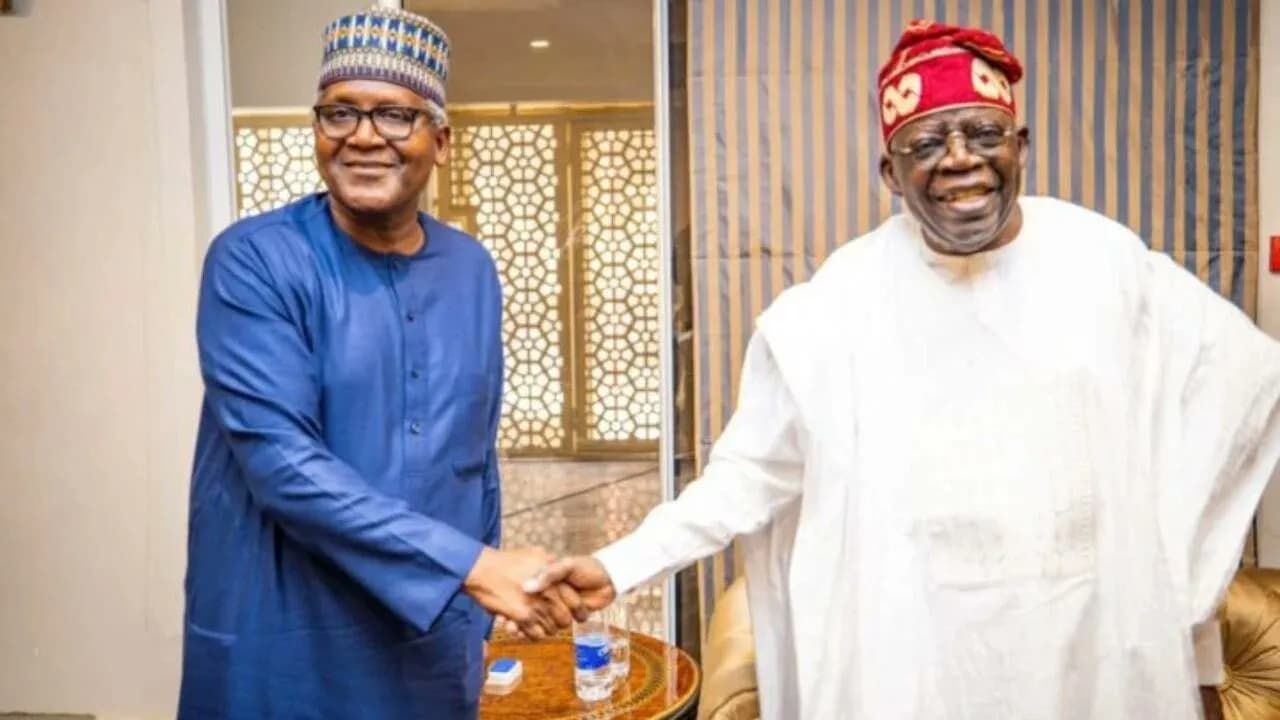
President Bola Ahmed Tinubu will tour the Dangote Petroleum Refinery on Thursday, June 6. A senior official close to the planning confirmed the development to Petroleumprice.ng. It will be the President’s first in-person look at the complex since he assumed office.
The 650,000-barrel-per-day plant in the Lekki Free Zone refines and distributes petrol, diesel, cooking gas, aviation fuel, and other byproducts. Engineers are now completing units needed for full petrol output. When production peaks, the refinery could sharply reduce Nigeria’s import bill and improve fuel security.
Earlier today, the refinery scaled down gantry loading and dispatch operations, deviating from its usual pace. A source familiar with the situation said the adjustment was part of preparations for the President’s arrival. Management expects normal operations to resume as soon as the presidential convoy departs.
On Tuesday, refinery owner Aliko Dangote attended a State House ceremony where President Tinubu honoured philanthropist Bill Gates with the Commander of the Federal Republic award. Observers viewed the interaction as a signal of close cooperation ahead of the refinery visit.
Industry Sees a Strategic Signal
Energy analysts have welcomed the President’s decision to tour the plant, noting that a hands-on inspection underscores federal support for domestic refining. Experts say that every litre refined locally could help ease pressure on the naira, as it reduces the need for dollars to import petrol.
The refinery ranks among the world’s largest single-train facilities. Once fully operational, it plans to export surplus petrol and diesel across West and Central Africa. Officials project thousands of direct and indirect jobs, along with new tax revenue for Lagos State and the federal treasury.
A Cornerstone of Nigeria’s Industrial Roadmap
The upcoming visit underscores the significance of the Dangote Refinery within Nigeria’s industrial roadmap. The project has been widely recognized for its potential to support economic diversification, reduce the country’s dependence on imported refined fuels, and strengthen foreign exchange stability by cutting dollar-denominated fuel imports.