

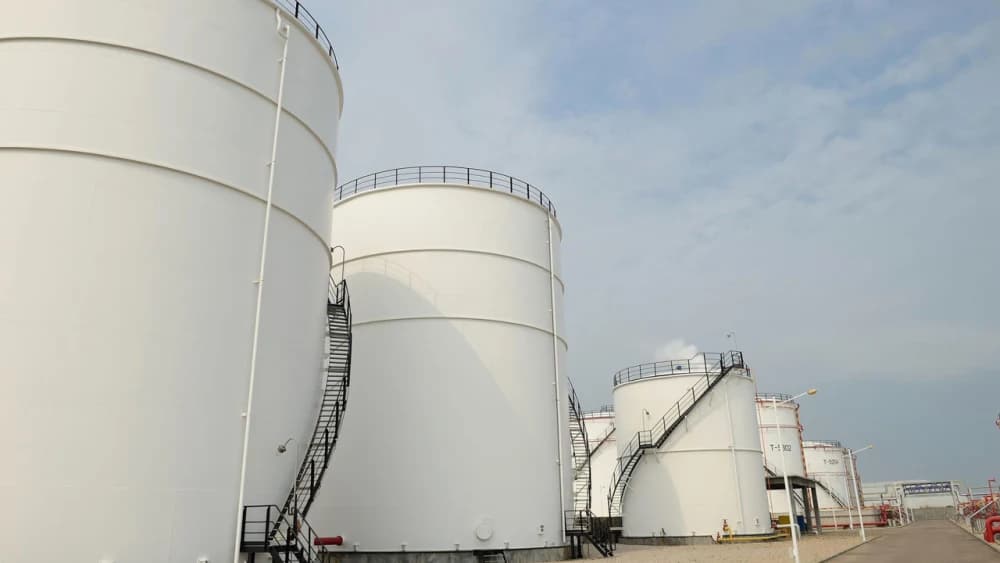
Nigeria’s downstream petroleum market in April showed a clear pricing hierarchy, with Lagos-based depots firmly establishing the national price floor for Premium Motor Spirit (PMS), while other regions traded at consistent premiums.
An analysis conducted by Petroleumprice.ng reveals that while early-month trading remained relatively stable across depots, a synchronized market-wide price adjustment emerged toward the end of April, pushing PMS levels significantly higher across all regions.
Top 10 Cheapest PMS Depots in April
Based strictly on the lowest recorded PMS prices and consistency within those bands, the following depots ranked as the cheapest across Nigeria:
- Aiteo — ₦1204
- Ascon — ₦1204
- Bono — ₦1204
- Nipco — ₦1204
- Matrix — ₦1220
- Danmarna — ₦1220
- Rain Oil — ₦1220
- Liquid Bulk — ₦1215
- Masters — ₦1217
- Wabeco — ₦1227
These depots consistently defined the lowest attainable PMS price levels within their respective regions throughout April.
Lagos
Lowest PMS Prices
Aiteo — ₦1204
Ascon — ₦1204
Bono — ₦1204
Nipco — ₦1204
Observed Trading Range:
₦1204–₦1210
Highest PMS Prices:
₦1290–₦1300 (Rain Oil, Techno Oil)
Price Dynamics and Market Behaviour
Lagos maintained the tightest and most competitive pricing structure nationwide, with multiple depots repeatedly converging at the ₦1204 floor. Data across April 8–24 shows that Aiteo, Ascon, Bono, and Nipco consistently traded within ₦1204–₦1208, often hitting identical price points on the same trading days.
For instance:
- Aiteo moved between ₦1211 → ₦1208 → ₦1205 → ₦1204
- Nipco consistently tracked ₦1213 → ₦1210 → ₦1206 → ₦1204
- Bono and Ascon showed similar downward convergence into the same floor band
This pattern reflects intense price competition, strong product availability, and efficient market alignment, making Lagos the definitive price discovery hub.
However, by April 29–30, a sharp shift occurred:
- Rain Oil rose to ₦1290–₦1300
- Techno Oil peaked at ₦1295
This divergence shows that while the floor remained anchored earlier, late-month supply or pricing adjustments triggered a rapid upward reset, expanding the spread significantly.
Warri
Lowest PMS Prices
Matrix — ₦1220
Danmarna — ₦1220
Rain Oil — ₦1220
Observed Trading Range:
₦1220–₦1235
Highest PMS Prices:
₦1325–₦1335 (Matrix, Nepal)
Price Dynamics and Market Behaviour
Warri operated within a structurally higher and less compressed pricing band compared to Lagos. The lowest consistent level across the region was ₦1220, with Matrix, Danmarna, and Rain Oil repeatedly trading within ₦1220–₦1235.
Dataset patterns show:
- Matrix declined steadily from ₦1235 → ₦1230 → ₦1225 → ₦1220
- Danmarna mirrored similar movement into the ₦1220 band
- Rain Oil followed a parallel trend within the same range
Unlike Lagos, prices did not converge tightly at a single point, indicating lower competitive intensity and wider price dispersion.
The most defining feature of the Warri market is its extreme late-month volatility:
- Matrix surged to ₦1335 (highest in the dataset)
- Nepal reached ₦1330
- Other depots moved above ₦1325
This confirms Warri as the most reactive and volatile PMS market, with the widest spread between floor and peak prices.
Port Harcourt
Lowest PMS Prices
Liquid Bulk — ₦1215
Masters — ₦1217
Observed Trading Range:
₦1215–₦1230
Highest PMS Prices:
₦1300–₦1330 (Masters, Liquid Bulk)
Price Dynamics and Market Behaviour
Port Harcourt demonstrated a balanced pricing structure, sitting between Lagos’ tight competition and Warri’s volatility.
The dataset shows:
- Liquid Bulk reached ₦1215 (lowest non-Lagos price)
- Masters consistently hovered between ₦1217–₦1230
Across April:
- Prices remained stable within ₦1215–₦1230
- Occasional dips to ₦1215 were not sustained across multiple depots
This indicates moderate competition with intermittent pricing pressure, but without the sustained clustering seen in Lagos.
By month-end:
- Masters rose to ₦1330
- Liquid Bulk reached ₦1325
This aligns with the broader national repricing trend, confirming external market drivers rather than localized supply shocks.
Calabar
Lowest PMS Prices
Wabeco — ₦1227
Observed Trading Range:
₦1227–₦1234
Highest PMS Prices:
₦1300–₦1320 (Sobaz, Soroman cluster)
Price Dynamics and Market Behaviour
Calabar recorded the highest minimum price among all regions, with Wabeco establishing the floor at ₦1227.
Dataset observations show:
- Prices consistently hovered between ₦1227–₦1230
- Very limited downward movement below this band
- Minimal variation between depots
This tight clustering reflects:
- Limited depot competition
- Supply constraints relative to Lagos and Port Harcourt
- Reduced pricing flexibility
By April 29–30:
- Prices rose to ₦1300–₦1320 across depots
Despite the increase, the structure remained tight, confirming a controlled but elevated pricing environment.
Market Timeline
April 8–24: Stable Trading Window
- Lagos: ₦1204–₦1215 (tight clustering)
- Warri: ₦1220–₦1235 (moderate spread)
- Port Harcourt: ₦1215–₦1230 (stable mid-range)
- Calabar: ₦1227–₦1230 (tight but elevated)
This period reflects a stable and coordinated downstream pricing regime.
April 26–30: Nationwide Price Adjustment
A decisive shift occurred across all regions:
- Lagos: ₦1204 → ₦1275–₦1281
- Warri: ₦1220 → ₦1325–₦1335
- Port Harcourt: ₦1215 → ₦1300–₦1330
- Calabar: ₦1227 → ₦1300–₦1320
This confirms a system-wide repricing event, not isolated depot-level adjustments.
Cross-Market Comparison
Lowest Market Price
₦1204 (Lagos floor across Aiteo, Ascon, Bono, and Nipco)
Highest Market Price
₦1335 (Matrix, Warri)
Price Spread
₦131 per litre
Market Structure Interpretation
The April 2026 PMS pricing pattern confirms a clear two-tier market structure:
- Lagos consistently functioned as the national pricing benchmark, setting the lowest trading levels
- Warri recorded the highest volatility and peak pricing levels
- Port Harcourt and Calabar operated within mid-to-upper pricing corridors, adjusting in line with national trends
The widening spread in the final week reflects a coordinated market-wide repricing, rather than isolated depot-level movements, with significant implications for marketers, depot operators, and downstream pricing strategies.