

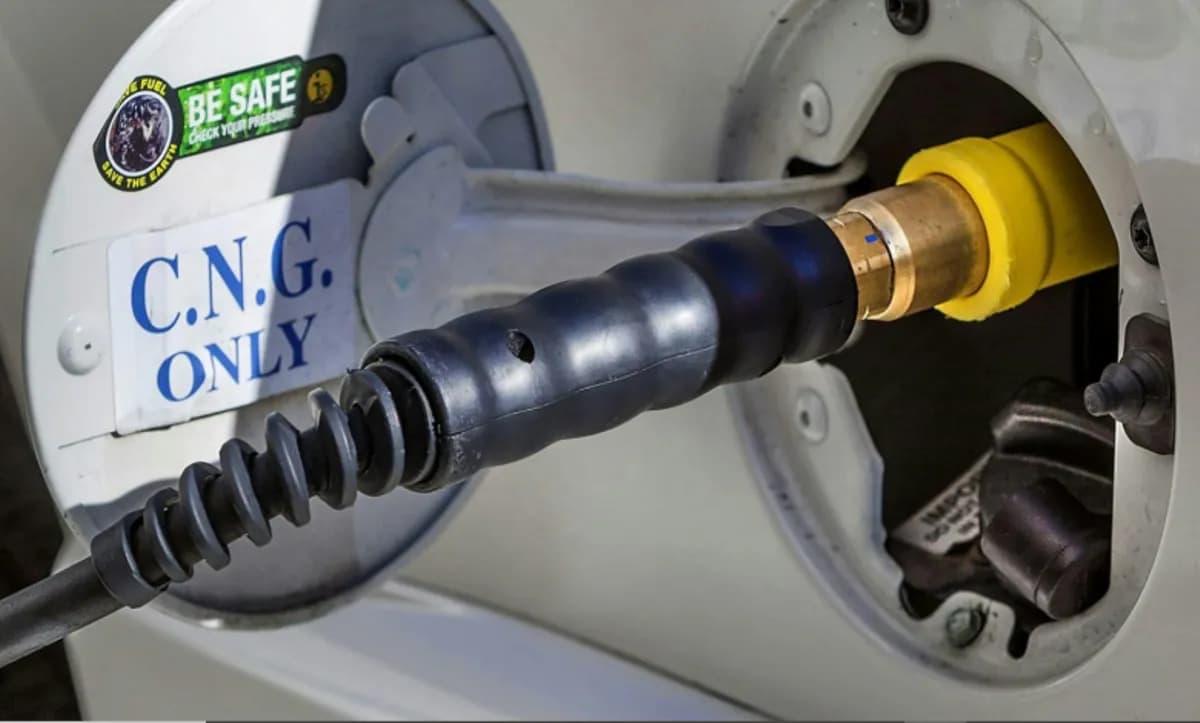
The Federal Government has raised the retail benchmark for Compressed Natural Gas (CNG) from ₦230 to ₦450 per Standard Cubic Metre (SCM), citing subsidy withdrawal. Market operators confirmed that while truck owners now pay the full ₦450/SCM, commercial and private drivers enjoy a partial subsidy at ₦380/SCM to stabilise public transport fares.
A senior official of the Presidential Compressed Natural Gas Initiative (PCNGI), who requested anonymity, said the pricing model was deliberate:
“The subsidy is targeted at commercial transporters to prevent a surge in passenger fares. Trucks carrying goods are excluded to align pricing closer to cost recovery.”
Market Reactions and Supply Constraints
The sharp upward review by NNPCL Gas Marketing Limited (NGML) has intensified concerns of affordability and supply. Long queues stretching over 1.5 kilometres in some refuelling stations are already discouraging vehicle owners who invested up to ₦1.5 million in petrol-to-CNG conversions.
Retailers warn that CNG prices could escalate further to ₦500–₦600/SCM if government subsidies are fully phased out. The rationale, according to insiders, is to attract private sector investment into CNG distribution infrastructure.
Infrastructure Expansion vs. Rising Prices
Despite the price hike, government officials emphasise that the PCNGI remains focused on scaling infrastructure. In the past year, Nigeria has expanded from 7 to 265 vehicle conversion centres, increased operational CNG stations from 20 to 60, with 175 more under development, and facilitated over 100,000 vehicle conversions.
Programme Director Michael Oluwagbemi recently defended the pace of implementation:
“Rome wasn’t built in a day. The fuel subsidy crisis was decades in the making. We are building a foundation that will endure.”
Risk of Market Reversal
Analysts caution that without reliable supply and pricing stability, Nigeria risks demand destruction in the nascent CNG market. If adoption stalls, consumers may revert to petrol, undermining the Federal Government’s clean fuel transition goals.
Energy economist Adeyemi Paul, a ride-hailing driver, voiced public frustration:
“The queues and rising costs make CNG less attractive. If nothing changes, many of us will return to petrol despite the initial investment.”
Policy Outlook
The subsidy rollback marks a significant policy shift in Nigeria’s downstream gas market, aligning CNG closer to cost-reflective pricing. However, balancing investment attractiveness with consumer affordability will determine the long-term success of the initiative.