

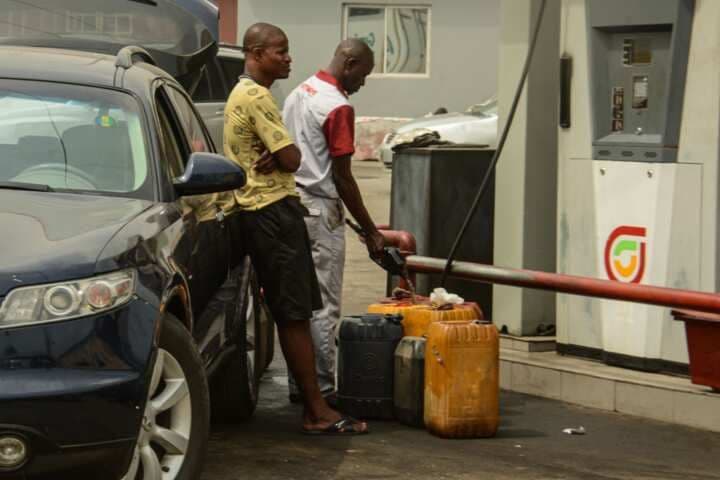
The Federal Government has announced a 10-point intervention package to cushion the impact of rising petrol prices, including a proposed ₦1,350 per litre ceiling on the ex-gantry or landing cost of petrol.
The Minister of Finance and Coordinating Minister of the Economy, Taiwo Oyedele, disclosed this on Thursday during a press briefing on petrol prices and the subsidy question in Abuja.
Oyedele said the proposed ceiling would be reviewed monthly and was designed to smoothen petrol-price volatility rather than reintroduce a blanket fuel subsidy.
Under the arrangement, refiners and importers would absorb the difference when costs rise above the ₦1,350 ceiling and recover the shortfall when crude prices or exchange rates become more favourable.
The government also announced a 30-day margin discount on petrol dispensed by the Nigerian National Petroleum Company Limited, with priority given to public transport operators nationwide.
Oyedele said the measure would allow petrol to be sold at cost during the 30-day period, stressing that it should not be regarded as a return to subsidy.
The government will also increase forward crude sales to domestic refineries as production rises, a move it said would free up committed crude supplies and reduce the exposure of local petrol prices to international market fluctuations.
Other measures announced include efforts to eliminate illegal road taxes and levies that increase transportation costs, increased cash transfers to vulnerable households and subsidised credit for small businesses and consumers.
The government also plans to accelerate the rollout of compressed natural gas vehicles, with federal and state governments expected to support deployment while transport operators are encouraged to pass CNG-related savings to passengers.
Oyedele said the government would consider an excess profit tax for operators found to be taking undue advantage of the situation across the energy value chain.
He said proceeds from the tax would be dedicated to cushioning the impact of higher fuel prices through transport support or vouchers for urban minimum-wage earners.
The government also plans to work with the National Assembly to introduce enhanced tax relief for low-income earners under the 2027 Finance Bill.
Other interventions include reducing unnecessary regulatory requirements and costs, establishing a National Strategic Fuel Reserve and improving traffic and logistics management in urban areas.
The proposed strategic reserve would allow refined products to be released into the market under published rules when global disruptions or hoarding threaten supply and price stability.
According to Oyedele, the reserve is intended to prevent artificial scarcity, deter market manipulation and reduce the impact of external supply shocks without fixing prices in a deregulated market.
The government also plans to deploy NIPOST address codes to improve logistics efficiency and reduce transportation costs.
The measures come amid rising international crude and refined-product prices, which have pushed petrol prices higher in Nigeria.
Oyedele maintained that the Federal Government would not return to a blanket fuel subsidy, arguing that the new interventions were targeted at protecting vulnerable households, businesses and transport users while limiting the broader economic impact of petrol-price volatility.
“To be perfectly clear, none of these measures restores a blanket subsidy,” Oyedele said, adding that each intervention was designed to support those most affected without exposing the wider economy to the long-term costs of subsidising petrol.