

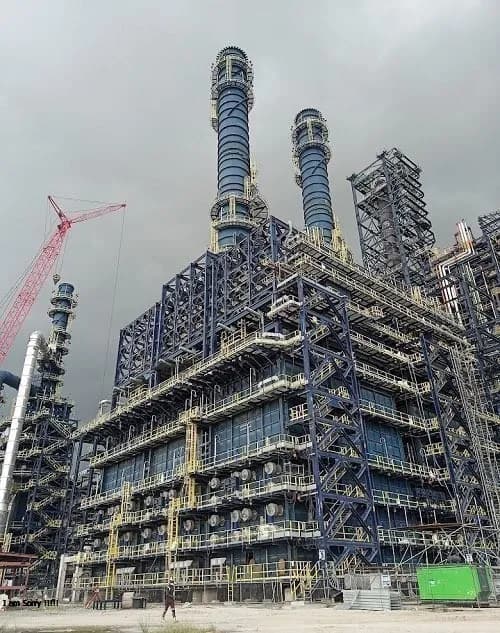
Africa’s oil refining industry is finally shaking off decades of underperformance. For years, the continent exported crude oil while importing petrol, diesel, and aviation fuel, a situation that left consumers exposed to price swings and supply shortages. Today, however, bold investments, massive projects, and operational upgrades are starting to change the narrative.
As of 2026, a small group of operational refineries are transforming Africa’s energy landscape. They are not only increasing fuel production but also strengthening energy security, reducing import dependency, and creating opportunities for regional trade. Here’s what you need to know about the continent’s top five refineries.
1. Dangote Refinery: Africa’s Behemoth
At the forefront is Dangote Petroleum Refinery, located in the Lekki Free Trade Zone, Lagos. With a jaw-dropping 650,000 barrels per day (bpd) capacity, it is Africa’s largest refinery and among the world’s biggest single-train facilities.
Why it matters:
- The refinery produces petrol, diesel, aviation fuel, and other refined products, enabling Nigeria to slash fuel imports and even export to neighbouring countries.
- Dangote processes about 50 million litres of petrol daily, reshaping domestic supply and stabilising prices.
- It delivers Euro-5 standard fuels, elevating Nigeria’s fuel quality to meet international standards.
Recent breakthroughs:
- Started exporting refined products to Europe and Dubai, marking a historic shift for Nigeria’s energy sector.
- Gas integration projects are supporting cleaner energy and fuelling industrial growth.
Looking ahead: With plans to eventually reach 1.4 million bpd, Dangote is setting a benchmark for private investment and regional energy leadership.
2. Skikda Refinery: Algeria’s Energy Pillar
In North Africa, Algeria’s Skikda Refinery continues to anchor the region’s energy supply. The facility processes roughly 350,000 bpd, balancing domestic needs and exports.
Key gains:
- Modern upgrades have improved efficiency and consistency, keeping Algeria a reliable fuel supplier.
- Exports to the Mediterranean and international markets cement Algeria’s influence in global energy trade.
Why it matters: Skikda demonstrates how long-standing infrastructure, when maintained and modernised, can secure energy for decades.
3. SAPREF: Southern Africa’s Fuel Backbone
Further south, SAPREF Refinery in Durban, South Africa, handles about 180,000 bpd, making it the largest in Southern Africa. Operated as a joint venture between BP and Shell, SAPREF reliably supplies transport fuels and other refined products to South Africa and neighbouring countries.
Recent developments:
- Operational upgrades have enhanced throughput, efficiency, and reliability.
- SAPREF remains crucial for regional energy stability, ensuring industries and households have steady access to fuel.
Impact: Its consistent supply underpins Southern Africa’s transport and industrial sectors, reinforcing energy security in a rapidly industrialising region.
4. Alexandria MIDOR: Egypt’s Strategic Refinery
Egypt’s Alexandria MIDOR Refinery now processes about 160,000 bpd, following targeted expansion and efficiency upgrades.
Current gains:
- Serves Egypt’s domestic market while also supporting regional fuel distribution.
- Reduces dependence on imported fuels, bolstering national energy security.
Significance: MIDOR highlights how strategic investment and modernisation can strengthen downstream sectors, support industrial growth, and improve fuel accessibility.
5. Cairo Mostorod: Strengthening Egypt’s Supply Chain
Finally, the Cairo Mostorod Refinery, run by the Egyptian Refining Company, adds 140,000 bpd to Egypt’s refining capacity.
Recent breakthroughs:
- Supplies consistent domestic fuel and supports regional networks.
- Produces higher-quality fuels in line with Egypt’s energy policies.
Why it matters: Paired with MIDOR, Mostorod ensures Egypt can reduce imports, enhance downstream resilience, and position itself as a regional energy hub.
Africa’s Refining Horizon
Collectively, these five refineries are reshaping Africa’s energy narrative. They are increasing production, raising fuel standards, expanding exports, and slowly reducing import dependency.
While legacy plants still require attention, Dangote’s milestone achievements, alongside consistent outputs from Algeria, South Africa, and Egypt, demonstrate that Africa can not only meet domestic demand but also compete globally.
In short, Africa’s refinery story is no longer just about crude exports. It is about turning resources into value, building regional influence, and achieving energy independence.