

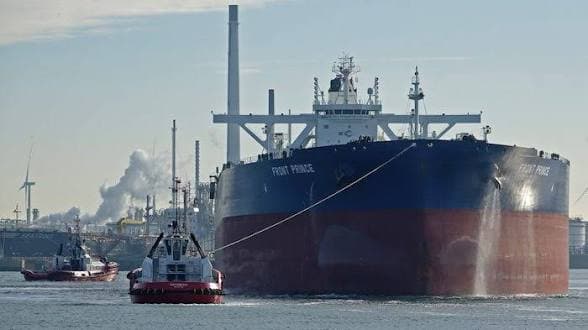
A sharp rise in international shipping costs is piling fresh pressure on fuel importers across West Africa, but Nigeria has largely been shielded from the immediate impact as the Dangote Petroleum Refinery continues to keep domestic petroleum prices below import parity, according to the latest market intelligence from S&P Global Commodity Insights.
The report showed that freight rates for clean petroleum products shipped from Northwest Europe to West Africa surged by about 25 per cent within weeks, increasing from $29.70 per metric tonne at the end of June to $37.12 per metric tonne. The increase reflects a tightening global shipping market as vessels were redirected to alternative trading routes, significantly raising the landed cost of imported fuel across the region.
The higher freight charges have coincided with firmer international oil prices and tighter global fuel supplies, creating additional cost pressures for importers supplying Nigeria and neighbouring West African countries. However, traders told S&P that Nigeria's downstream market remains relatively protected because Dangote Refinery has continued to sell petroleum products at prices that are lower than the cost of importing equivalent cargoes.
According to the report, importers are increasingly finding it difficult to compete with the refinery's pricing. One trader said petrol prices in Nigeria are effectively being "capped by Dangote prices," leaving importers unable to transfer rising international and freight costs to buyers without pricing themselves out of the market.
Another market participant noted that while petrol cargoes meeting Ghana's fuel specifications are attracting stronger premiums, Nigerian-specification cargoes remain commercially unattractive because Dangote's pricing has effectively closed the import arbitrage. "Lomé values have risen above Dangote sales prices, which has shut the arbitrage," the trader was quoted as saying.
S&P further noted that the pressure extends beyond petrol, with diesel markets also tightening following reduced supplies of Russian Black Sea cargoes. The decline in available volumes has pushed up prices for high-sulphur gasoil across West Africa, further increasing the cost of importing refined petroleum products into the region.
Despite mounting international cost pressures, Dangote Refinery has continued to moderate domestic fuel prices. However, the effect is already becoming visible across Nigeria's downstream market. Petroleumprice.ng market intelligence indicates that private depots are beginning to adjust petrol prices upwards across major supply hubs. As of Thursday, Pinnacle and Ardova depots in Lagos were selling PMS at ₦1,200 per litre, while Honeywell sold at ₦1,185 per litre. In Port Harcourt, Liquid Bulk and Sigmund both priced PMS at ₦1,230 per litre. In Warri, Parker sold at ₦1,200 per litre, while Prudent quoted ₦1,215 per litre. Jenny Depot in Calabar also sold PMS at ₦1,200 per litre. The widespread adjustments suggest that marketers are increasingly factoring elevated freight charges, tighter international fuel supplies and rising replacement costs into their ex-depot prices, even as Dangote Refinery continues to offer products below import parity.
The refinery has consistently maintained that its pricing reflects the actual cost of crude procurement under long-term commercial supply contracts rather than daily fluctuations in Brent crude prices, noting that crude oil is typically acquired weeks or months before refining.
Analysts said the latest S&P assessment reinforces the growing economic advantage of local refining, arguing that without Dangote's refining capacity, Nigeria would have been significantly more exposed to rising international oil prices, escalating freight costs and tighter global product supplies. They added that the refinery's ability to cushion domestic prices despite worsening global market conditions is increasingly positioning it as the benchmark for petroleum pricing across West Africa while strengthening Nigeria's energy security and reducing dependence on imported fuels.