

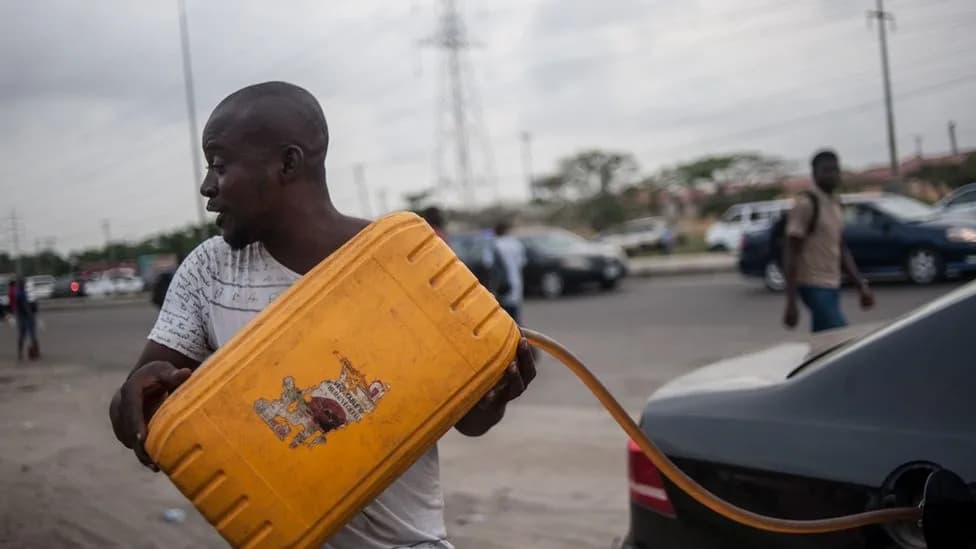
Nigeria is grappling with severe fuel shortages that have exacerbated black market operations, triggering a sharp rise in fuel prices both locally and across borders. The country’s decision to remove fuel subsidies in mid-2023 has had profound economic consequences, leading to soaring prices at official fuel stations and a surge in demand for contraband fuel in the informal market.
Before the subsidy was lifted, Nigeria’s black market fuel trade flourished, with smuggled petrol being sold at much lower prices than official retail rates, often making it a key resource for consumers, especially in bordering countries. The subsidy removal, however, led to a steep increase in fuel costs, with official petrol prices reaching levels that were unsustainable for many Nigerians. As a result, the black market became an essential lifeline, though at a significantly higher cost. For instance, petrol in some black market stalls is now selling at N2,500 per litre, a price far above the official rate.
This situation is creating further economic strain, particularly in urban areas where transport services are heavily dependent on affordable fuel. Increased transportation costs are fueling inflation, making basic goods and services more expensive for Nigerians. In addition, long queues at official stations have become a regular feature, leaving many Nigerians to turn to the informal market, often at inflated prices.
The black market’s resilience in the face of these challenges highlights the systemic issues within Nigeria’s fuel distribution system. Despite efforts by the Nigerian National Petroleum Corporation (NNPC) to import more fuel and stabilize supply, the country’s fuel distribution remains unreliable, with persistent supply disruptions leading to widespread fuel scarcity. This has compounded the financial strain on Nigerians, as both the cost of fuel and everyday expenses continue to rise.
The future of Nigeria’s black market fuel trade is uncertain, as fluctuating prices, ongoing shortages, and inflationary pressures continue to shape the economic landscape. Without long-term structural reforms in fuel pricing and distribution, the black market is likely to remain a critical, albeit costly, source of fuel for many Nigerians