

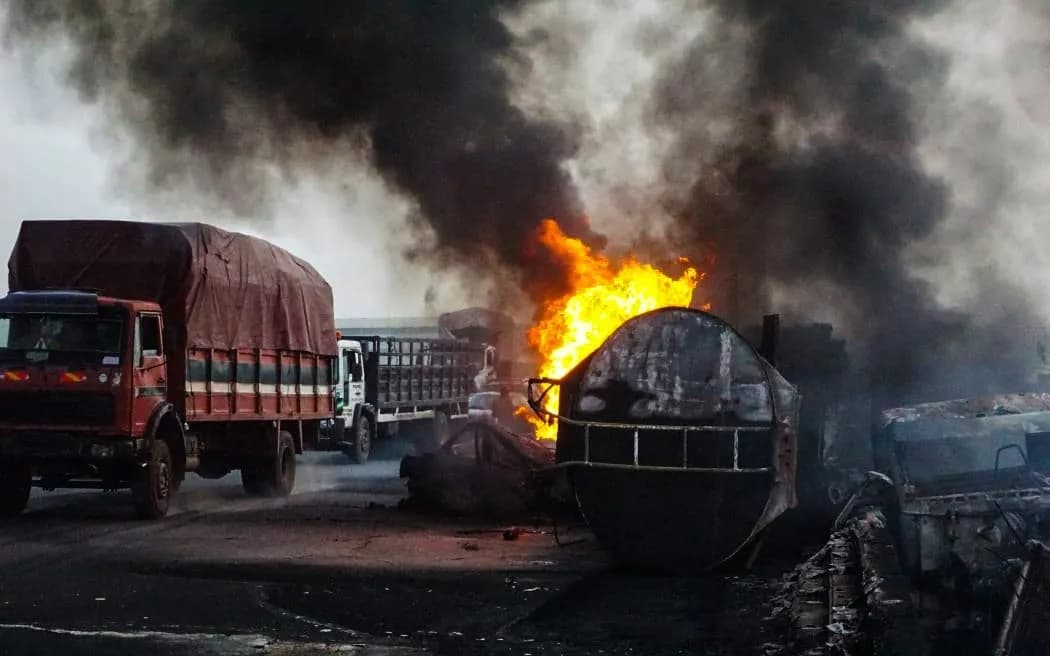
Nigeria has witnessed fuel tanker explosions throughout 2024, resulting in widespread fatalities, injuries, and extensive property damage. These incidents are part of a growing trend that calls for better regulation of fuel distribution, handling and safety measures on Nigerian roads.
Data from the Federal Road Safety Corps (FRSC) and other emergency agencies indicate a total of 47 tanker explosions across the country this year, with over 330 deaths and 354 injuries. These figures highlight the devastating human toll of fuel tanker accidents, which have become more frequent due to factors such as human error, poor road conditions, and fuel scooping.
Here is a breakdown of fatalities and injuries by state:
| State | Explosions | Deaths | Injuries |
|---|---|---|---|
| Lagos | 9 | 45 | 62 |
| Ogun | 6 | 32 | 44 |
| Rivers | 5 | 28 | 39 |
| Edo | 4 | 25 | 36 |
| Kaduna | 5 | 22 | 33 |
| Jigawa | 1 | 105 | 50 |
| Delta | 3 | 18 | 27 |
| Anambra | 4 | 21 | 29 |
| Niger | 3 | 15 | 19 |
| Other States (12+) | 7 | 19 | 15 |
One of the most tragic incidents occurred on 16 October 2024, in Majiya town, Jigawa State, where over 100 people died and 50 were injured following a fuel tanker explosion. The tanker had overturned, and despite warnings from authorities, local residents gathered to scoop fuel. The explosion left a devastating impact on the community, with most of the victims receiving a mass burial due to the high number of casualties.
This incident alone accounted for a significant portion of the overall fatalities recorded in 2024, making Jigawa the state with the highest single explosion death toll this year.
Analysis of Causes
The leading causes of these explosions remain consistent across states:
- Human error, particularly reckless driving, accounted for 60% of incidents. Many accidents were caused by tanker drivers over speeding or losing control of their vehicles.
- Mechanical failures such as brake malfunctions and tyre bursts contributed to 23% of tanker explosions.
- Fuel scooping where locals collect petrol from overturned tankers was responsible for 17% of deaths. Despite public awareness campaigns, this dangerous practice continues in rural and underdeveloped areas, with Jigawa being the most recent and deadly example.
Geographic Distribution
The highest number of incidents occurred in Lagos State, with 9 explosions and 45 deaths. Lagos’s congested highways, such as the Lagos-Ibadan Expressway, are notorious for heavy tanker traffic, contributing to frequent accidents.
In Jigawa, the explosion in Majiya town brought the state into sharp focus due to the sheer scale of the tragedy. Ogun, another high-risk state, saw 6 explosions leading to 32 deaths, largely because of its position as a transit route for fuel distribution from Lagos to other parts of the country.
The 2024 fuel tanker explosions in Nigeria have underscored the critical need for stronger safety protocols, better maintenance of tanker fleets, and intensified public awareness. With over 330 deaths and 354 injuries, the scale of human loss is staggering. Going forward, the federal government must take urgent action to improve road conditions, regulate fuel transport, and ensure that incidents like the one in Jigawa never happen again.