

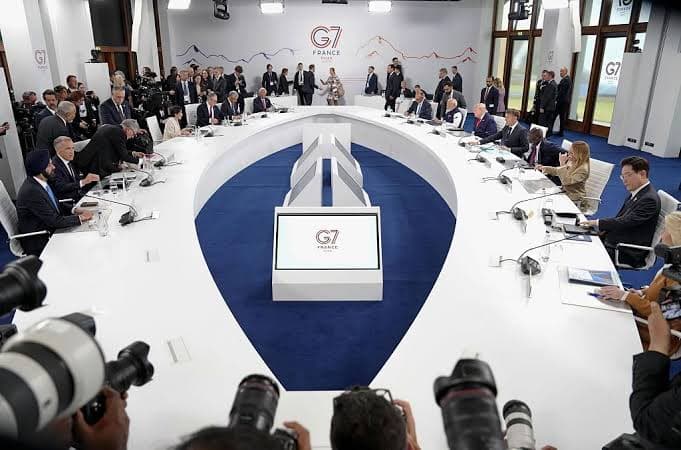
The Group of Seven (G7) countries have agreed to release 100 million barrels of crude oil and petroleum products from emergency reserves through the International Energy Agency (IEA), as governments move to ease pressure on global fuel markets following supply disruptions linked to the Iran war.
The coordinated release will begin immediately and run for four months, with the G7 saying a substantial volume of diesel will be released within the first 20 days. However, the joint statement did not provide a detailed breakdown of how much would come from crude, diesel or other products, nor the exact contribution from individual countries.
The agreement follows pressure from the United States on European countries to draw down emergency diesel inventories. The Trump administration had warned that failure to release stocks could result in restrictions on US diesel exports, a measure that could further tighten supplies in Europe, which has increased its dependence on US diesel imports.
For the oil market, the timing is significant because diesel supply has come under particular pressure. Middle East disruptions, Russia's diesel export restrictions and China's suspension of refined-product exports have all added to concerns over the availability of middle distillates. Reuters reported that US diesel futures fell 3.25% to $4.49 a gallon, while European benchmark diesel futures dropped about $83 per metric tonne, or 5.75%, following reports of the stock-release discussions.
The G7 also pledged to refrain from imposing energy-product export restrictions among its members. That commitment is relevant to the diesel market because it reduces the immediate prospect of additional restrictions on cross-border supplies at a time when refiners and traders are already managing tighter product availability.
The new release builds on the 400 million-barrel emergency stock agreement announced in March and coordinated by the IEA. According to Reuters, IEA Executive Director Fatih Birol said members had released about two-thirds of that earlier commitment, meaning part of the latest 100 million barrels could relate to outstanding commitments from the March arrangement.
For Nigeria's downstream market, the development could become relevant through the international pricing chain. Diesel and crude benchmarks influence the economics of imported petroleum products, while freight, insurance, exchange rates and other landing-cost components determine the final import-parity position. A sustained increase in available diesel supplies could therefore ease some international product-market pressure, although the effect on Nigerian pump or depot prices would depend on how global benchmarks and other landing-cost variables respond.
The development also comes as the United States seeks to increase available fuel supply. On September 29, Washington announced that it would offer to loan up to 40 million barrels from its Strategic Petroleum Reserve as the final US contribution to the broader IEA-coordinated emergency release.
The G7 decision therefore adds another significant volume of emergency supply to a market already responding to geopolitical disruption. Its immediate impact will depend not only on the headline 100 million barrels, but on the speed of the releases, the proportion allocated to diesel and the ability of refiners and trading markets to translate the additional supply into physical product availability.
For Nigerian marketers and other downstream operators, the key variables to watch are international diesel benchmarks, crude prices, shipping costs and product availability. These will determine whether the additional emergency stocks translate into a meaningful reduction in import and replacement costs in the coming weeks.