

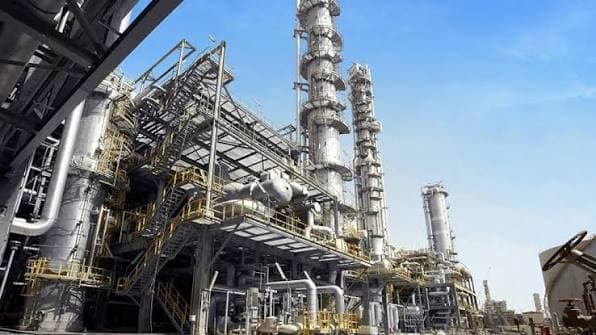
Ghana has directed oil producers operating in the country to prioritise domestic crude supply to the state-owned Tema Oil Refinery (TOR), a move aimed at boosting local refining capacity and reducing dependence on imported petroleum products.
The decision follows a directive from President John Mahama requiring producers, including Ghana National Petroleum Corporation, Eni, Tullow Oil, Vitol, Kosmos Energy and PetroSA, to make crude available for domestic refining.
Chief Executive of Tema Oil Refinery, Edmond Kombat, said the refinery plans to process about 33,000 barrels per day of locally produced crude from July as part of efforts to increase utilisation rates and strengthen Ghana’s refining sector.
The development comes as Ghana seeks to maximise value from its upstream petroleum resources and improve fuel supply security through increased domestic processing.
According to data from Ghana’s upstream regulator, production from the Jubilee, Sankofa and TEN oilfields averaged about 114,000 barrels per day during the first quarter of 2026, providing a substantial domestic feedstock base for the country’s refining industry.
The policy shift also coincides with growing activity at Ghana’s second major refinery, the privately owned Sentuo Oil Refinery, which recently received its first cargo of locally produced Jubilee crude.
Industry sources indicate that Sentuo is currently operating consistently and supplying roughly 30 per cent of Ghana’s domestic fuel demand. The refinery is also pursuing a second-phase expansion that would increase its processing capacity from 40,000 barrels per day to 100,000 barrels per day, with a focus on supporting regional fuel exports.
Ghana’s total refined petroleum product demand is estimated at approximately 135,000 barrels per day.
At Tema, operations have continued to improve following the restart of its crude distillation unit in December after a four-year shutdown. The facility was subsequently taken offline to install a new furnace designed to increase throughput to its nameplate capacity of 45,000 barrels per day.
The refinery recently received a one-million-barrel cargo of Nigerian crude under a tolling arrangement, supporting efforts to restore stable refining operations.
According to Kombat, the crude distillation unit is currently processing around 28,000 barrels per day and is expected to reach its full 45,000 barrels-per-day capacity before the end of June.
However, the refinery’s 14,000 barrels-per-day gasoline-producing Residue Fluid Catalytic Cracking (RFCC) unit remains offline as maintenance and rehabilitation work continue.
The turnaround programme includes repairs to critical components such as the catalyst cooler, wet gas compressor and flue gas steam generator. Refinery management now expects the unit to return to service by the end of July.
To support the restart programme, technical teams from the refinery have engaged equipment suppliers in Japan regarding maintenance and upgrade requirements, while discussions have also been held with Chinese suppliers of gasoline blending components, including methyl tert-butyl ether (MTBE).
Work is also progressing on the refinery’s catalytic reforming unit as part of broader efforts to improve product yields and operational efficiency.
The gradual recovery in domestic refining capacity has already begun to influence Ghana’s fuel import requirements. Market data shows gasoline imports have declined to about 42,000 barrels per day so far in 2026, compared with approximately 50,000 barrels per day in 2025.
Beyond existing refinery upgrades, Ghana is advancing longer-term plans to expand its refining footprint.
The Petroleum Hub Development Corporation is pursuing a proposed 900,000 barrels-per-day refining and petrochemical complex in Jomoro, while a separate feasibility study is underway for a new state-owned refinery with a planned processing capacity of 100,000 barrels per day.
The initiatives form part of Ghana’s broader strategy to strengthen domestic refining, improve energy security and position itself as a regional petroleum processing hub in West Africa.