

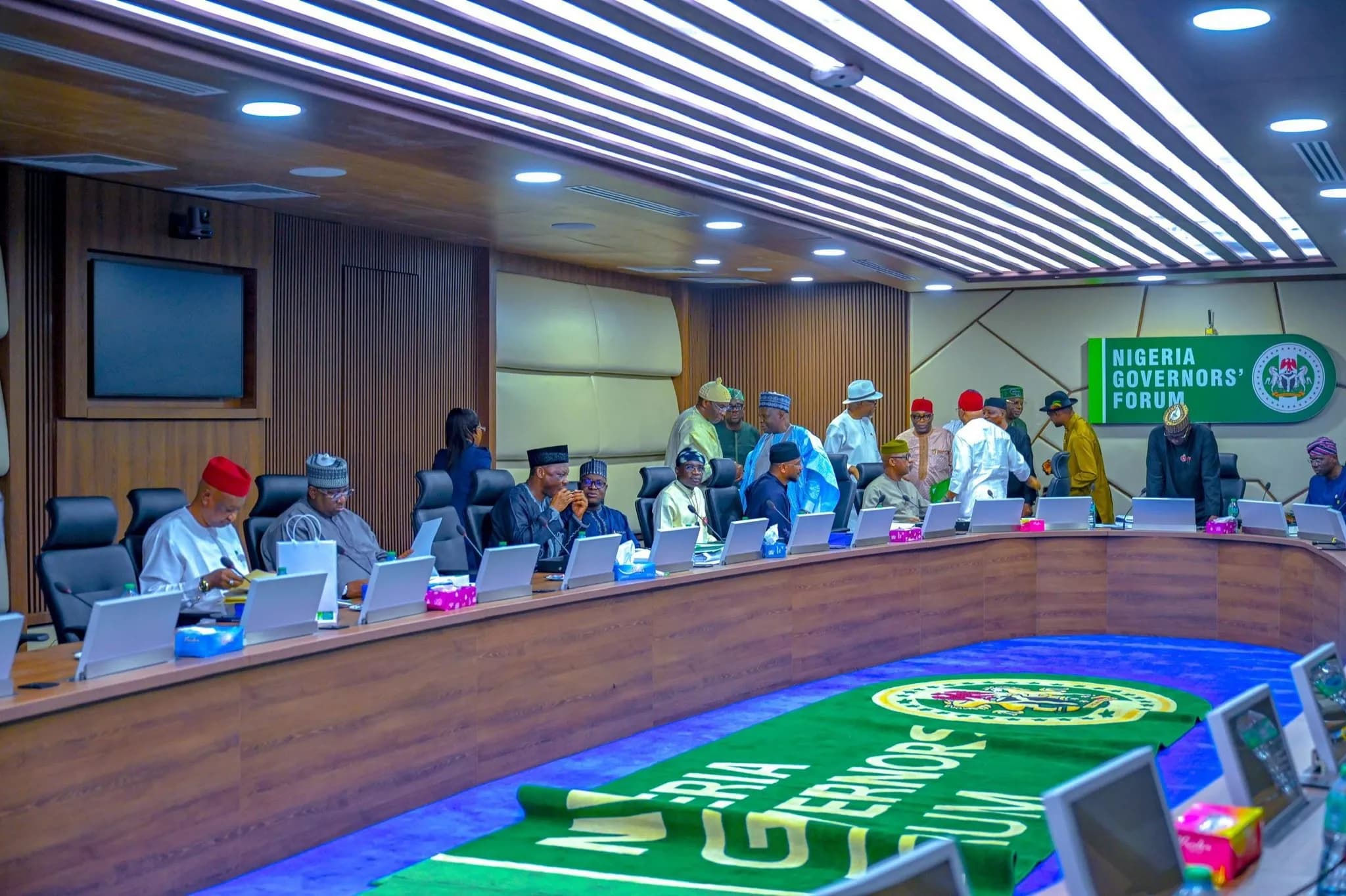
State governors have demanded documentary proof of President Bola Tinubu’s reported approval to write off $1.42 billion and ₦5.57 trillion in legacy debts allegedly owed by the Nigerian National Petroleum Company Limited (NNPC Ltd.) to the Federation Account.
They raised the issue during the January 2026 post-mortem meeting of the Federation Account Allocation Committee (FAAC). At the meeting, state representatives pressed for full disclosure of the figures and the legal basis for the write-off.
The development comes as NNPCL seeks more time to comply with a FAAC-approved reporting template on the alleged $42.37 billion under-remittance to the Federation Account.
Dispute Over Debt Write-Off and Revenue Remittance
Documents from the FAAC meeting show that the Nigerian Upstream Petroleum Regulatory Commission (NUPRC) informed the committee that the presidency approved the debt netting-off. However, FAAC’s sub-committee asked the regulator to present the formal approval letter.
NUPRC listed $1,421,727,723 and ₦5,573,895,769,388.45 as NNPCL liabilities cleared through presidential consent. The sub-committee immediately requested documentary evidence. In response, NUPRC asked for more time, citing a recent leadership change at the commission.
Earlier, the regulator announced that President Tinubu authorised the cancellation after a reconciliation exercise with key stakeholders. The review covered NNPCL’s royalty and lifting obligations up to December 31, 2024.
At the October 2025 FAAC meeting, NUPRC had reported liabilities of $1.48 billion and ₦6.33 trillion. After the presidential directive, the commission cleared $1.42 billion and ₦5.57 trillion and updated its accounting records.
Meanwhile, FAAC continues to examine claims that NNPCL failed to remit $42.3 billion. Although the company denies the allegation, FAAC issued a standard template for NNPCL to disclose its revenues and liabilities.
NNPCL later requested additional time to complete the template. FAAC approved the request. NNPCL and Periscope Consultants agreed to reconcile their figures before submitting a final report. The reconciliation process is still underway.
FAAC Orders Physical Verification of Frontier Projects
Governors also called for physical inspection of projects funded through the Frontier Exploration Fund (FEF). An ad-hoc FAAC committee raised concerns after reviewing submissions from NNPCL, the Central Bank of Nigeria (CBN), and NUPRC.
The committee prepared an interim report but insisted on site visits to confirm project execution and ensure transparency. FAAC then directed the committee and NNPCL to agree on inspection plans. That process remains ongoing.
Recent reviews show that allocations to frontier exploration exceeded ₦400 billion within about 10 months.
The Petroleum Industry Act (PIA) established the Frontier Exploration Fund to support oil and gas exploration in underdeveloped basins, including Chad, Sokoto, Anambra, and Benue.
Under the law, NNPCL contributes 30 per cent of its profit from oil and gas production-sharing, profit-sharing, and risk-service contracts. The fund also receives portions of rents from petroleum licences and leases.
FAAC officials say the ongoing review aims to strengthen accountability and ensure accurate remittance of oil revenues to the Federation Account.