

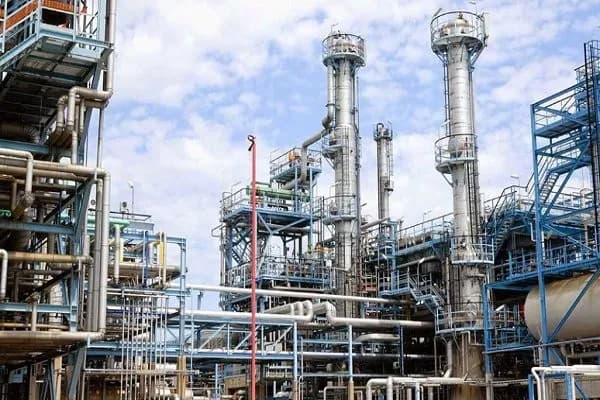
Nigeria’s government-owned refineries remain a symbol of missed opportunities and persistent inefficiency. Despite decades of rehabilitation attempts and repeated public assurances, these assets continue to drain national resources while offering minimal contribution to the domestic fuel supply.
The latest development emerged in late May 2025 when the Nigerian National Petroleum Company Limited (NNPC Ltd) announced a fresh shutdown of the old Port Harcourt Refinery in Eleme, Rivers State, for “scheduled maintenance.” The announcement raised eyebrows, especially as it followed just six months after the facility’s highly publicised restart in November 2024. At the time, many analysts doubted the operational status of the plant, questioning whether the relaunch was more a political stunt than a technical success.
Those doubts have now resurfaced. Despite over $1.5 billion reportedly spent on reviving the facility, the refinery has been taken offline once again—this time for maintenance and sustainability testing. Industry norms typically schedule such overhauls years after commissioning, not within months. Meanwhile, reports indicate that the plant had been producing primarily diesel (AGO), with no clear evidence of petrol output, suggesting the refinery never truly became operational.
Billions Spent, Little to Show
This recurring cycle of shutdowns and hollow restarts has become all too familiar. Nigeria owns four state-run refineries with a combined nameplate capacity of 445,000 barrels per day (bpd), yet imports most of its refined fuel. The Warri Refinery, which boasts a 125,000 bpd capacity, briefly came online in December 2024—only to go dark again weeks later.
Despite these underwhelming results, public spending has continued. Official figures reveal that the government approved $1.55 billion for the Port Harcourt rehabilitation, $740,669 for Kaduna, and $656,963 for Warri. Yet, these investments have failed to yield sustained output or economic return.
The core issue lies in the repeated failures of the Turn Around Maintenance (TAM) strategy, which has consumed enormous public funds over decades without solving fundamental operational problems. Each cycle ends in the same outcome: more money spent, infrastructure still idle, and no domestic fuel relief.
A Missed Opportunity—and a Stark Contrast
One of Nigeria’s pivotal missteps came in 2007 when the administration of then-President Olusegun Obasanjo approved the sale of a 51% stake in the Port Harcourt refineries to the Bluestar Consortium for $561 million. However, the deal was reversed under President Umaru Musa Yar’Adua over concerns about national interest. In retrospect, that reversal now seems costly.
Over the past 30 years, Nigeria has reportedly spent more than $20 billion attempting to revive state-owned refineries. That’s nearly equivalent to the estimated $20 billion used by private investor Aliko Dangote to build a brand-new 650,000 bpd refinery from scratch. The disparity between public and private sector outcomes is difficult to ignore.
Time for a Market-Driven Future
If the federal government genuinely aims to ensure sustainable refining capacity, it must shift from the current model of state ownership toward full privatisation. Examples already exist to support this pivot.
The turnaround of Eleme Petrochemicals, once an NNPC subsidiary, illustrates what private capital can achieve. After selling 75% of its stake to the Indorama Group in 2006, the plant underwent a $130 million overhaul and returned to profit within months. By its first year, the company distributed ₦9.5 billion in dividends.
Another success story is Nigeria LNG Limited, where NNPC owns 49% alongside private partners Shell, Total, and Eni. Since operations began in 1999, the joint venture has consistently generated revenue, paid taxes, and expanded capacity to an expected 30 million metric tonnes per annum.
The same private-led efficiency could transform the refining landscape. Privatising state-owned refineries, while promoting investment in new players like the 200,000 bpd BUA Refinery and 100,000 bpd Midoil project, would foster competition and break Dangote’s emerging monopoly.
Global Lessons for a Local Crisis
Across the globe, privately managed refining sectors dominate. In the U.S., none of its 132 refineries is government-owned, yet they collectively meet one of the world’s highest fuel demands. Countries such as the UK, Canada, and Singapore, whose refining output exceeds their crude production by a large margin, demonstrate what’s possible with the right incentives and frameworks.
President Bola Tinubu’s administration has an opportunity to pivot. By privatising these assets transparently and attracting only technically credible investors, Nigeria can rewrite its refining narrative. The lessons of past failed asset sales must be heeded to avoid new rounds of asset stripping or political patronage.
Moreover, NNPC Ltd itself must evolve. Listing it on the Nigerian Stock Exchange could instill corporate discipline, draw capital, and modernise its operations. Global state-owned oil giants such as Saudi Aramco, Brazil’s Petrobras, and Malaysia’s Petronas have shown that hybrid ownership models work when coupled with accountability.
With a reported valuation of $300 billion as of December 2024, an NNPC IPO could catalyse structural change, raising funds for infrastructure, reducing public debt, and improving transparency.
A Call for Bold Action
Nigeria can no longer afford to maintain refineries that function as cost centres rather than productive assets. If the country is to achieve true energy security, it must reimagine the refining sector, anchored in private investment, competitive efficiency, and policy consistency.
The Dangote Refinery has reset expectations. Now, the challenge is to build a diversified ecosystem that supports multiple players and guarantees sustainable supply, not just for Nigeria, but for the entire West African subregion.