

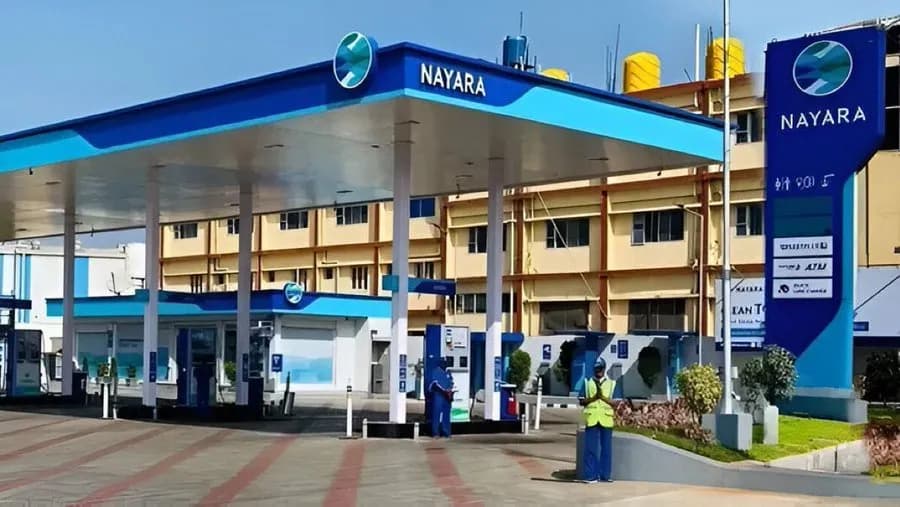
Saudi Aramco and Iraq’s State Oil Marketing Organization (SOMO) have stopped crude supplies to Nayara Energy’s Vadinar refinery in India. The suspension follows the European Union’s 18th sanctions package on Russia, adopted in August, which targeted companies tied to Moscow’s oil exports.
Refinery Operations Hit
Nayara Energy, in which Russia’s Rosneft owns a 49.13% stake, has suspended operations. Reuters reported that the refinery now runs at 70–80% capacity, processing almost exclusively Russian crude from Rosneft. LSEG data confirms that alternative suppliers sharply reduced deliveries after the sanctions.
The Vadinar facility can process 400,000 barrels per day and contributes about 8% of India’s refining output. As the country’s second-largest refinery, it faces limited export opportunities under the EU ban and has shifted its focus to domestic demand.
Focus on Local Fuel Demand
From the outset, Nayara Energy aimed at India’s domestic fuel market rather than exports. Its only notable foreign sales were jet fuel shipments to the UK, which remains outside EU sanctions. Those exports continue, but they are too small to offset lost crude supplies.
Bloomberg reported last month that Nayara’s crude imports could drop to 94,000 barrels per day—the lowest since the plant opened. This represents a steep decline from the 366,000 barrels per day it averaged in the third quarter of 2024.
EU’s Expansive Sanctions
The EU’s latest package widened restrictions on Russian oil trade. The measures impose asset freezes, travel bans, and bans on the provision of resources. Brussels also blacklisted operators of Russia’s “shadow fleet,” crude traders, and Nayara Energy itself, citing its role as a major outlet for Rosneft’s oil.