

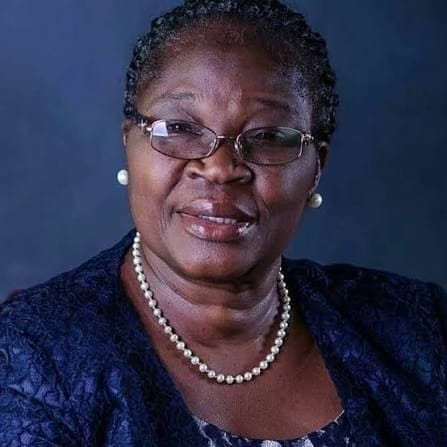
The Group Managing Director of Bovas and Company Limited and third Chancellor of Osun State University, Mrs Victoria Adewola Samson, has described her path from childhood domestic work, which delayed her start in school until the age of nine, to leading an integrated downstream energy group as one "from mud to grace". She spoke at the third Founders Fireside Forum, held during the 20th OTL Africa Downstream Energy Week.
Many people know the Bovas name, but not how it originated or why everyone calls you Mama Bovas.
Bovas combines my husband's initials and mine. A friend of ours and a lawyer friend visited us and were discussing a trip to Abuja to register a company. My husband asked if they could register one for us too, and they asked for the name and particulars. It came to my mind that we could use our initials, B-O-V-A-S, for the future of the children and everybody else. I told my husband, and he agreed. We also added "and Company" so that anybody who wants to join us in future can be accommodated. People call me Mama because they respect my age.
You started the company as a business partnership and as husband and wife. How did you manage both without one destroying the other?
Between myself and my husband, we agreed not to carry boardroom solutions to the bedroom. Decision-making in the bedroom is different from decision-making in the boardroom. With that understanding, one does not affect the other. We keep boardroom matters at work and bedroom matters where they belong.
Take us back to Victoria before Bovas. What was she like, and what did you dream about?
I started life at a very tender age. I left my parents' home when I was six years old. My father was a polygamous man and my mother was the last wife. A family member had a child and asked that I come along to take care of the child, play with the child and go to school.
I was happy because I thought I would go to school and play with their child. When I got there, the wife called me and said I could not go to school because someone had to do the house jobs. I was very young and did not understand. The first two weeks, I enjoyed it. After that, I had to wake up very early and sleep wherever I could.
In the first year, I expected to start school. By the second and third year, there was nothing I could do. My mother could not withdraw me from the family, and when we went home I was not allowed to tell the story. My father was a farmer and did not know I was not in school.
When we went home for Christmas at the age of nine, I begged my father to appeal on my behalf so that I could start school. They allowed me to start primary school at nine. I had to do all the house jobs, or I would not go to school.
I finished primary school at about 15 and wanted to go to secondary school. My brother's wife asked where they would find the money to send me. After a long conversation, I promised that I would not get married after secondary school until I had paid back whatever they spent on me. Before I knew what was happening, I had mortgaged my life. In those days, girls got married easily at 18.
When I finished, I got a teaching job. My salary was ₦16. My dream was to be a nurse and wear the uniform, but I could not afford the form. I could not go to teacher training either, because I had to fulfil my obligations. I had to pay back and cut my savings so that I would not suffer the way I had suffered. So I decided to find another job and was employed by Philip Morris. That is how my passion for marketing started.
When I look at myself, it is not grass to grace, it is mud to grace. If I had time to tell you everything that happened, you would see that I am right.
People with your background often say their children will never suffer. Was that your approach?
From day one, I told them no to things I could not afford. People look at my two sons and do not know that they started as pump attendants at our filling station. One of them still asks if I remember the meat we used to fry and take to the stations. I made them do everything. There is no difference between a man and a woman at home. At times, one of my sons cooks for my team. I decided to let them know that a good thing that does not pass through fire will not become a good thing.
In 1990, you won the Texaco Latin America and West Africa award for best overall dealer. What did that mean to you?
I did not know it would be like that. I did not even know I was making history. There was a promotion with targets, and if you served a certain volume, you received incentives. I was working to make more money. I did not know any other reward came with it.
When it was announced that I had won best dealer, I said, "Please, first work out my commission. Let me have my commission before you start talking." My manager said I was not happy. I said I was happy, but it comes with commission. The trip for the award was my first time outside the country. The rest is history.
You entered a sector that is traditionally dominated by men. Do you feel you have to work twice as hard to be taken seriously?
We have to walk higher, not twice. In this position, you must understand that you will have to do it even if it is ten times. So I have to make sure that I do my best. One, as I said before, I do not compromise.
People often say that to succeed in business, you have to play the game differently. What would you say to that?
You can make it without compromise. If you compromise, you are not free anymore. For young people, I would say that they do not need to compromise before they can make it to the top. A young person must have the mindset that "I know I am going to make it". It may be difficult initially, but with that mindset, you go for it.
Have you ever had to walk away from money to protect your principles?
Anytime. In this industry, whenever I have to decide, we leave the money. We are not living for today, we are living for tomorrow.