

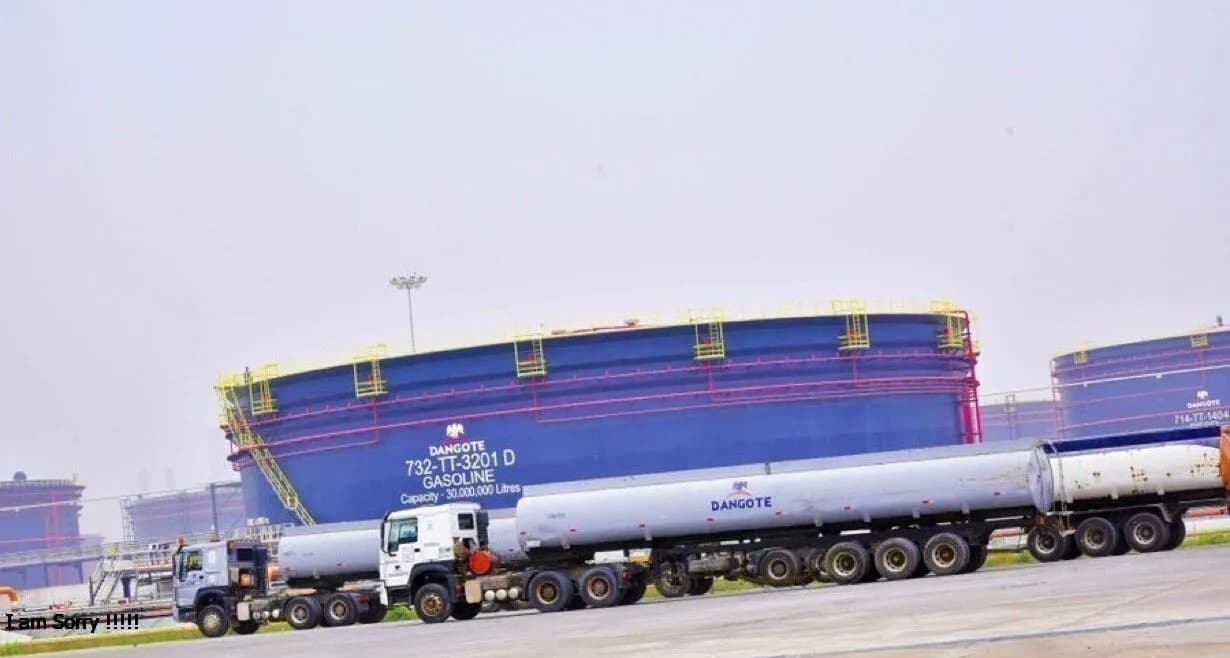
Confusion is growing in Nigeria’s downstream oil sector after the Petroleum Tanker Drivers (PTD) and the Independent Petroleum Marketers Association of Nigeria (IPMAN) distanced themselves from the planned strike announced by the Nigeria Union of Petroleum and Natural Gas Workers (NUPENG).
NUPENG had issued a strike notice effective Monday, September 8, 2025, citing alleged anti-labour practices at the Dangote Refinery. PTD leaders, however, urged their members to ignore the directive, warning that such action could disrupt fuel distribution, worsen economic hardship, and undermine stability in the sector.
PTD Calls for Security Agencies’ Intervention
In a joint statement signed by zonal leaders Tajudeen Abubakar (Kaduna), Blessing Dafinone (Warri), Joseph Dagogo-Jack (Port Harcourt), and Kolade Fadahunsi-Ojelabi (Lagos), the PTD asked the National Security Adviser, the Department of State Services, and the police to intervene.
The group maintained that union membership is voluntary and argued that Dangote Refinery’s plan to deploy 4,000 compressed natural gas-powered trucks would improve supply and serve the public interest. PTD leaders also criticised NUPENG’s leadership for failing to pursue dialogue before declaring a strike. They alleged that the union faces unresolved internal disputes and warned that its actions risk eroding public trust.
IPMAN Disowns Western Zone Strike Notice
Meanwhile, IPMAN’s national leadership disowned a strike notice issued by its Western Zone. In a statement signed by National Ex-Officio Douglas Iyike on behalf of the National Executive Council (NEC), the association directed members nationwide to continue normal operations.
Iyike stressed that only the NEC has the authority to declare a strike, not individual zones or depots. He further noted that Dangote’s decision to use its own trucks for distribution aligns with the Petroleum Industry Act (PIA). According to him, this model could lower distribution costs, reduce multiple levies on marketers, and eventually ease fuel prices for consumers.
He added that the refinery may also allow marketers to obtain products on credit and pay after sales, which could support business growth.
Dangote Refinery’s Growing Role
The $20 billion Dangote Refinery in Lagos, Africa’s largest, is designed to meet Nigeria’s fuel demand and cut reliance on imports. With PTD and IPMAN publicly backing its operations, the unions’ stance marks a clear divide with NUPENG, whose strike threat has raised concerns about potential supply disruptions.