

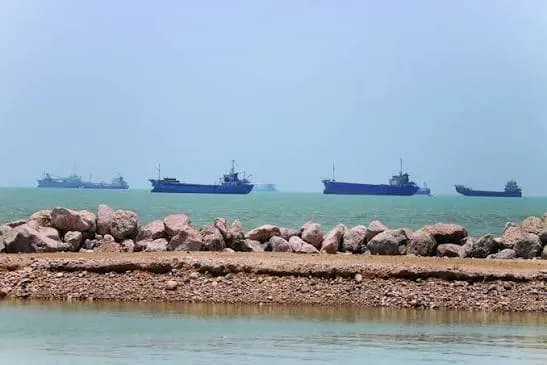
Iran has announced the closure of the Strait of Hormuz following renewed Israeli military operations in Lebanon, a move that has introduced fresh uncertainty into the implementation of the recently signed U.S.-Iran peace framework and raised new concerns about global energy supplies.
According to reports from CNN, the development comes ahead of a new round of negotiations scheduled for Sunday in Switzerland, where U.S. and Iranian officials are expected to discuss the worsening situation in Lebanon, maritime security in the Strait of Hormuz, sanctions, and Iran’s nuclear programme.
The Strait of Hormuz, one of the world's most strategic oil shipping routes, had only recently begun to witness a gradual recovery in vessel movements following the ceasefire framework agreed by Washington and Tehran. The waterway serves as a critical gateway for crude oil and liquefied natural gas exports from the Middle East to global markets.
Iranian military authorities said the decision to close the strait was linked to continued Israeli attacks in Lebanon, where hostilities involving Hezbollah have intensified despite broader diplomatic efforts aimed at reducing tensions across the region.
The United States has challenged Tehran's position, with U.S. military officials maintaining that commercial vessels remain free to navigate the waterway. President Donald Trump also dismissed suggestions that Iran could impose transit fees on vessels passing through the channel, warning that any future toll arrangement would not be determined solely by Tehran.
The latest escalation has complicated what had been viewed as a breakthrough in relations between Washington and Tehran after both sides signed a memorandum of understanding earlier this week designed to reduce hostilities and reopen critical shipping routes.
An emergency session dedicated to Lebanon has now been added to Sunday's talks in Switzerland and will be the first issue addressed by negotiators.
U.S. Vice President JD Vance, who is travelling to Switzerland to participate in the discussions, acknowledged the challenges facing the diplomatic process.
"We've got a lot to discuss," Vance told reporters before departing for Switzerland, adding that the United States hopes to make progress on both regional security issues and Iran's nuclear programme.
Iran has likewise signalled that developments in Lebanon will heavily influence the pace of future negotiations.
Iranian officials have described the situation in Lebanon as the delegation's top priority, arguing that Tehran would be reluctant to move forward with broader implementation of the peace framework unless concerns surrounding Israeli military actions are addressed.
Iranian Parliament Speaker and chief negotiator, Mohammad Bagher Ghalibaf, has already arrived in Switzerland alongside members of Tehran's negotiating team.
Meanwhile, Shehbaz Sharif and Pakistan's army chief, Syed Asim Munir, are also expected to participate in discussions on implementing the agreement, after Islamabad played a key mediating role in earlier talks.
Beyond Lebanon, negotiators are expected to address the future operation of the Strait of Hormuz and the next phase of discussions on Iran's nuclear activities.
The nuclear file remains one of the most sensitive elements of the agreement. While Tehran has committed not to pursue nuclear weapons under the framework, both sides still need to resolve questions surrounding Iran's stockpile of enriched nuclear material during a 60-day negotiation window established under the deal.
The renewed tensions are also being closely watched by energy markets.
The prospect of Hormuz reopening had contributed to a sharp decline in oil prices over recent days as traders anticipated stronger crude exports from the Middle East and the release of delayed cargoes into international markets. However, Iran's latest announcement has revived concerns about potential disruptions to one of the world's most important energy corridors.
Market participants are now closely monitoring the Switzerland negotiations, with analysts suggesting that progress on Lebanon could become a key test of whether the broader U.S.-Iran agreement remains viable.
For now, diplomatic engagement continues, but the combination of escalating violence in Lebanon and renewed disputes over the Strait of Hormuz underscores the fragile nature of the ceasefire framework and the significant challenges that remain before a lasting settlement can be achieved.