

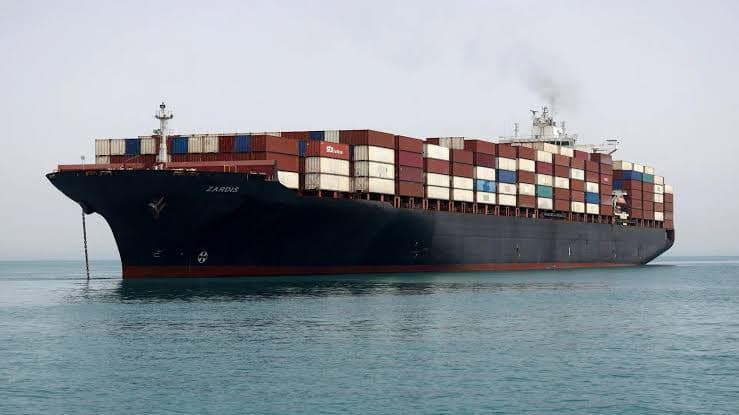
A container ship carrying more than 2,500 containers has sunk south of the Strait of Hormuz after hitting a naval mine, according to Iran’s Islamic Revolutionary Guard Corps (IRGC) Navy, amid renewed concerns over the security of commercial shipping in the strategic waterway.
The vessel reportedly exploded and caught fire after attempting to navigate a route the IRGC described as unauthorised and dangerous, before sinking on Wednesday morning.
Iran’s Mizan News Agency reported the incident, citing a statement from the IRGC Navy’s public relations office, which attributed the vessel’s sinking to the intensity of the fire.
The naval force subsequently warned local vessels and fishermen to exercise extreme caution in the affected waters, particularly because containers from the sunken ship could be floating across navigation routes and pose collision risks.
The incident comes as Iran intensifies pressure on maritime traffic through the Strait of Hormuz, a critical energy corridor that normally handles approximately one-fifth of global oil supplies.
Shipping through the 24-mile-wide passage has been severely disrupted since the United States and Israel launched coordinated airstrikes against Iran on February 28, triggering a conflict that has threatened regional security and energy flows.
Before the conflict, an estimated 125 to 140 large commercial vessels passed through the strait daily. These included crude oil tankers, gas carriers, bunkering vessels and container ships. Traffic subsequently came close to a standstill.
Although maritime activity appeared to be recovering in recent months, reports indicate that Tehran may be widening its operations to sustain pressure on shipping and international energy markets.
Two senior Iranian officials told The Independent that Iran was developing tactics to target vessels beyond the Strait of Hormuz, with the stated objective of frustrating US efforts to lower global oil prices ahead of the November midterm elections.
“The aim is to frustrate efforts by the United States and its allies to bring down global oil prices,” one of the officials was quoted as saying.
According to the officials, Iran intends to expand the geographical scope of its operations into the Gulf of Oman and other waters farther from the strait.
Maritime security assessments based on incidents reported to the United Kingdom Maritime Trade Operations (UKMTO) and regional security companies suggest that the expansion may already be taking place.
Recent reports indicate that vessels have been targeted in waters beyond the strait, including areas off Qatar and the United Arab Emirates.
The second Iranian official said Tehran would seek to prevent US President Donald Trump from securing lower oil prices before the November elections.
“Just when they think they are getting close to the point where prices will fall, we will push them away from it. This is a game of chess,” the official said.
The official also warned that vessels could face threats beyond the immediate Strait of Hormuz, suggesting that the risk to commercial shipping could extend across a wider area of the region.
The latest sinking adds to concerns over the safety of merchant vessels operating near one of the world's most important maritime routes for energy supplies. The presence of floating containers could create additional hazards for ships navigating the affected waters, while any further escalation could complicate efforts to restore normal shipping activity.
Iran’s warning to vessels and fishermen underscores the immediate navigational risks following the reported sinking, as the broader conflict continues to threaten maritime security and global oil market stability.