

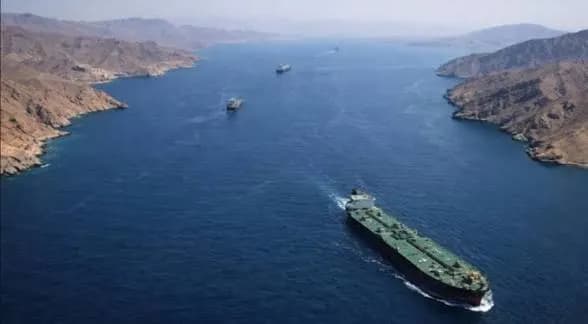
Iran is increasingly relying on overland and regional trade routes to bypass disruptions caused by the ongoing blockade around the Strait of Hormuz, as pressure from the United States and Israel continues to hit the country’s economy and oil exports.
According to a report by Oilprice.com citing RFE/RL, Tehran has stepped up imports of food and consumer goods through Pakistan, Turkey and Russia while also exploring rail exports of crude oil to China as maritime shipments face mounting restrictions. The report said the US-led blockade has disrupted trade through the Strait of Hormuz since the conflict began on February 28, worsening shortages and driving up prices of essential goods inside Iran.
Despite the restrictions, analysts believe Iran is unlikely to suffer a complete economic collapse due to its extensive land borders and alternative supply corridors. Steve Hanke, Professor of Applied Economics at Johns Hopkins University, said alternative trade channels could still keep the Iranian economy running, although at higher costs.
“Trucking is more expensive and Caspian throughput is constrained by port and fleet capacity,” Hanke said. “Expect higher landed costs and higher inflation in tradeables but not the economic implosion some have advertised.”
Iranian Agriculture Minister Gholamreza Nouri also insisted the country still had access to food and basic supplies despite the blockade.
“Despite the US naval blockade, we have no problem in supplying basic goods and food because, due to the size of the country, it is possible to import from different borders,” Nouri said.
Pakistan has already opened several land corridors for cargo heading into Iran from ports including Gwadar, Karachi and Port Qasim. The routes are expected to support the movement of rice, meat and baby formula into the country. The report added that Russia had resumed shipments through the Caspian Sea into Iran’s Bandar Anzali port, while Tehran was also examining crude-by-rail exports to China through Central Asian rail links.
Rosemary Kelanic, Director of the Middle East Programme at Defense Priorities, said Iran’s geography gives it multiple ways to work around maritime restrictions. “The possibilities for the Iranians to ‘MacGyver’ their way around Trump's blockade are endless because the country has thousands of miles of land border to work with,” Kelanic stated.
Although oil exports by sea remain more efficient, experts said rail and land transport could help Iran maintain part of its crude supply to China, which reportedly buys about 90 per cent of Iranian oil exports. The report noted that Iran-linked tankers are still managing to bypass parts of the blockade, while an estimated 130 million barrels of Iranian crude already at sea before the restrictions took effect may help Tehran withstand the pressure in the short term.