

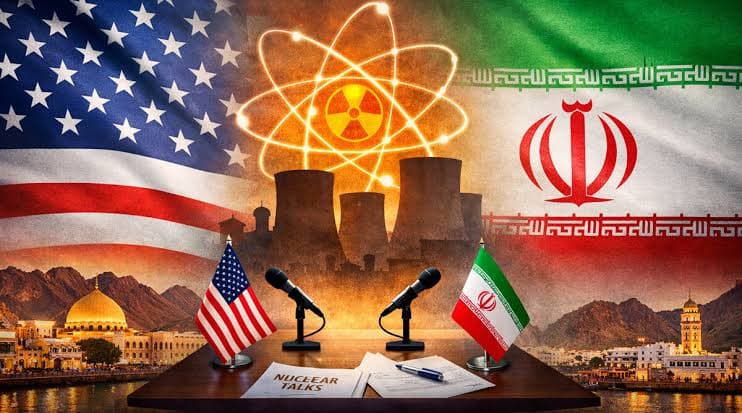
Iran’s prolonged war with the United States and Israel has intensified calls among lawmakers, security officials, and conservative commentators for Tehran to develop nuclear weapons, despite warnings that pursuing an atomic bomb could trigger further devastating military attacks.
The debate is gaining momentum as ceasefire negotiations stall, Washington maintains economic pressure on Tehran, and uncertainty surrounds Iran’s stockpile of highly enriched uranium. Although air strikes have severely damaged the country’s nuclear infrastructure, questions remain over the location of its uranium reserves and the condition of equipment that could support renewed enrichment.
U.S. and Israeli officials say Iran has moved thousands of centrifuges to Pickaxe Mountain, an underground facility reportedly buried deep beneath granite. Washington is considering further strikes on the site, with U.S. President Donald Trump warning that military action could resume if negotiations fail.
The growing public support for nuclear weapons marks a significant shift in Iran’s political discourse. Iranian authorities previously cited a religious ruling by former Supreme Leader Ayatollah Ali Khamenei prohibiting weapons of mass destruction, while insisting that the country’s nuclear programme was intended exclusively for civilian purposes.
However, the killing of Khamenei and several senior military and security officials in the opening strikes of the war on February 28 has strengthened arguments among some Iranian political figures that the country needs a stronger deterrent against future attacks.
Lawmakers and Security Officials Renew Calls for Nuclear Weapons
Ahmad Bakhshayesh Ardestani, a member of Iran’s influential parliamentary National Security and Foreign Policy Committee, recently argued that Tehran had already paid a substantial price for its nuclear programme and should now consider producing weapons.
Another lawmaker, Hossein Ali Haji-Deligani, identified the absence of a nuclear deterrent as one of Iran’s major weaknesses and suggested that the country could conduct a nuclear test in the not-too-distant future.
Mohsen Rezaei, secretary of Iran’s Supreme National Security Council, has also indicated that pursuing nuclear weapons remains an option. He blamed U.S. President Donald Trump’s policies for “pushing the world toward acquiring nuclear weapons.”
Conservative commentator Davud Modarresian has made an even more direct case for weaponisation, arguing on X that developing a nuclear bomb is “more important than food.”
He described an atomic arsenal as a guarantee of Iran’s survival, citing Trump’s remarks about the importance of maintaining good relations with nuclear-armed countries.
“When people have 11 nuclear missiles, it’s nice to get along,” Trump said earlier this month, referring to North Korea and his relationship with its leader, Kim Jong Un.
Modarresian also challenged the argument that Iran’s religious leadership had ruled out nuclear weapons. In 2003, Khamenei issued a fatwa prohibiting the development, possession and use of nuclear weapons under Islamic law.
According to Modarresian, the religious ruling was not the principal obstacle to weaponisation. He instead blamed what he described as indecision and a lack of unified political will for Tehran’s failure to develop a bomb.
The renewed calls also echo a warning issued in 2024 by Kamal Kharazi, a former adviser to Khamenei who was killed in Israeli strikes earlier this year. Kharazi said Iran might reconsider its nuclear doctrine if it faced an existential threat. Some advocates of weaponisation now appear to view the ongoing war as precisely that kind of threat.
Iranian Critics Warn Against Pursuing an Atomic Bomb
Support for developing nuclear weapons is not universal within Iran’s political establishment. Mohammad Mokhber, a former vice president who now serves as a senior adviser to Supreme Leader Mojtaba Khamenei, said on October 19 that Iran already possessed sufficient deterrence through its regional strategy and its ability to disrupt shipping through the Strait of Hormuz.
“Any country that has the Strait of Hormuz has no need for an atomic bomb,” Mokhber said.
He argued that controlling the strategic waterway could affect billions of people, whereas a nuclear weapon might kill between 50,000 and 100,000 people. His position reflects an alternative approach to national security, centred on Iran’s regional influence and its ability to disrupt a critical international shipping route rather than acquiring nuclear weapons.
Other critics have warned that attempting to build a bomb could expose Iran to further attacks before it establishes a credible nuclear deterrent.
Sina Jahani, a journalist based in Tehran, argued that withdrawing from the Treaty on the Non-Proliferation of Nuclear Weapons (NPT) and developing an atomic bomb would be “playing into Israel’s hands.”
Political commentator Amir Ali Abolfath similarly questioned whether Iran could complete a nuclear weapons programme before its adversaries destroyed the infrastructure needed to support it.
“What happens when the country’s entire infrastructure is destroyed after a destructive American attack before nuclear deterrence is achieved?” Abolfath wrote on X, directing the question at proponents of weaponisation. He also questioned whether acquiring an atomic bomb after widespread destruction would still provide meaningful protection.
The disagreement exposes a central dilemma for Tehran: whether nuclear weapons would strengthen its ability to deter future attacks or increase the likelihood of military action before such a capability could be established.
U.S. Pressure and Stalled Talks Deepen the Nuclear Dispute
The debate has intensified as diplomatic efforts to end the war remain stalled and Washington maintains pressure on Tehran.
The conflict began on February 28, when the United States and Israel launched strikes that killed Khamenei and several senior figures in Iran’s military and security establishment. The attacks targeted state-linked facilities, military installations and nuclear infrastructure, while civilian infrastructure was also hit and ordinary Iranians were killed.
The latest war followed earlier U.S. and Israeli strikes on Iranian nuclear facilities in June 2025, when both countries warned that Tehran was approaching the capability to develop nuclear weapons.
Major U.S. military operations have since wound down, with Washington shifting towards economic pressure, including a naval blockade of Iranian ports. Indirect negotiations through mediators have also stalled.
Trump rejected Iran’s latest proposal for a seven-day ceasefire and a phased reopening of the Strait of Hormuz, while threatening to resume major military strikes. Washington has maintained that any agreement must include a substantial reduction in Iran’s uranium enrichment capacity, with U.S. Vice President JD Vance describing the required reduction as “meaningful.”
The confrontation follows years of disagreement over Iran’s nuclear ambitions. Tehran signed the NPT in 1968 and ratified it in 1970. The treaty requires countries without nuclear weapons to refrain from acquiring them, restricts the transfer of nuclear arsenals and guarantees access to peaceful nuclear technology under safeguards.
In 2015, Iran also signed the Joint Comprehensive Plan of Action (JCPOA) with the United States and other world powers. The agreement restricted Tehran’s nuclear activities in exchange for sanctions relief. Trump withdrew the United States from the accord in 2018, after which Iran expanded uranium enrichment while continuing to insist that its programme was intended for civilian purposes.
Damage to Nuclear Facilities Raises Questions Over Iran’s Capabilities
The condition of Iran’s nuclear infrastructure raises questions about whether the country could develop a weapon if its leadership decided to pursue one. Air strikes have severely disrupted its enrichment capacity, although the extent to which surviving equipment could support a recovery remains uncertain.
Iran’s three enrichment plants have suffered extensive damage. The above-ground enrichment facility at Natanz was destroyed, while the other two facilities, at Natanz and Fordow, were badly damaged and are widely believed to be out of operation. Strikes also destroyed Iran’s only uranium milling and conversion facilities, further disrupting its nuclear operations.
The most significant uncertainty concerns Iran’s reported stockpile of 440.9 kilogrammes of uranium enriched to 60 per cent purity. Although the material is below the level generally required for nuclear weapons, it could potentially be enriched further.
International Atomic Energy Agency (IAEA) Director-General Rafael Grossi said in March that more than 200 kilogrammes of the stockpile remained in tunnels at Isfahan, with some material also located at Natanz. In September, the agency said it had lost track of the stockpile more than a year earlier, leaving uncertainty over its current location and condition.
The absence of verification complicates assessments of Iran’s remaining nuclear capabilities. If Tehran retains access to the material and suitable centrifuges, it could potentially resume enrichment despite the destruction of major facilities. However, possessing highly enriched uranium does not establish that Iran has assembled a nuclear weapon, which would require additional technical capabilities beyond uranium enrichment.
Pickaxe Mountain Emerges as a Potential Military Target
Attention has consequently shifted towards Pickaxe Mountain, where U.S. and Israeli officials say Iran has relocated thousands of centrifuges. The facility is reportedly buried between 80 and 100 metres beneath granite, making it more difficult to reach with conventional air strikes.
Trump said last week that Washington might have to target the site, raising the prospect of further military action if negotiations fail. Its strategic importance stems from uncertainty over whether Iran retains operational centrifuges capable of restoring enrichment activities away from damaged surface installations.
In principle, uranium enriched to 60 per cent purity can be processed further to reach weapons-grade levels. The feasibility and timing would depend on the condition of the material, the availability of functional centrifuges and Iran’s ability to operate the necessary facilities. Whether the country could subsequently manufacture a functioning nuclear weapon remains a separate and unresolved question.
Iran has consistently rejected demands to surrender its highly enriched uranium stockpile but has offered to dilute the material as part of a broader agreement with Washington to end the conflict, now in its eighth month.
No agreement has been reached, leaving the stockpile’s status and Iran’s future nuclear policy uncertain. As the war continues, Tehran faces competing arguments over whether nuclear weapons would provide lasting protection or expose the country to greater military risks, while the condition of its remaining nuclear infrastructure and the prospects for renewed negotiations remain central to the dispute.