

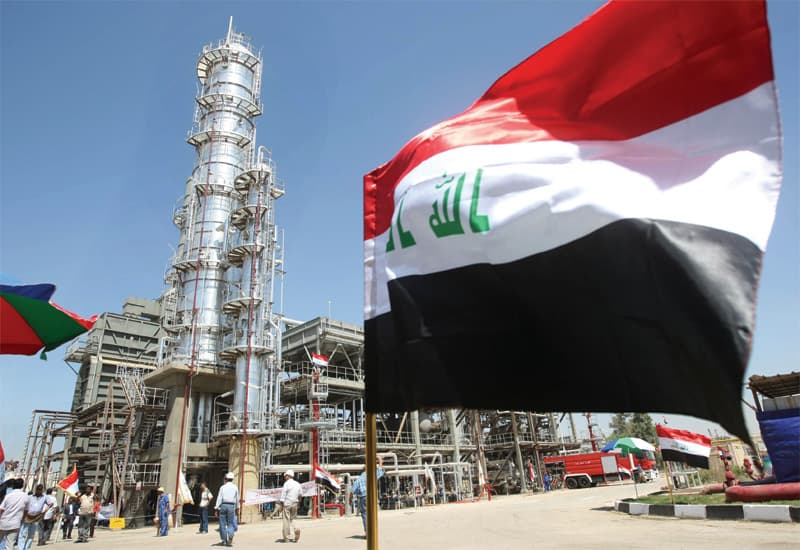
Iraq is targeting a major expansion of its oil production over the next six years, but achieving the plan will depend on both OPEC+ approval and the development of alternative export routes outside the Strait of Hormuz.
Prime Minister Ali al-Zaidi said Friday that Baghdad wants to raise crude output to between 8 million and 10 million barrels per day (bpd), compared with roughly 4 million bpd before the Iran war.
The proposed increase would require Iraq to secure greater room to produce under the OPEC+ framework. On Friday, Baghdad sent its oil and finance ministers to Saudi Arabia to push for a higher production quota.
The timing coincides with an independent review of members’ production capabilities. OPEC+ has appointed DeGolyer and MacNaughton to assess the maximum sustainable production capacity of most participating countries, including Iraq. The consultancy is expected to deliver its findings by the end of September, after which negotiations over production baselines for 2027 are expected to begin.
The outcome will be important for Iraq because production baselines generally determine how much crude individual members are permitted to bring to market. Countries seeking higher baselines therefore have an incentive to demonstrate greater sustainable capacity.
Even with a favourable OPEC+ decision, however, Iraq faces another major obstacle: moving additional crude to international buyers.
The country has been particularly exposed to the disruption around the Strait of Hormuz, which has historically served as its main export corridor. Although Iraq has managed to restore crude shipments through the chokepoint to around 2 million bpd this month, tanker traffic remains substantially below pre-war levels.
Baghdad is therefore seeking to develop additional routes that would reduce its dependence on Hormuz.
Al-Zaidi said Iraq plans to increase exports through Turkey’s Ceyhan port while also pursuing alternative corridors through Syria’s Baniyas port and Jordan’s Aqaba port.
The existing Iraq-Turkey pipeline, however, currently transports only about 170,000 bpd, leaving it far below the capacity that would be required to accommodate a substantial increase in Iraqi production.
A proposed pipeline connecting Iraq to Syria could provide another route to the Mediterranean and help bypass Hormuz. But the project is expected to require around four years to construct and could cost at least $15 billion.
That means Iraq's ambition to reach 8 million to 10 million bpd is not simply dependent on expanding fields and increasing drilling. It would also require a major expansion of the country's crude transportation and export infrastructure.
The disruption to regional supply routes is already reshaping crude flows. China has increased purchases of Iraqi oil as Middle Eastern supply channels have become more difficult to navigate, including recent purchases of about 8 million barrels of Basrah Heavy and Basrah Medium.
For Iraq, the combination of higher production ambitions and constrained export infrastructure creates a significant challenge. Securing additional OPEC+ production capacity could allow Baghdad to pump more crude, but without sufficient pipelines, ports and alternative routes, a substantial portion of that additional output could face difficulty reaching international markets.