

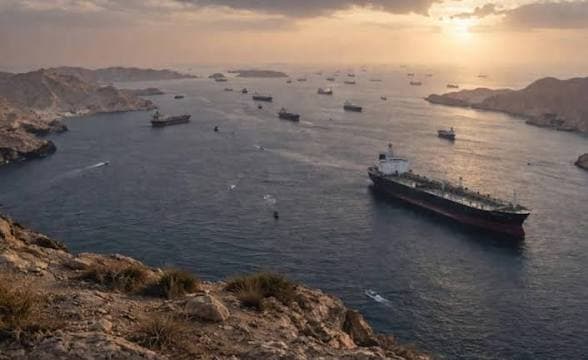
Only nine commodity vessels crossed the Strait of Hormuz on Thursday, as mounting security risks and a severe shortage of available tankers pushed the cost of moving crude from the Persian Gulf to China to a record $1.27 million per voyage for a very large crude carrier (VLCC).
The latest vessel count, reported by Reuters, marks a further deterioration in shipping activity through the strategic waterway, with the 10-day average now standing at just 18 vessels. Of the nine vessels recorded on Thursday, eight were exiting the Strait, including one VLCC, while the remainder comprised Panamax and Supramax vessels, smaller crude and product carriers and a very large gas carrier (VLGC) sailing in ballast.
The collapse in traffic is taking place against a worsening tanker market, as shipowners become increasingly reluctant to expose vessels to the security risks around the Strait. The resulting shortage of available tonnage has driven VLCC freight rates on the Persian Gulf-China route to an all-time high of $1.27 million, before easing slightly to about $1.26 million, according to Lloyd’s List data cited by Reuters.
The pressure on tanker availability has been compounded by the diversion of Saudi crude exports towards the Gulf of Oman following disruptions affecting the country’s East-West pipeline. Saudi Arabia has reportedly sold about 60 million barrels of crude for shipment in September and October, with cargoes being moved through ship-to-ship transfers from smaller vessels to larger tankers in the Gulf of Oman.
According to Kpler, ship-to-ship transfer volumes have increased to an average 3.6 million barrels per day in September, from about 900,000 barrels per day in August. The additional shuttle movements are absorbing substantial VLCC capacity, with estimates indicating that between 36 and 40 additional VLCCs are required to handle the increased flows.
Oil Brokerage’s head of global shipping research, Anoop Singh, said the additional 2 million barrels per day in Saudi flows would alone require about 15 VLCCs for shuttle operations. The implication is that significantly more tanker capacity is now required to move volumes that previously could be handled with fewer vessels under normal routing conditions.
The tanker squeeze is further complicated by vessels waiting in the Red Sea for operations at Saudi Arabia’s Yanbu port to resume. Reuters reported that about 20 tankers are currently affected, adding to the effective shortage of available tonnage.
The consequences extend beyond freight rates. Reduced vessel movements through Hormuz, longer and more complex voyage patterns and increased reliance on ship-to-ship transfers are raising the logistical cost of transporting Gulf crude to major Asian markets.
With only single-digit vessel movements now being recorded through the Strait and VLCC freight costs at record levels, the disruption is placing additional pressure on the physical oil trade. The direction of tanker availability, Saudi export flows and shipping security around Hormuz will remain critical to crude supply logistics and freight markets in the coming weeks.