

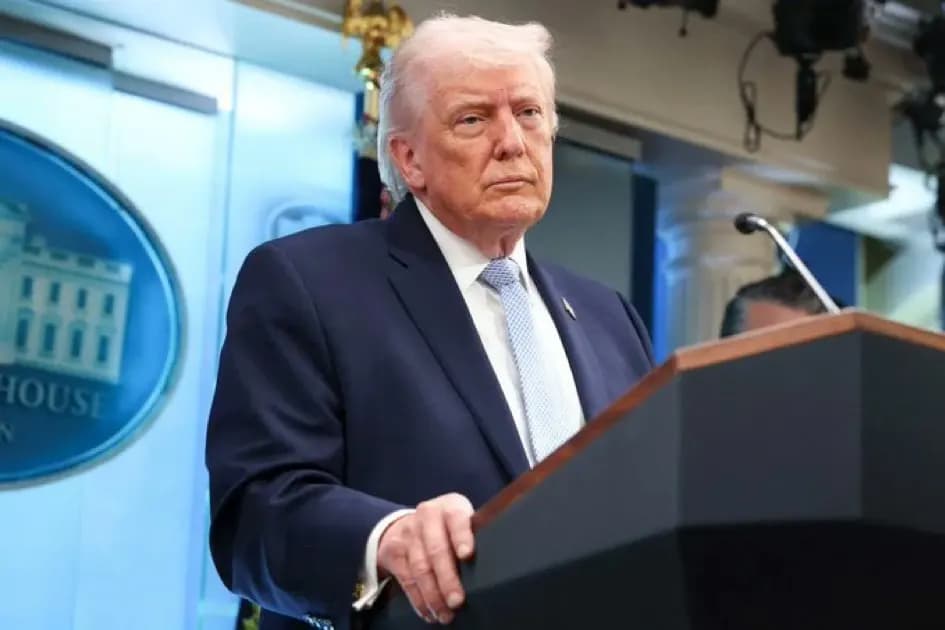
Donald Trump says the United States will not rush into a nuclear agreement with Iran as negotiations continue over Tehran’s uranium programme, sanctions-related issues and the future of the Strait of Hormuz.
Trump stated on Sunday that discussions between both countries were still ongoing and stressed that any final arrangement must ensure Iran does not develop nuclear weapons capability.
According to the U.S. president, relations between Washington and Tehran had become “more professional and productive,” although he maintained that Iran must not be allowed to obtain a nuclear weapon.
Trump also confirmed that the American blockade linked to the Strait of Hormuz would remain in place until a final agreement is completed and formally approved.
Senior officials within the Trump administration later indicated that no agreement would be signed immediately, noting that negotiators were still working through sensitive language tied to several key provisions within the proposed framework.
One U.S. official familiar with the talks said discussions remained ongoing over specific wording considered critical by both Washington and Tehran, adding that Iran’s internal approval process could delay finalisation for several more days.
The official further disclosed that Iran’s Supreme Leader, Mojtaba Khamenei, had reportedly approved the broader structure of the proposed arrangement, although uncertainty remained over whether negotiations would ultimately produce a final agreement.
Earlier, Marco Rubio suggested that negotiations surrounding the Strait of Hormuz were progressing, stating that developments linked to the talks could emerge within hours.
According to U.S. officials, Washington intends to lift restrictions affecting the Strait of Hormuz under a broader settlement framework, while Iran has reportedly agreed in principle to dispose of its highly enriched uranium stockpile.
However, officials stated that the current framework does not include plans to unfreeze Iranian financial assets and also rejected any proposal that would allow Iran to impose tolls on vessels using the Strait of Hormuz.
Iranian officials and state-linked media presented a more cautious assessment of the negotiations.
Iran’s semi-official Tasnim News Agency reported that disagreements remained over several provisions within the proposed arrangement, while Fars News Agency dismissed Trump’s optimistic assessment of the talks and suggested negotiations remained far from complete.
Masoud Pezeshkian said Tehran remained willing to assure the international community that it was not pursuing nuclear weapons capability.
According to Iranian media reports, Pezeshkian stated that Iran was prepared to provide assurances during negotiations that its nuclear activities were not intended for weapons development.
Meanwhile, Benjamin Netanyahu said he had discussed the negotiations with Trump and reiterated that any final agreement must eliminate the possibility of Iran acquiring a nuclear weapon.
Sources familiar with the discussions indicated that conversations between Trump and Netanyahu over Iran policy have at times become tense, particularly as Israeli officials continue pushing for a tougher position toward Tehran while sections of the Trump administration pursue a negotiated settlement and extension of the current ceasefire arrangement.
The proposed framework has also drawn criticism from some Republican figures in the United States, with critics comparing the emerging arrangement to the 2015 nuclear agreement negotiated during the administration of former U.S. President Barack Obama.
Trump rejected those comparisons, arguing that the previous agreement created a pathway for Iran to develop nuclear weapons capability, while insisting that the current negotiations were fundamentally different.
The ongoing talks are being closely monitored by governments, investors and energy markets because of their potential impact on Middle East security, global oil supply flows and international crude prices.