

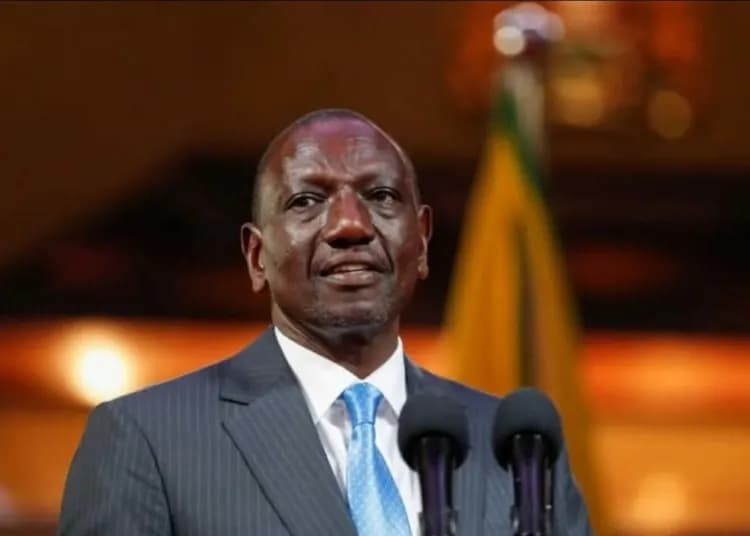
Kenyan President William Ruto has praised Nigerian billionaire Aliko Dangote for helping to resolve Nigeria’s long-standing fuel supply challenges through the establishment of the Dangote Petroleum Refinery, describing the project as a landmark example of Africa solving its own problems.
Speaking at an infrastructure summit in Nairobi, Ruto said Nigeria, despite being one of Africa’s largest oil producers, struggled with recurring fuel shortages for years. “Nigeria has been a producer of oil for all the years that we know. Yet, when you went to Nigeria, there were queues of people looking for fuel in petrol stations for a long time,” he said.
He credited Dangote’s investment with changing that narrative. “Until one African stepped forward and built a refinery, Aliko Dangote,” Ruto added, drawing applause from participants at the summit.
The Kenyan leader said Dangote’s achievement demonstrates that African countries have the resources, expertise and capital required to address the continent’s infrastructure and industrial challenges without relying excessively on foreign solutions.
“The solution wasn’t in Europe or Asia. The solution was in Nigeria for a problem that disturbed Nigeria for years,” he said.
Ruto urged African leaders, investors and business executives to act boldly in developing transformative projects across the continent. “We have in this room the political leadership, we have the industrialists, we have the financials to transform our continent and we must waste no time looking any further,” he stated.
Dangote, who attended the summit, expressed readiness to support plans for a similar refinery in East Africa, provided governments in the region commit to the project. Analysts say the success of the Lagos-based refinery is increasingly being seen as a model for industrial development and energy security across Africa.
While challenges remain in Nigeria’s domestic fuel pricing and distribution network, the refinery has significantly reduced dependence on imported petroleum products and strengthened confidence in private-sector-led solutions to Africa’s energy needs.