

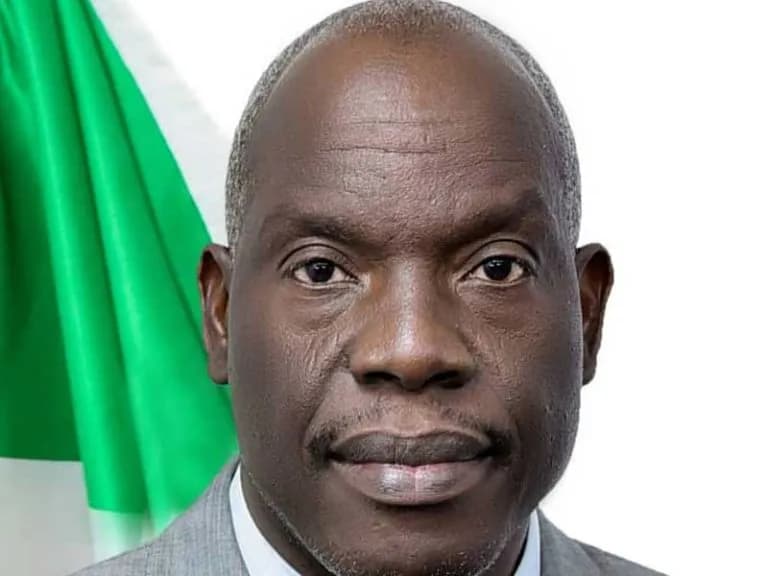
The Chief Executive of the Nigerian Upstream Petroleum Regulatory Commission (NUPRC), Gbenga Komolafe, has expressed confidence that Nigeria’s ongoing licencing round will significantly boost the nation’s oil and gas reserves through aggressive exploration and development initiatives.
Speaking at the Oil Week Conference in Cape Town, South Africa, Komolafe emphasised that this licencing round will not only enhance Nigeria’s oil production but also expand opportunities for gas utilisation and the overall development of the upstream value chain across Africa.
He described the 2024 licencing round as a pivotal opportunity to unlock Nigeria’s vast hydrocarbon resources, attract substantial investments, and contribute to the continent’s economic advancement. “This is an unprecedented opportunity for Nigeria to demonstrate its hydrocarbon potential while attracting investments that will help propel the continent towards greater economic prosperity,” Komolafe said.
Nigeria, he noted, holds an abundance of crude oil and condensate reserves, accounting for over 30% of Africa’s total oil reserves, and 33% of the continent’s natural gas reserves. He further stressed that the country’s renewable energy resources also offer a significant opportunity for a diversified energy portfolio.
Highlighting the nation’s increasing capacity, Komolafe stated that Nigeria’s active oil rig count had recently risen to 38, up from below 20 in previous years. The ongoing licencing round, he asserted, offers both domestic and international investors an exceptional chance to participate in Nigeria’s upstream oil and gas sector.
The NUPRC chief recalled President Bola Tinubu’s recent Executive Orders, which were designed to enhance the attractiveness of the Nigerian oil and gas sector. These orders aim to incentivise oil and gas development by reducing local content bottlenecks and improving the efficiency of operations under the Nigerian Oil and Gas Industry Content Development Act.
Komolafe elaborated that these orders also address the reduction of contracting costs and timelines, a move intended to bolster the global competitiveness of Nigeria’s oil and gas industry. “This will ensure higher returns on investments while strengthening Nigeria’s position as a key player in the global energy market,” he added.
The NUPRC, in line with the provisions of the Petroleum Industry Act (PIA), has introduced wide-ranging reforms to modernise the licencing process. These include a regulatory framework that encourages stakeholder engagement, promotes environmental sustainability, and enhances the licencing procedures to attract investment. “Our goal is clear: to drive growth and innovation in the oil and gas sector by attracting local and international investments,” Komolafe stated.
He further explained that the licencing round will be instrumental in growing Nigeria’s oil and gas reserves, while also boosting production and expanding the scope of gas utilisation. The initiative, according to him, aligns with Nigeria’s commitment to transparency, as outlined in the Extractive Industry Transparency Initiative (EITI).
“The licencing round is a testament to Nigeria’s commitment to openness and transparency, and we are confident that it will be a huge success, benefiting all stakeholders involved,” Komolafe affirmed. He also remarked that the licencing process aligns with global energy sustainability goals and has been formulated with attention to environmental, social, and governance (ESG) considerations, as well as Nigeria’s net-zero carbon emission targets and the elimination of gas flares.
Komolafe assured potential investors that Nigeria’s oil and gas industry is embracing the global shift towards energy transition while remaining mindful of the ongoing role of fossil fuels in the global energy mix. “It’s clear that recent global events indicate that fossil fuels will remain a core component of the global energy landscape, even beyond the 2050 net-zero carbon emission targets,” he noted.
He concluded by emphasising the significance of the 2022/2024 licencing rounds as a unique investment opportunity for both local and international stakeholders. “As we stand at a historic juncture in our energy sector, let us collaborate to harness these opportunities. This is about meeting the immediate needs of our growing economies while ensuring a sustainable future for generations to come,” Komolafe said.
This bold initiative by Nigeria is expected to contribute not only to the nation’s economic growth but also to the long-term stability of global energy supply, reinforcing Nigeria’s critical role in the future of energy.