

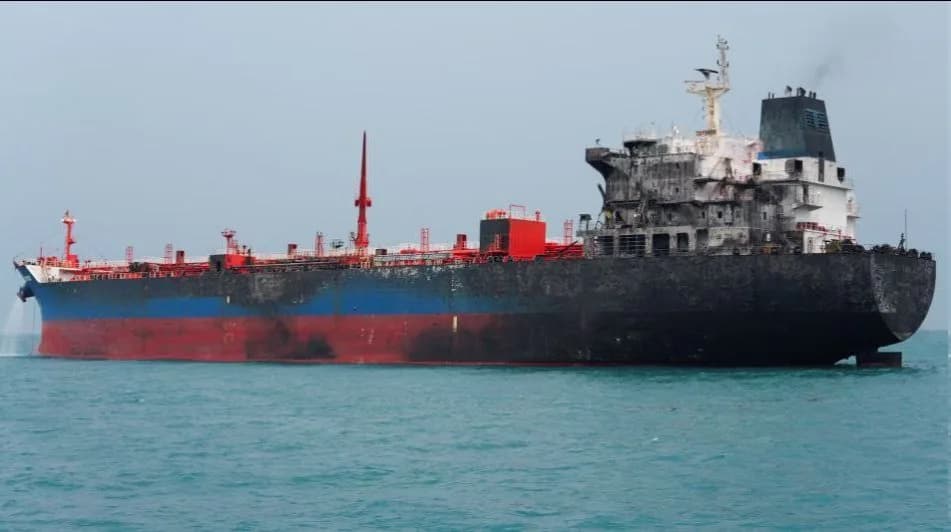
Global oil markets have reacted sharply to a temporary de escalation in tensions after United States President Donald Trump announced a conditional two week ceasefire agreement with Iran, tied to the reopening of the Strait of Hormuz.
As at 06:35 WAT on April 8 Brent crude dropped to about 95 dollars per barrel, declining by roughly 13 percent, while West Texas Intermediate fell to around 97 dollars per barrel, down nearly 14 percent. The sharp drop followed easing concerns over immediate supply disruptions after both countries signalled a pause in hostilities.
The ceasefire marks a shift from earlier threats of military escalation. Trump had initially warned of possible strikes on Iranian infrastructure if the strait remained closed, but later confirmed a temporary agreement that would allow safe passage through the corridor.
Iran’s Foreign Minister Abbas Araqchi stated that Tehran would halt attacks provided military action against Iran stops and transit through the Strait of Hormuz is coordinated with its armed forces during the two week period.
Despite the easing of tensions, the Strait of Hormuz remains under controlled access. The waterway, which accounts for about 20 percent of global crude oil flows, continues to operate below normal capacity with movement of vessels still regulated.
At least 10 countries have continued to ship through the strait under these controlled conditions. These include:
India
China
Russia
Pakistan
Iraq
Thailand
Turkey
Japan
France
Malaysia
Additional countries such as Italy and the Philippines have also secured limited access through diplomatic engagement with Iranian authorities.
Earlier in the crisis Iran had warned that unauthorised vessels attempting to transit the strait could face military action. However, it later confirmed that several countries had requested passage, with approvals granted selectively.
Shipping data reflects the scale of disruption. Between March 1 and March 27 about 150 vessels moved through the strait, a volume equivalent to just over one day of normal traffic before the crisis. Weekly transits later rose to 53 from 36, indicating a gradual but limited recovery in activity.
Specific movements included a Pakistani flagged tanker exiting the Gulf in mid March, Indian and Turkish vessels receiving clearance, and China engaging Iran to facilitate crude and liquefied natural gas shipments. Thailand secured passage for an oil tanker following diplomatic talks, while Russia maintained access for commercial shipping. Iraq was also granted unrestricted passage after being designated a friendly nation.
More recently vessels from France and Japan have been allowed to pass through the corridor, with Japan moving liquefied gas cargoes through the strait. Southeast Asian countries including Malaysia and the Philippines have also been added to the list of permitted nations.
In some instances vessels are required to meet certain conditions including payment arrangements, effectively creating a regulated transit system.
Although the ceasefire has eased immediate supply concerns and triggered a drop in oil prices, tensions remain elevated across the region. Reports of missile activity drone operations and civil defence alerts in several Gulf states highlight the fragile nature of the agreement.
Analysts note that even with a temporary pause in hostilities the geopolitical risk premium in oil markets is likely to persist. Market participants continue to monitor the durability of the ceasefire and its impact on global energy flows.
The situation underscores a shift in global shipping dynamics where access to critical energy routes remains influenced by geopolitical considerations even as diplomatic efforts attempt to stabilise the market.