

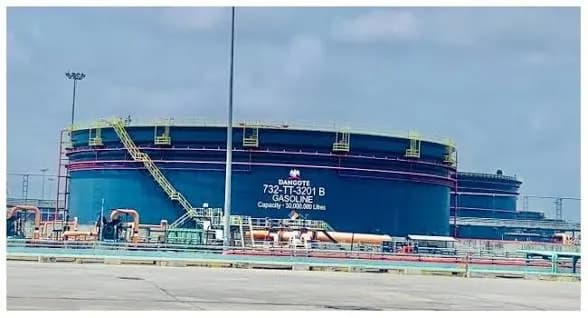
Nigeria’s domestic refining sector recorded a major boost as crude supply from the Federal Government, the Nigerian National Petroleum Company Limited (NNPCL) and International Oil Companies (IOCs) to local refineries rose by 103.4 per cent between January and April, according to data from the Nigerian Midstream and Downstream Petroleum Regulatory Authority (NMDPRA).
Crude allocation increased from 8.83 million barrels in January to 17.96 million barrels in April, strengthening feedstock availability for the Dangote Refinery and other operators.
The rise reflects a shift toward supporting local refining, with the Dangote Refinery increasingly relying on domestic crude to drive production of Premium Motor Spirit (PMS) and other refined products.
At the same time, imported crude fell sharply, dropping from 9.43 million barrels in March to 0.41 million barrels in April, a decline of 95.6 per cent.
Petrol output also rose, with domestic supply increasing from 34.2 million litres per day in March to 40.7 million litres in April. Imported petrol volumes fell from 5.9 million litres daily in January to 3.7 million litres in April.
The NMDPRA reported that the Dangote Refinery operated at an average 99.12 per cent capacity in April, reaching near full utilisation for most of the month.
Despite higher global crude prices, petrol pump prices ranged from ₦1,271.50 per litre in Lagos to ₦1,413 in Maiduguri, while average daily truck-out stood at 51.1 million litres, slightly above estimated national demand.
Nigeria also maintained relatively stable fuel reserves, with stock sufficiency levels of 18 days for petrol, 39 days for diesel and 70 days for aviation fuel.
Modular refiners including WalterSmith, Edo Refinery and Aradel Holdings contributed an additional 0.559 million litres of diesel daily.
The data signals continued progress in Nigeria’s push to strengthen domestic refining, reduce import dependence and improve energy security.