

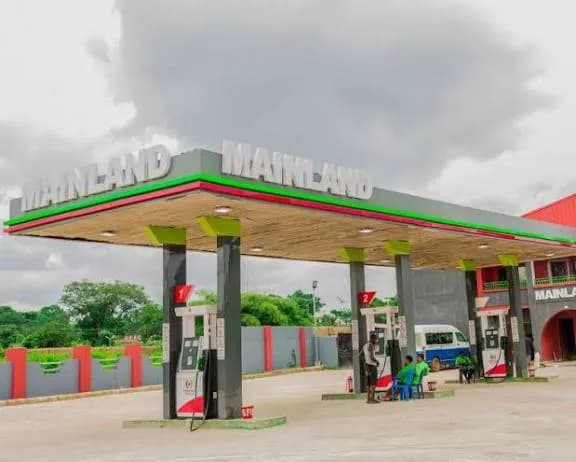
In Nigeria’s downstream oil and gas sector, longevity is never accidental. It is earned through discipline, trust, and the willingness to invest when others hesitate. For Mainland Oil and Gas Limited, what began as a clear-eyed vision over two decades ago has matured into a resilient, infrastructure-driven energy company with a growing national footprint.
Founded on June 23, 2003, Mainland Oil and Gas Limited entered the industry at a time when Nigeria’s downstream sector was grappling with supply instability, regulatory shifts and deep infrastructure deficits. From the start, the company adopted a long-term mindset: build a compliant business, strengthen logistics, and grow steadily into an integrated operator capable of supporting Nigeria’s energy needs.
Licensed by the Department of Petroleum Resources (DPR), Mainland Oil and Gas commenced operations as an oil and gas marketing company. However, rather than remain transactional, the company set out on a deliberate path toward asset ownership, operational depth and value-chain control—an approach that would later define its growth trajectory.
Laying the foundation through compliance and infrastructure investment
From inception, Mainland Oil and Gas anchored its operations on regulatory compliance, operational discipline and supply reliability. In a sector often disrupted by policy uncertainty and logistics bottlenecks, this commitment became a competitive advantage, earning the trust of regulators, financial institutions, suppliers and downstream partners.
A major turning point came in 2012 with the commissioning of a petroleum products storage and distribution depot in Calabar. Strategically positioned to serve the South-South and South-East corridors, the facility strengthened product availability, improved evacuation efficiency and reduced dependence on third-party infrastructure.
Over time, the company expanded its logistics backbone, developing high-capacity truck parks and strengthening its nationwide haulage network. These investments allowed Mainland Oil and Gas to maintain supply consistency during peak demand periods and market disruptions, reinforcing its reputation as a dependable downstream operator.
Beyond physical assets, the company also invested in internal systems health, safety and environmental standards, staff training, and operational controls ensuring that growth was matched with sustainability and compliance.
Expanding across the downstream value chain
As Nigeria’s downstream market evolved, Mainland Oil and Gas moved decisively to deepen its role across the value chain. In 2023, the company commissioned a state-of-the-art lubricant blending plant, marking a strategic shift from trading to manufacturing and value addition.
Designed to produce high-performance lubricants for automotive, industrial and marine applications, the facility supports local content development, reduces reliance on imports and positions the company within Nigeria’s growing lubricants market. Quality assurance, formulation control and brand differentiation sit at the core of the operation.
Infrastructure expansion continued in 2024 with the deployment of a dedicated jetty line for direct vessel receipt and discharge of petroleum products. This investment significantly improved turnaround time, increased volume-handling capacity and enhanced safety and environmental compliance in line with international standards.
In the same year, Mainland Oil and Gas commissioned a plastic manufacturing plant to support its lubricant operations. By producing containers and packaging in-house, the company achieved vertical integration—tightening quality control, lowering production costs and ensuring consistency across its product portfolio.
These moves reflect a clear strategic philosophy: control critical infrastructure, reduce operational risk and build resilience across the supply chain.
A fully integrated Nigerian energy partner
Today, Mainland Oil and Gas Limited operates across trading, storage, logistics, blending, manufacturing, marine receipt and distribution of petroleum products. Its integrated business model allows it to respond quickly to market shifts while supporting Nigeria’s broader objectives of energy security, local manufacturing and infrastructure development.
Industry analysts note that the company’s evolution mirrors a wider transformation within Nigeria’s downstream sector, where indigenous operators are increasingly leading capacity expansion through long-term, infrastructure-led investment rather than short-term arbitrage.
Built on consistency, compliance and capacity, Mainland Oil and Gas has grown into a trusted Nigerian energy partner with a strong asset base and a clear growth trajectory. With continued investment across petroleum products, lubricants and supporting infrastructure, the company remains well positioned to play a lasting role in Nigeria’s energy future.
As its journey shows, sustainable growth in the energy sector is not driven by ambition alone but by the discipline to build, the patience to scale and the foresight to invest for the long term.