

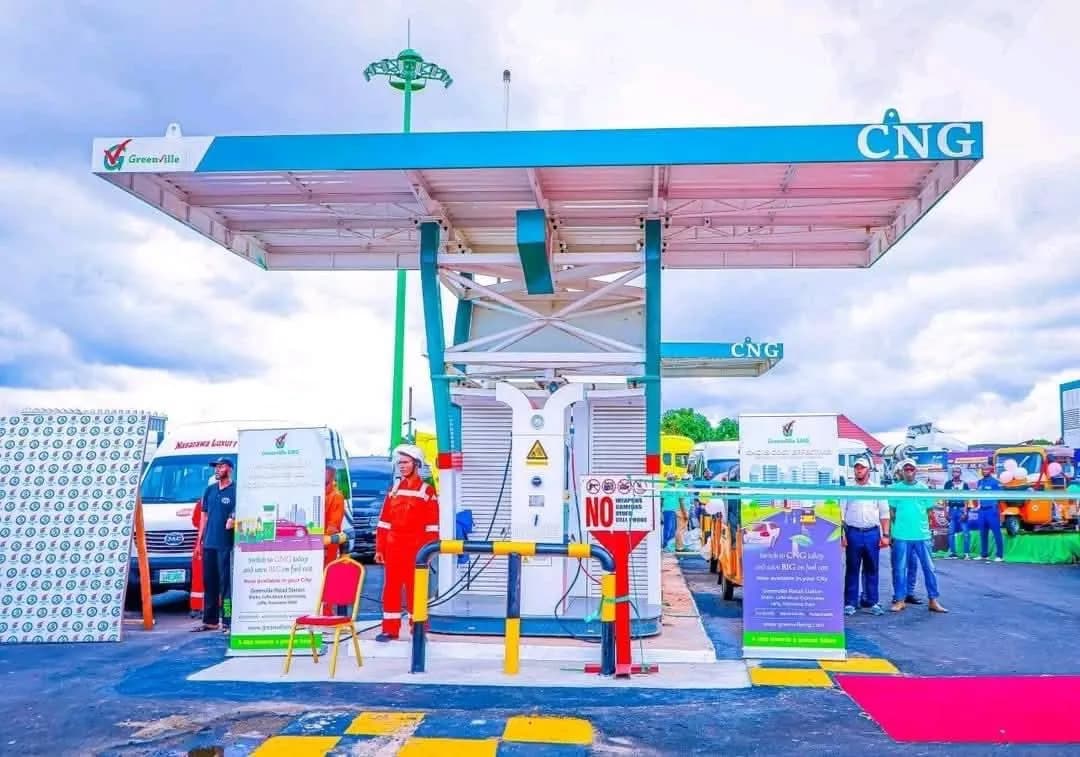
Manufacturers in Nigeria are switching to natural gas to reduce production costs as diesel and petrol prices remain high. The removal of fuel subsidies has caused petrol prices to triple, adding to the financial challenges many businesses face.
Natural Gas as a Solution
The federal government is promoting the use of natural gas through its Compressed Natural Gas (CNG) programme, leveraging Nigeria’s 200 trillion cubic feet of natural gas reserves. This initiative aims to cut transportation costs by nearly 50%, encourage vehicle conversions to CNG, and introduce CNG-powered buses in major cities.
The recent entry of the Dangote Refinery into diesel production has also lowered diesel prices from ₦1,700 to about ₦1,350 per litre, providing some relief to businesses reliant on diesel.
Energy Costs and Production Challenges
The Manufacturers Association of Nigeria (MAN) revealed that energy accounts for 30-40% of production costs. The association is encouraging businesses to adopt sustainable energy solutions to address these high expenses.
Zheng Wei, Managing Director of Tiget Business International Limited, highlighted the importance of gas in maintaining operations amid Nigeria’s unreliable power grid. Tiget, one of Nigeria’s largest footwear manufacturers, recently installed a 6.6-megawatt gas power plant along the Lagos-Ibadan Expressway to reduce reliance on diesel and lower operational costs.
Benefits of Switching to Gas
Wei noted that the new gas plant produces cleaner electricity and significantly cuts costs. “It has improved our efficiency and made our operations more sustainable,” he said.
Yiannis Tsantilas, Managing Director of Clarke Energy for sub-Saharan Africa, praised Tiget for setting an example by adopting efficient energy solutions. He noted that these efforts not only enhance productivity but also create jobs and boost Nigeria’s economy.
Call for Support
Manufacturers are urging investments in refineries to provide affordable raw materials for plastic and other industries. They are also calling for a stable gas supply to support production and reduce logistics costs.
Nigeria’s Potential as an Economic Hub
With a population of over 220 million, Nigeria’s market offers enormous opportunities for growth. Companies like Tiget aim to capitalise on this by producing high-quality products that cater to local and international markets.
However, challenges such as high fuel costs, inflation, and unstable electricity supply remain obstacles to competitiveness and industrial growth. Investments in sustainable energy and infrastructure will be critical to Nigeria’s economic stability.