

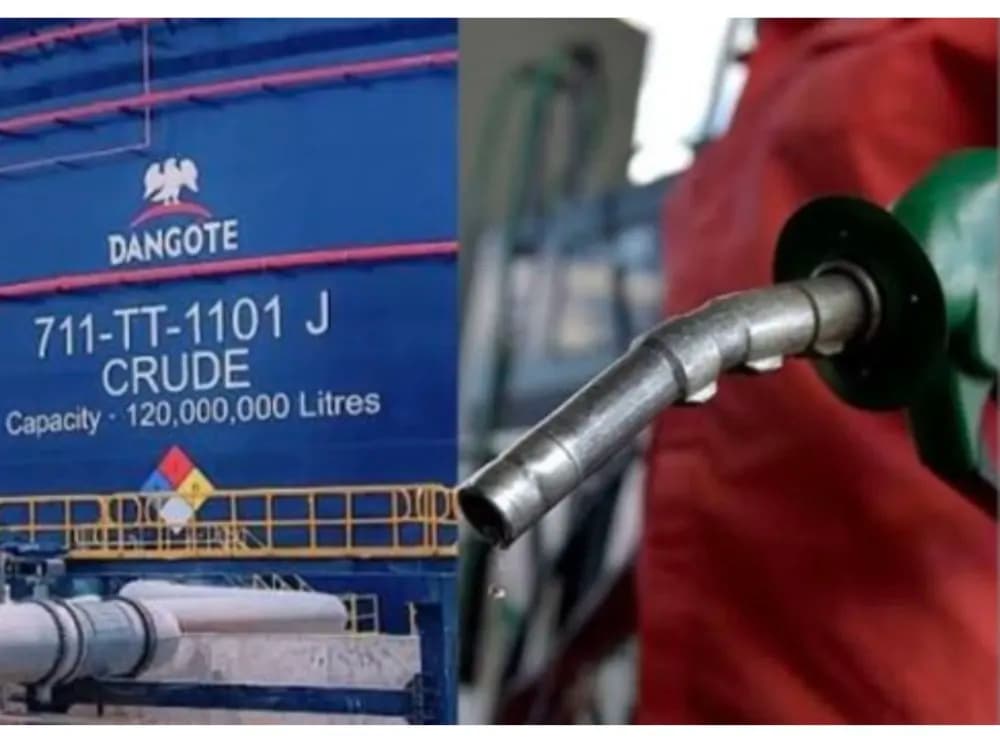
The recent reduction in the ex-depot price of Premium Motor Spirit (petrol) by the Dangote Petroleum Refinery has triggered mixed reactions across Nigeria’s downstream petroleum sector, with some marketers and retail outlet operators arguing that the adjustment does not fully reflect the sharp decline in global crude oil prices, while the Independent Petroleum Marketers Association of Nigeria (IPMAN) has urged caution against further aggressive price cuts.
Dangote Refinery recently reduced its petrol gantry price by ₦75 per litre to ₦1,175, a move widely seen as a response to easing international oil prices and improving supply conditions in the global market.
However, several depot operators and retail marketers who spoke with Petroleumprice.ng said the reduction was insufficient when compared to the scale of the decline recorded in crude oil benchmarks over recent months.
Their position comes against the backdrop of a significant correction in the international oil market. Brent crude, which traded above $113 per barrel in May, has fallen sharply in recent weeks and recently hovered around the low-$80 range before recovering slightly. Market participants argue that the pace of domestic fuel price reductions has not matched the speed at which crude prices climbed earlier in the year.
According to some marketers, fuel prices reacted quickly when crude oil surged above $100 per barrel, leading to successive increases in ex-depot prices. They contend that a similar pricing response should occur on the downside to ease pressure on operators and consumers.
A depot marketer in Lagos told Petroleumprice.ng that financing costs remain a major challenge for businesses across the supply chain.
"When prices rise, adjustments happen almost immediately. Now crude has dropped significantly, but the relief is not coming at the same pace. Many marketers are carrying expensive inventory and servicing bank facilities with very high interest rates. Lower prices would improve turnover and help operators remain competitive," the marketer said.
A retail station manager in Ogun State expressed a similar view, noting that many independent operators are struggling with shrinking margins amid declining purchasing power.
"Business is becoming increasingly capital intensive. A more substantial reduction would provide some breathing space for marketers and ultimately benefit consumers," he said.
Industry observer Odunubi also questioned whether the latest reduction adequately reflects prevailing market realities.
According to him, crude oil prices have fallen considerably from the levels that supported earlier petrol price increases.
"Crude was above $100 per barrel when petrol sold around ₦1,350 per litre. With crude now trading around $80 per barrel, many industry participants believe prices should be significantly lower than current levels," he said.
Odunubi further argued that continued competition from imported products remains important to maintaining market discipline and ensuring consumers benefit from favourable global market conditions.
However, not all stakeholders share that position.
Speaking to Petroleumprice.ng, the Public Relations Officer of IPMAN, Chief Chinedu Ukadike, said the refinery's latest reduction should be viewed within the broader context of market stability and inventory management.
He noted that although global oil prices have softened following reports of progress toward the reopening of the Strait of Hormuz and easing geopolitical tensions in the Middle East, price adjustments within the domestic market often take time to filter through the supply chain.
According to him, abrupt and substantial reductions could expose marketers holding higher-cost stock to significant losses.
"The refinery has taken a positive step with the latest reduction. Market adjustments should be gradual to prevent unnecessary disruptions and losses for marketers who purchased products at higher prices," he said.
Ukadike also advised marketers against stockpiling products, suggesting that further price adjustments could emerge if current trends in the international market are sustained.
He added that recent developments in the Middle East, particularly the reopening of critical shipping routes, could improve supply conditions and support additional moderation in prices over time.
The divergent views underscore growing debate within Nigeria's downstream sector over how quickly domestic fuel prices should respond to changes in international crude markets.
While some marketers are pushing for deeper cuts to reflect lower crude prices and ease financing pressures, others argue that a measured approach is necessary to protect operators from inventory losses and maintain market stability.
The debate comes at a time when competition in the petroleum market is intensifying, with refinery pricing decisions increasingly influencing depot prices, retail pump prices and overall market sentiment across the country.