

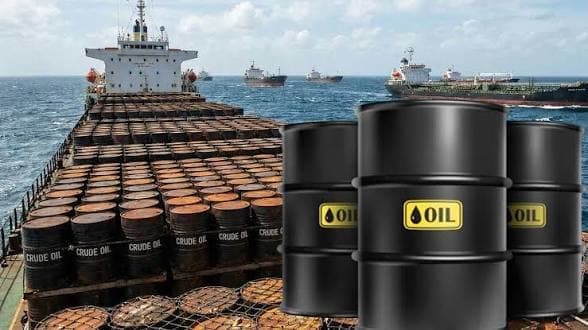
A framework agreement between the United States and Iran has raised expectations for the reopening of the Strait of Hormuz and a gradual easing of disruptions that have rattled global energy markets for months. However, analysts say the deal is unlikely to result in an immediate recovery in oil and gas production, exports, or shipping activity across the Middle East.
The agreement, expected to be formalised later this week, has already triggered a sharp decline in oil prices as traders bet on the eventual return of supply through one of the world's most important energy corridors. Brent crude and U.S. West Texas Intermediate both fell after news of the breakthrough emerged, reflecting expectations that crude exports through the Strait of Hormuz could gradually resume.
Despite the market optimism, industry observers caution that restoring normal energy flows will be a lengthy process.
For more than three months, the closure of the Strait of Hormuz forced producers across the Gulf region to curtail significant volumes of oil production. Analysts estimate that more than 10 million barrels per day of crude output has been shut in during the disruption, while broader assessments suggest total curtailed supply may have exceeded 11 million barrels per day.
Experts say restarting production is not as simple as reopening a shipping lane. Oil fields that have remained idle for months often require careful and phased restarts, while producers must also coordinate storage, transportation and export logistics before volumes can return to pre-disruption levels.
Daniel Sternoff, Senior Fellow at Columbia University's Center on Global Energy Policy, noted that uncertainty remains over how quickly trapped cargoes and vessels can be cleared once shipping resumes. According to him, questions remain about the operational meaning of a reopening and the speed at which accumulated supply can move through the system.
The pace of recovery is also expected to vary significantly among producing countries.
Analysts believe Saudi Arabia and the United Arab Emirates are better positioned to restore production more rapidly due to the flexibility of their infrastructure and export systems. Iraq, however, may face a more challenging path because a large share of its crude exports depends on southern production and export facilities linked to Basrah.
Alan Gelder, Senior Vice President for Refining, Chemicals and Oil Markets at Wood Mackenzie, said Iraq experienced one of the largest production shut-ins during the disruption and could require considerably more time to restore output than some of its regional peers.
According to Wood Mackenzie estimates, affected producers could restore roughly 70 percent of pre-crisis production within three months under a measured restart scenario. Output could rise to around 90 percent of previous levels within six months, although full recovery of the remaining volumes may take substantially longer.
Beyond upstream production, shipping remains a critical concern.
Several shipowners are reportedly waiting for the agreement to be formally signed and implemented before resuming voyages through the Strait. Industry participants also point to insurance requirements, security assessments and vessel availability as factors that could delay a full return to normal trade flows.
Analysts say the restoration of maritime confidence will be just as important as the reopening itself. Shipping companies, insurers and financiers are expected to seek evidence of sustained stability before returning operations to pre-crisis levels.
The recovery challenge extends beyond crude oil production. Regional refining facilities affected during the conflict are also expected to require weeks or months of repair and recommissioning before returning to full operations. In addition, parts of the region's natural gas infrastructure, particularly liquefied natural gas facilities, may face a more prolonged recovery timeline.
Market analysts say the speed at which supply chains normalize will play a major role in determining whether geopolitical risk premiums remain embedded in global energy prices.
Although the U.S.-Iran agreement has improved market sentiment and reduced fears of a prolonged supply crisis, experts caution that the reopening of the Strait of Hormuz marks the beginning of a recovery process rather than its conclusion. Production restarts, export logistics, shipping confidence and infrastructure repairs are all expected to influence how quickly Middle Eastern oil and gas supplies return to global markets.
For now, energy traders and market participants are expected to focus less on the announcement of the agreement itself and more on the pace at which physical barrels and cargoes begin flowing through the region in the weeks and months ahead.