

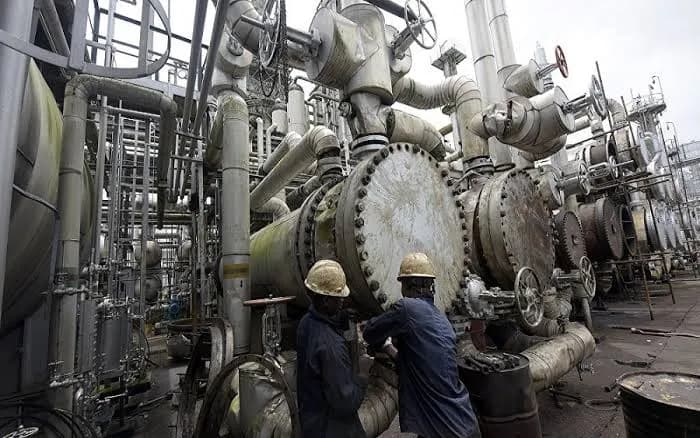
The Federal Government has expressed it’s plans to privatise the four state-owned refineries located in Port Harcourt, Warri, and Kaduna. The decision, revealed by the Presidency, aims to address inefficiencies in the refining sector and end Nigeria’s reliance on imported petroleum products. However, this has sparked a variety of opinions from industry stakeholders and labour unions.

Government’s Vision for Refinery Privatisation
Sunday Dare, Special Adviser to President Bola Tinubu, confirmed on social media that full privatisation of the refineries is in progress. He stated that with private sector involvement and active modular refineries like Waltersmith, Nigeria’s local refining capacity will steadily improve, potentially eliminating fuel queues.
The government has proposed that private companies take over operationsof the Kaduna Refining and Petrochemical Company (KRPC) and Warri Refining and Petrochemical Company (WRPC). The NNPC Limited, which oversees the refineries, seeks reputable firms with the expertise to manage and operate these facilities.
Mixed Reactions from Stakeholders
Support for Privatisation
Some experts and business leaders see privatisation as a positive step:
- Efficiency Gains: Dr Muda Yusuf, CEO of the Centre for the Promotion of Private Enterprise (CPPE), argued that private companies are better equipped to manage refineries. He suggested adopting a model similar to the Nigerian Liquefied Natural Gas (NLNG), where private investors hold the majority stake.
- Improved Output: Tunji Oyebanji, Managing Director of 11Plc, noted that private ownership could yield better results than what the government has achieved in recent decades.
Concerns from Labour Unions
The Petroleum and Natural Gas Senior Staff Association of Nigeria (PENGASSAN) expressed reservations, citing failed privatisation efforts in the past. They called for adopting the NLNG model, where private investors hold 51% ownership and the government retains 49%. PENGASSAN emphasised the need to address issues such as crude oil theft, pipeline vandalism, and poor maintenance, which have historically hindered refinery operations.
The State of Nigeria’s Refineries
Nigeria’s refineries have long struggled to meet domestic demand, forcing the country to rely heavily on imported fuel.
- Port Harcourt Refining Company (PHRC): Installed capacity of 210,000 barrels per day (bpd).
- Kaduna Refining and Petrochemical Company (KRPC): Capacity of 110,000 bpd.
- Warri Refining and Petrochemical Company (WRPC): Capacity of 125,000 bpd.
Despite their potential, the refineries have operated at minimal levels due to poor maintenance, underinvestment, and mismanagement.
The Way Forward
Experts have emphasised key steps to ensure successful privatisation:
- Transparency: Stakeholders demand clear guidelines and a fair process to ensure credible investors take control.
- Local Refining Incentives: Labour unions advocate for policies to encourage local refining, which would boost economic growth and reduce dependency on imports.
- Strengthening Security: Addressing crude theft and vandalism is essential to sustain operations and attract investors.
The proposed privatisation of Nigeria’s refineries marks a critical juncture for the country’s energy sector. While it offers hope for improved efficiency and local refining, the government must address existing challenges and foster collaboration among all stakeholders. Success will depend on transparency, competent management, and strategic investments in the nation’s oil infrastructure.
4o
ChatGPT ስህተት ሊሠራ ይችላል። ጠቃሚ