

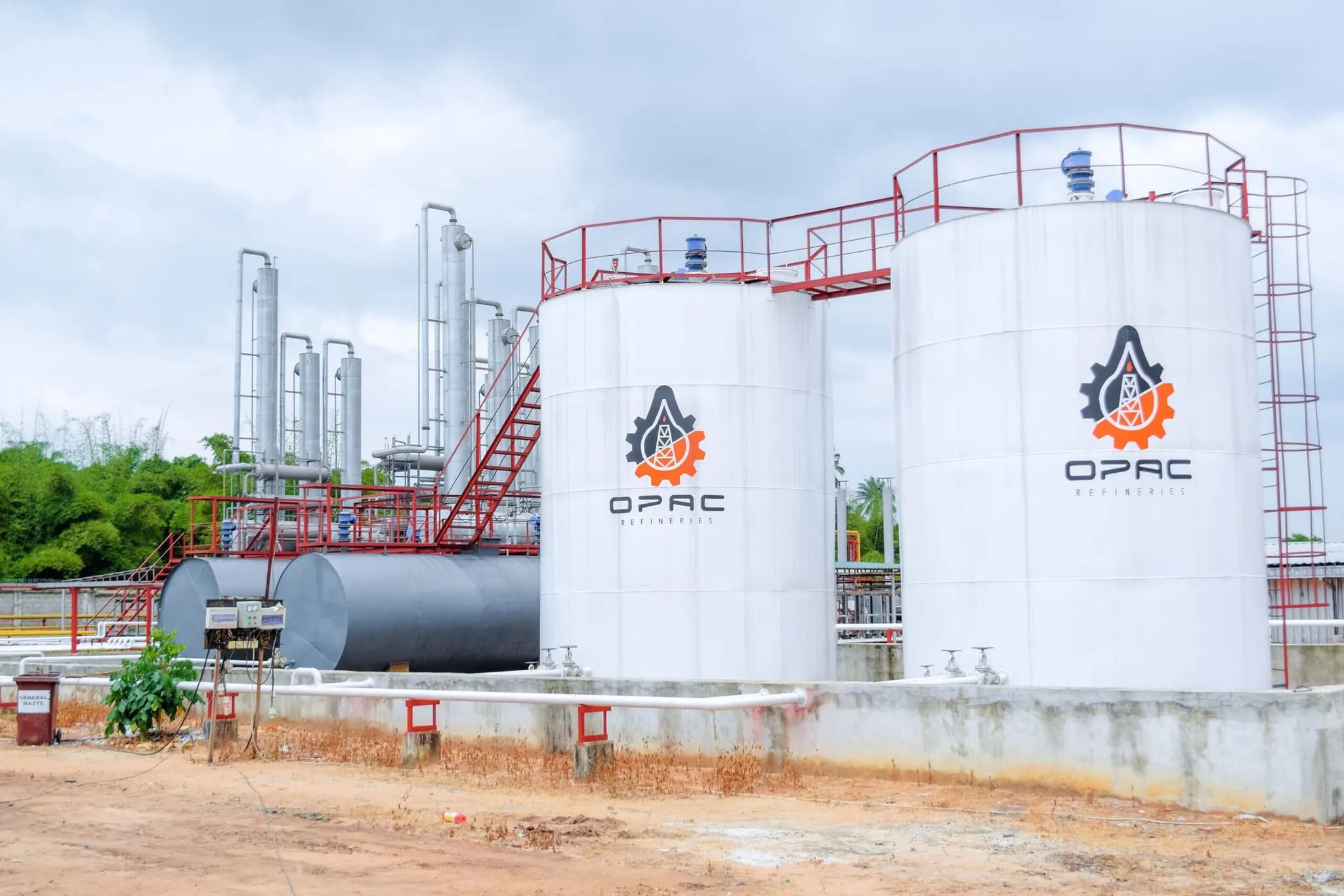
The Nigerian National Petroleum Company Limited (NNPC) is under scrutiny regarding its crude oil supply commitments to domestic modular refineries. Despite multiple discussions, modular refinery operators report minimal support from NNPC, which they claim has instead prioritised the Dangote Refinery’s supply needs. This dynamic has left smaller refineries facing operational difficulties, even as they continue seeking government engagement to access necessary resources.
According to Momo Oyarekhua, Chairman of OPAC Refinery and the Crude Oil Refineries Owners Association of Nigeria, modular refinery operators have yet to secure consistent crude oil allocations from NNPC. This lack of support, Oyarekhua stated, has stunted operational capacities for modular refineries that play a vital role in promoting regional energy security and reducing Nigeria’s dependency on imported refined products. “We have not actually received any barrel of crude from NNPC,” he shared, underscoring the strain faced by smaller operators.
Crude Allocation Priorities and the Dangote Refinery
The Dangote Refinery, with its considerable refining capacity of 650,000 barrels per day, has recently entered a long-term supply agreement with NNPC. Under this arrangement, NNPC is committed to providing 100 million standard cubic feet per day of natural gas to the Dangote facility. This prioritisation of the larger Dangote refinery has left modular refineries, which operate at smaller scales, concerned about their place in NNPC’s supply strategy. Oyarekhua expressed that, despite continuous engagement, modular refineries remain sidelined in crude allocation, as “NNPC has not told us clearly that it cannot supply us crude; we are still engaging them.”
Operational and Financial Barriers for Modular Refineries
Unlike larger refineries with direct access to crude, modular refineries typically operate under smaller capacities and often depend on private crude suppliers. This reliance on external suppliers introduces several financial and logistical barriers, including currency constraints. Oyarekhua explained that many private producers require payments in USD, which poses a challenge for modular refineries that market their products locally and in naira.
The recent presidential directive mandating NNPC to sell crude oil to domestic refineries in local currency was a welcome development. However, modular refinery operators say implementation has been slow. Oyarekhua further highlighted that private suppliers’ dollar-denominated contracts exacerbate the financial strain on modular refineries, preventing them from meeting their full production potential.
Proposed Solutions and Path Forward
To address these challenges, the Crude Oil Refineries Owners Association has advocated for NNPC to explore direct supply agreements with modular refineries using nearby oil clusters. This strategy, according to Oyarekhua, could reduce logistical complications and reliance on high-cost private suppliers. For instance, OPAC has proposed that NNPC supply crude from the nearby Forcados cluster, a solution they believe could ease some of the operational constraints faced by modular facilities.
While recent government directives aim to bolster domestic refining, modular operators are still awaiting clear actions from NNPC to ensure they can contribute effectively to Nigeria’s energy independence. Oyarekhua emphasised the importance of equitable support, noting that without NNPC’s crude allocations, modular refineries may continue to face production limitations that hinder their ability to operate at full capacity and support Nigeria’s local fuel needs.
Broader Implications for Nigeria’s Energy Sector
The disparity in NNPC’s crude supply prioritisation reflects broader policy challenges within Nigeria’s energy sector. Modular refineries, intended to enhance local refining and minimise fuel import dependency, are a crucial component of Nigeria’s long-term energy strategy. However, without direct support and equitable access to crude, the modular refinery sector faces difficulties in meeting these objectives.
The continued prioritisation of large-scale projects, such as the Dangote Refinery, over smaller operators raises questions about NNPC’s commitment to a balanced refining sector that supports diverse operational models. As Nigeria strives for energy self-sufficiency, the inclusion and operational viability of modular refineries will be essential for a sustainable, inclusive approach to domestic refining.
The Nigerian government’s goal of energy self-sufficiency hinges on supporting all levels of domestic refining capacity, from large-scale refineries to modular facilities. NNPC’s prioritisation of the Dangote Refinery has overshadowed smaller modular refineries, leaving operators like OPAC advocating for a more inclusive distribution policy. As discussions continue, modular refinery operators remain cautiously optimistic that NNPC will address these challenges and facilitate a more equitable crude supply framework. Until such policies are realised, Nigeria’s modular refineries may remain underutilised, limiting their role in the country’s energy future.