

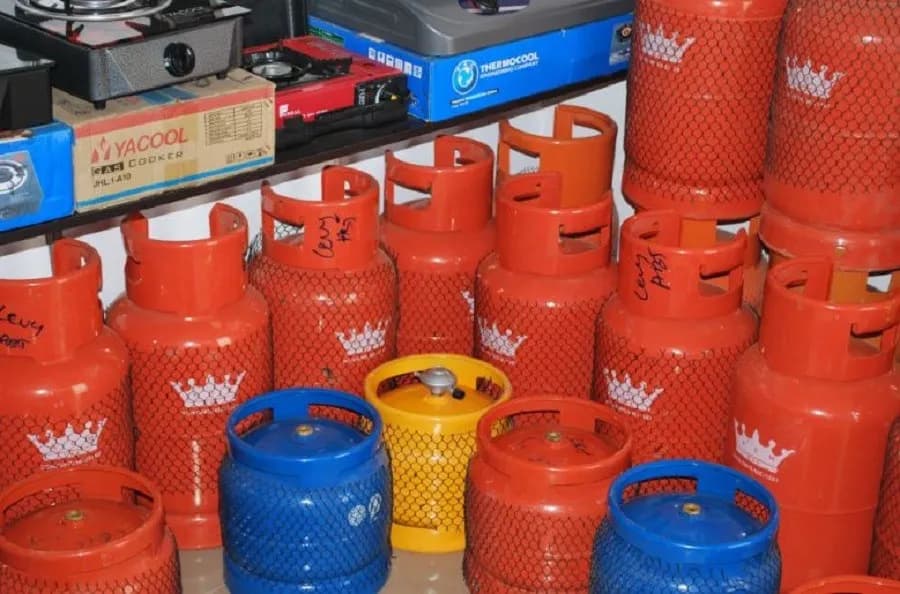
Cooking gas prices in Nigeria surged by 16.01% between March and April 2025, driven by rising import costs, distribution challenges, and growing demand for clean energy. A new market analysis based on nationwide retail tracking reveals stark price differences across states, with some households paying nearly ₦4,000 more than others for a 12.5kg cylinder.
The data, compiled from retail outlets and distributors across the country, highlights not only the inflationary pressure on LPG but also the uneven burden borne by consumers depending on their location
State-by-State Breakdown of LPG Prices (12.5kg Cylinder)
| State / Location | Price (₦) | Cost per Kg (₦) |
|---|---|---|
| Plateau State | 19,375 | 1,550 |
| Rivers State | 18,750 | 1,500 |
| Anambra State | 18,750 | 1,500 |
| Ikorodu, Lagos State | 18,125 | 1,450 |
| Ibadan, Oyo State | 18,125 | 1,450 |
| Borno State | 17,500 | 1,400 |
| Abia State | 17,500 | 1,400 |
| Kano State | 17,500 | 1,400 |
| Abuja (FCT) | 17,500 | 1,400 |
| Oyo State | 17,500 | 1,400 |
| Enugu State | 17,500 | 1,400 |
| Jos, Plateau State | 16,875 | 1,350 |
| Lagos | 16,250 | 1,300 |
| Kaduna State | 16,250 | 1,300 |
Ijebu Ode Offers Cheapest LPG in April
Ijebu Ode, Ogun State, emerged as the most affordable location for cooking gas in April, with a 12.5kg cylinder selling at ₦15,000 (₦1,200/kg). This can be attributed to the town’s proximity to Lagos, Nigeria’s largest gas import and distribution hub, which reduces transportation and logistics costs.
Mid-Range LPG Prices Across Select States
Cities like Kaduna, Shagamu, and Jos fell within the mid-price band, ranging from ₦16,250 to ₦16,875. These areas benefit from moderately efficient supply chains and lower distribution disruptions compared to more remote or congested markets.
Plateau, Rivers, and Anambra Among Costliest States
Plateau State recorded the highest average LPG price at ₦19,375 (₦1,550/kg), closely followed by Rivers State and Anambra State, both at ₦18,750 (₦1,500/kg). These inflated rates reflect the impact of poor road infrastructure, long-distance haulage from coastal terminals, and intermittent supply constraints.
Why Cooking Gas Prices Are Rising Sharply in Nigeria
The retail price of a 12.5kg cylinder of cooking gas has surged significantly in recent months, climbing from an average of ₦15,085 to as high as ₦17,500, a steep increase of over 16%. Several key factors are driving this inflationary trend:
- Currency Devaluation: The depreciation of the naira continues to inflate the cost of imported liquefied petroleum gas (LPG), which still makes up a large share of Nigeria’s supply despite growing local production efforts.
- Costlier Transportation: Rising diesel prices have pushed up the cost of distributing LPG across the country, especially from Lagos coastal depots to inland and northern cities.
- Terminal Bottlenecks: Operational delays and congestion at major loading terminals, particularly in Apapa, have caused disruptions in supply chains and delayed deliveries to marketers.
- Rising Household Demand: As more households transition to LPG in search of cleaner and more efficient cooking alternatives, pressure on the existing supply chain has intensified.
- Security Disruptions: Insecurity in parts of the Niger Delta and northern Nigeria has occasionally hindered logistics and distribution, creating localized scarcity and price spikes.
LPG Price Surge: A Blow to Household Budgets
As cooking gas prices surge by over 16% in a short span, Nigerian households are feeling the strain. With food inflation already high and energy costs rising, the jump in the price of a 12.5kg LPG cylinder is hitting hard, especially for low-income families outside major cities, where clean energy access is already limited.
The growing concern over affordability has sparked calls from industry stakeholders for urgent interventions. These include ramping up local LPG production, expanding bottling plants across the country, improving logistics infrastructure, and enforcing stronger regulatory measures to stabilize retail prices and protect consumers.
Without swift action, more families may be forced to revert to unsafe and polluting alternatives, undermining progress toward clean energy adoption.