

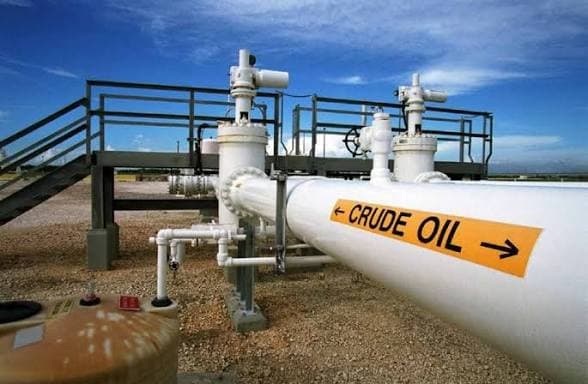
Nigeria's crude-for-naira policy has failed to achieve its primary objectives of strengthening the naira, reducing fuel costs and improving domestic refining, according to oil and gas expert Victor Udoh.
Speaking during an interview on Arise Television, Udoh said the policy introduced to allow local refiners purchase crude oil in naira instead of dollars, had produced little measurable impact despite raising expectations within the downstream petroleum sector.
According to him, the initiative has not significantly improved the value of the naira or translated into lower fuel prices for Nigerians, while local refiners have continued to face challenges accessing adequate crude supplies.
"The crude-for-naira policy has not worked. If it had worked, we would have seen stability in the naira, lower fuel prices and sufficient crude supply to domestic refiners. None of these objectives has been fully realised," he said.
Udoh argued that despite the policy, Nigeria's largest refinery, Dangote Refinery, reportedly spent billions of dollars importing crude oil within a short period because domestic supplies remained inadequate.
He said the development defeated the policy's central objective of ensuring that locally produced crude supports domestic refining before exports.
"When a refinery operating in an oil-producing country has to spend billions of dollars importing crude, then it is clear that something is fundamentally wrong with the implementation of the policy," he added.
The energy expert also criticised the absence of a transparent framework for allocating crude oil to domestic refiners, noting that uncertainty in supply continues to undermine investment and planning within the refining sector.
He called on the Federal Government to review the implementation strategy, insisting that policy consistency, guaranteed crude availability and stronger regulatory oversight are essential if Nigeria hopes to reduce dependence on imported petroleum products.
Udoh maintained that while the crude-for-naira initiative remains a sound concept, its execution has fallen short of expectations.
"The idea is good, but implementation is everything. Without adequate crude supply and transparency, the policy cannot deliver the desired economic benefits," he said.
The crude-for-naira arrangement was introduced to reduce pressure on foreign exchange demand, support domestic refining capacity and stabilise petroleum product prices. However, concerns have continued to grow over crude availability for local refiners, with industry stakeholders calling for reforms to ensure the policy delivers its intended outcomes.