

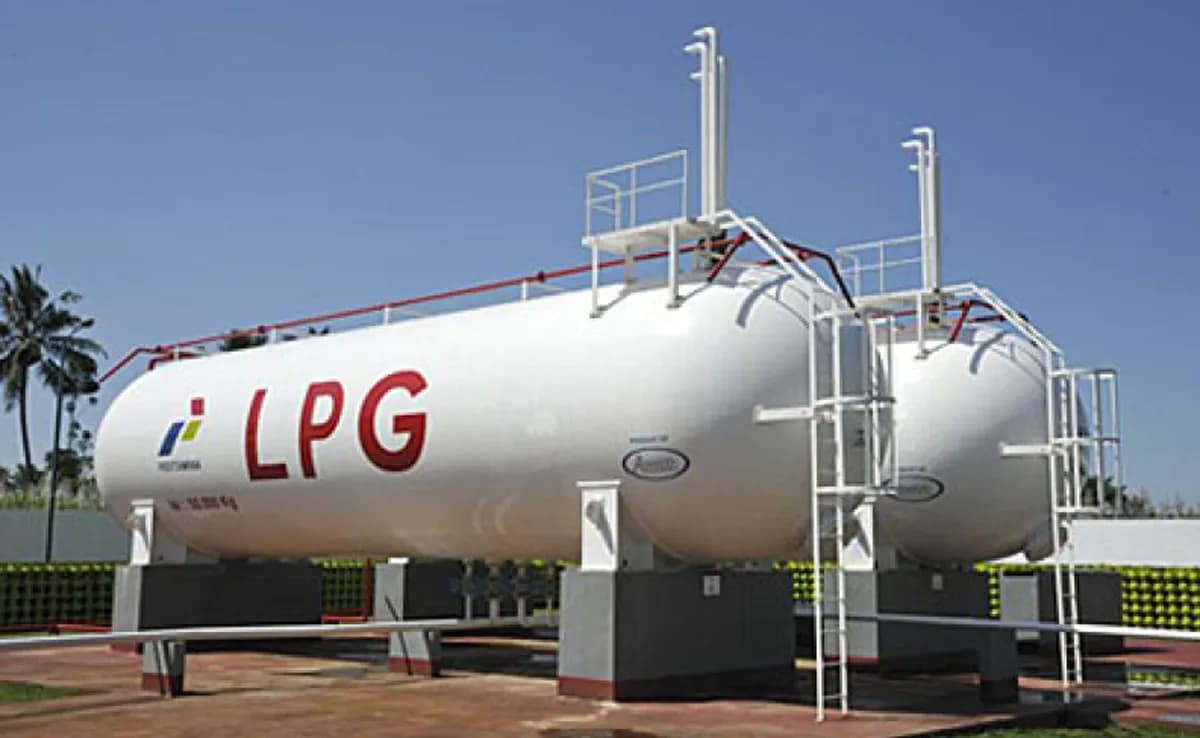
The Nigerian Association of Liquefied Petroleum Gas Marketers (NALPGAM) has thrown its weight behind Dangote Petroleum Refinery’s plan to reduce the retail price of Liquefied Petroleum Gas (LPG), also known as cooking gas, describing it as a critical step towards expanding energy access and displacing firewood in low-income households.
Speaking with newsmen, NALPGAM President, Oladapo Olatunbosun, confirmed that Dangote’s recent declaration to reduce LPG prices aligns squarely with the association’s long-standing advocacy for a more inclusive energy pricing framework.
“Everything Alhaji Aliko Dangote said reflects NALPGAM’s position. We have consistently urged government and major producers to consider the economic realities of Nigerians who rely on biomass fuels,” Olatunbosun stated.
Dangote Targets LPG Downstream Reform
During a recent facility tour of the Dangote Refinery in Lekki, Aliko Dangote addressed members of Lagos Business School’s CGEO Africa, emphasising the refinery’s capacity to produce 2,000 metric tonnes of LPG daily, while lamenting the current price burden on low-income earners.
He hinted at bypassing traditional distributor chains by supplying LPG directly to retailers and gas plant owners to eliminate middlemen and reduce consumer costs.
“If distributors don’t lower the price, we’ll supply directly to the market,” Dangote said. “We want people to transition from firewood and kerosene to cleaner LPG.”
Industry Response: Balancing Reform with Market Realities
While Dangote’s move has been welcomed by many in the clean energy sector, critics have raised concerns over potential disruption to existing distribution models. Olatunbosun acknowledged these fears, particularly from depot operators and plant owners servicing debt-financed infrastructure.
“Many operators took long-term loans to build their facilities. They are right to be concerned about price shocks that could undercut their return on investment,” he said.
However, he insisted the LPG market has enough flexibility and room to accommodate all players provided they adapt to necessary structural changes.
“What we need is not resistance to price reduction, but innovation in downstream logistics to protect investments while broadening access,” he added.
Direct Supply Model: Redefining Distribution Economics
Contrary to public misconceptions, Olatunbosun clarified that direct supply does not mean household-level sales by Dangote, but rather a streamlined wholesale model that links producers directly with plant owners and licensed retailers.
“Dangote won’t sell to end users at the gate. He will engage retail aggregators and plant associations, cutting off the non-value-adding middlemen that inflate prices,” he explained.
This model echoes broader calls in the sector for transparent pricing, improved last-mile logistics, and a reduction in artificial markups across the LPG value chain.
LPG Affordability: Key to National Energy Transition
According to NALPGAM, LPG penetration in Nigeria remains below 15%, with affordability being the single greatest barrier. Retail prices have climbed to ₦1,000 per kilogramme in some areas, excluding millions from adopting cleaner fuels.
“Only the middle and upper classes can afford gas today,” Olatunbosun lamented. “To build a truly inclusive gas economy, the poor must be brought into the net.”
He urged producers, especially Dangote, to dedicate a share of their profit margin towards social pricing mechanisms that encourage rural and low-income adoption.
“We’ve appealed to Dangote to lead by example. As the largest producer, his pricing decisions will shape the entire market,” he noted.
The Bigger Picture: From Firewood to Flame
Dangote’s LPG pricing strategy may very well be a watershed moment for Nigeria’s domestic gas utilisation. With rising deforestation, indoor air pollution, and energy poverty, stakeholders see LPG affordability as not just an economic issue, but a public health and environmental imperative.
“This is not about profit alone,” said Olatunbosun. “It’s about protecting the poor, promoting health, and driving Nigeria’s transition to cleaner fuels.”