

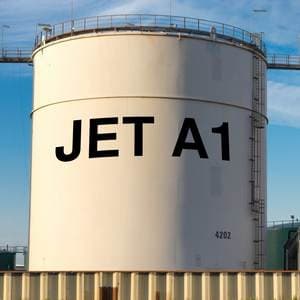
Nigeria has eliminated its dependence on imported aviation fuel for the first time in decades, with domestic refineries supplying the country's entire Jet A-1 market for 13 consecutive months, according to the latest petroleum supply data released by the Nigerian Midstream and Downstream Petroleum Regulatory Authority (NMDPRA).
An analysis of the regulator's petroleum supply statistics shows that between June 2025 and June 2026, Oil Marketing Companies recorded no imports of Aviation Turbine Kerosene (ATK), commonly known as Jet A-1, making locally refined aviation fuel the sole source of supply to Nigeria's aviation industry throughout the period.
The development marks a watershed moment for Nigeria's downstream petroleum sector, ending years of heavy reliance on imported aviation fuel caused by inadequate domestic refining capacity. The expansion of local refining operations, led by the Dangote Refinery and supported by other domestic refining facilities, has significantly reshaped the country's aviation fuel supply chain, reducing exposure to import dependence, foreign exchange volatility and international supply disruptions.
Industry data shows that domestic refinery receipts fluctuated throughout the review period. Average daily supply rose from 1.3 million litres in June 2025 to 1.5 million litres in July before climbing sharply to 3.5 million litres in August. Receipts later moderated to 1.6 million litres in September and recovered to 2.7 million litres in October before dropping to zero in November.
Production rebounded strongly in December 2025, reaching a record 14 million litres per day, the highest level recorded during the 13-month period. Supplies subsequently eased to 6.0 million litres per day in January 2026 and 1.6 million litres in February before recovering steadily to 2.1 million litres in March, 3.0 million litres in April and 4.3 million litres in May. Refinery receipts, however, declined to 2.5 million litres per day in June, representing a 41.9 per cent month-on-month decrease.
Despite the fluctuations in refinery output, aviation fuel demand remained relatively resilient. Daily consumption stood at 3.5 million litres in January before easing to 2.9 million litres in February and 2.1 million litres in March. Demand later recovered to 2.5 million litres in April, increased to 3.1 million litres in May and moderated slightly to 2.9 million litres in June, remaining broadly in line with Nigeria's estimated daily aviation fuel requirement of about three million litres.
The NMDPRA also reported that aviation fuel supply increased from 2.6 million litres per day in April to 3.6 million litres per day in May before moderating in June. The regulator noted that petroleum product consumption figures are derived from volumes trucked into the domestic market.
The complete disappearance of Jet A-1 imports underscores the growing impact of Nigeria's expanding refining capacity on the downstream petroleum industry. Beyond strengthening energy security, the shift is expected to improve product availability, shorten supply chains, conserve foreign exchange and reduce the industry's vulnerability to external supply shocks.
The milestone comes months after Nigeria's aviation industry grappled with an unprecedented surge in fuel costs. Between January and March 2026, Jet A-1 prices soared from about ₦900 per litre to as high as ₦2,557 per litre following disruptions in the global oil market triggered by the Middle East conflict. The sharp increase significantly raised airline operating costs, forcing domestic carriers to increase ticket prices as aviation fuel continued to account for roughly 40 per cent of total operating expenses.
While the transition to locally refined aviation fuel is expected to reduce Nigeria's exposure to foreign exchange pressures and import-related disruptions, the significant swings in refinery output indicate that sustaining stable production will be essential to delivering long-term price stability. Industry stakeholders maintain that consistent refinery operations, rather than production capacity alone, will determine whether Nigeria can fully consolidate its newly attained self-sufficiency in aviation fuel supply.