

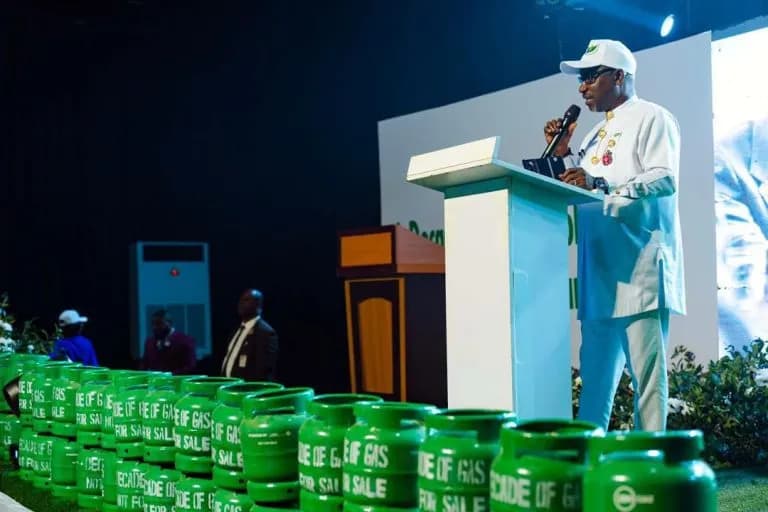
Nigeria has stepped up its clean-energy drive with the official launch of the South-East phase of the Liquefied Petroleum Gas (LPG) Penetration Programme in Owerri, Imo State a milestone that completes the nationwide rollout under President Bola Ahmed Tinubu’s Decade of Gas agenda. The initiative signals a strong push to move millions of families away from firewood and kerosene toward cleaner, safer and more affordable cooking alternatives.
Nigeria Deepens LPG Adoption Across All Zones
Speaking at the inauguration, Minister of State for Petroleum Resources (Gas), Ekperikpe Ekpo, said the programme represents a deliberate nationwide intervention. According to him, clean cooking remains a crucial element in reducing respiratory illnesses, protecting Nigeria’s forests and improving household spending power.
Ekpo stressed that the LPG rollout goes beyond handing out cylinders. Instead, it is designed to strengthen the entire gas value chain from storage and distribution to last-mile delivery while creating new opportunities for young people and women across all six geopolitical zones. With this latest phase completed, the government is confident of meeting its target of transitioning five million households to LPG by 2030.
Strong Government Collaboration Boosts Programme
The minister praised the Imo State Government for what he described as strong institutional support. He also acknowledged the consistent advocacy of the Minister of Women Affairs, Hajiya Imaan Sulaiman-Ibrahim, whose work has helped raise awareness on the health and economic benefits of clean cooking.
Energy analysts say such collaboration is vital for sustained LPG penetration. For many households, switching to LPG requires awareness, affordability and reliable access. The nationwide rollout aims to address these gaps through coordinated government partnerships and improved supply infrastructure.
Clean-Cooking Push to Spur Investments and Reduce Deforestation
Nigeria’s LPG Penetration Programme is expected to unlock investment in storage terminals, bottling plants, cylinder distribution and logistics. By cutting down dependence on firewood and kerosene fuels linked to deforestation, indoor pollution and household vulnerability the government hopes to build a cleaner and more resilient energy market.
Ekpo noted that each converted household contributes to a healthier environment and a stronger local economy. “This is how we build a healthier, cleaner and more prosperous Nigeria, one household at a time,” he said.
With the rollout now active nationwide, stakeholders anticipate improved LPG availability, stronger market confidence and faster adoption rates. As momentum grows, Nigeria is positioning LPG as a central pillar of its clean-cooking future, a future where homes breathe cleaner air and households spend less on unsafe, outdated fuels.