

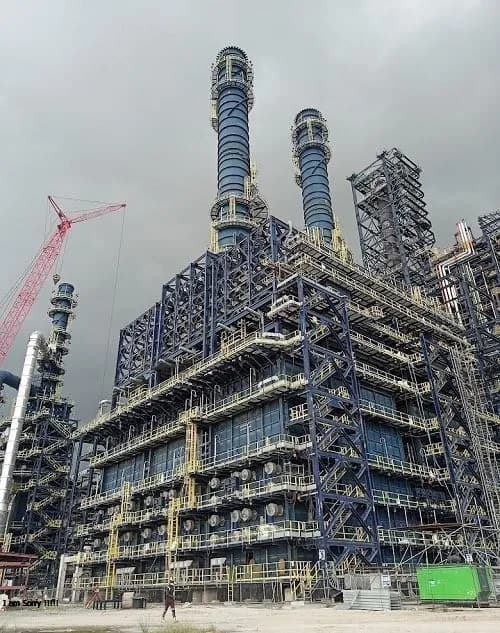
Three of Nigeria’s state-owned refineries, Port Harcourt, Warri, and Kaduna, remain dormant despite rehabilitation contracts valued at over $3bn. In Rivers, Delta, and Kaduna states, the refineries remain idle, with minimal staff activity and no meaningful operations taking place.
A Cycle of Rehabilitation Without Output
The refineries have undergone several turnaround contracts since the early 2000s. Yet Nigeria still imports nearly all its refined products, a gap that fuels allegations of waste and mismanagement.
The Economic and Financial Crimes Commission (EFCC) has opened investigations into the $3bn rehabilitation package. In May 2025, the agency questioned former managing directors of the Nigerian National Petroleum Company Limited (NNPCL) and senior officials over alleged mismanagement of funds.
Port Harcourt: Delayed Promises
The Port Harcourt Refining Company (PHRC) in Eleme LGA, with 210,000 barrels-per-day capacity from its two plants, was expected to restart under a $1.5bn phased rehabilitation contract.
In November 2024, then-GCEO Mele Kyari announced partial operations at 70% capacity, projecting daily output of 1.5m litres of diesel, 2.1m litres of fuel oil, 1.4m litres of petrol, and 900,000 litres of kerosene.
By May 2025, however, NNPCL announced a 30-day shutdown for maintenance. Stakeholders expressed concern over missed timelines. Later visits in June and August showed the refinery inactive. At the adjoining depot, only diesel was being trucked from old stock.
Marketers interviewed described the facility as idle, saying limited lifting occurred months earlier and accusing the government of overstating progress. Independent marketers also complained of high prices and limited access to supply.
Warri: Restart, Then Silence
The Warri Refining and Petrochemical Company (WRPC), built in 1978 with a capacity of 125,000 bpd, was allocated nearly $900 million for rehabilitation under a 2021 funding plan that also included Kaduna.
The refinery reportedly resumed operations in December 2024 at 60% capacity. Yet, recent visits showed the plant inactive, with its tanker park empty and no production visible.
Sources familiar with the operations confirmed that staff attend mainly for routine administrative tasks. Others suggested that some maintenance continues while awaiting new policy direction from NNPCL leadership.
Kaduna: Idle Despite Quick-Fix Contract
The Kaduna Refining and Petrochemical Company (KRPC), once a hub of industrial activity, remains idle. Locals in the nearby Kapam community recalled the furnace flames and worker traffic that defined its operations, now replaced by silence.
In February 2023, NNPCL awarded a $740.6 million quick-fix contract, promising a 60% output by December 2024. Those targets have not materialised. Only a fraction of the workforce remains, with fewer than 100 staff compared to over 1,200 previously.
Experts warn that prolonged inactivity could worsen corrosion, raising costs for any eventual restart.
Community Impact
Communities surrounding the plants reported economic decline. Small businesses that once thrived on worker patronage have seen sharp drops in sales. Residents in Kapam and Eleme noted that expectations of new jobs and improved fuel access remain unmet.
NNPCL Response
NNPCL insists it is still committed to restoring the plants. According to the company, it remains determined to provide a sustainable solution to its three refineries and to restore them to full operations. Detailed technical and commercial reviews of the Port Harcourt, Kaduna, and Warri facilities are ongoing.